
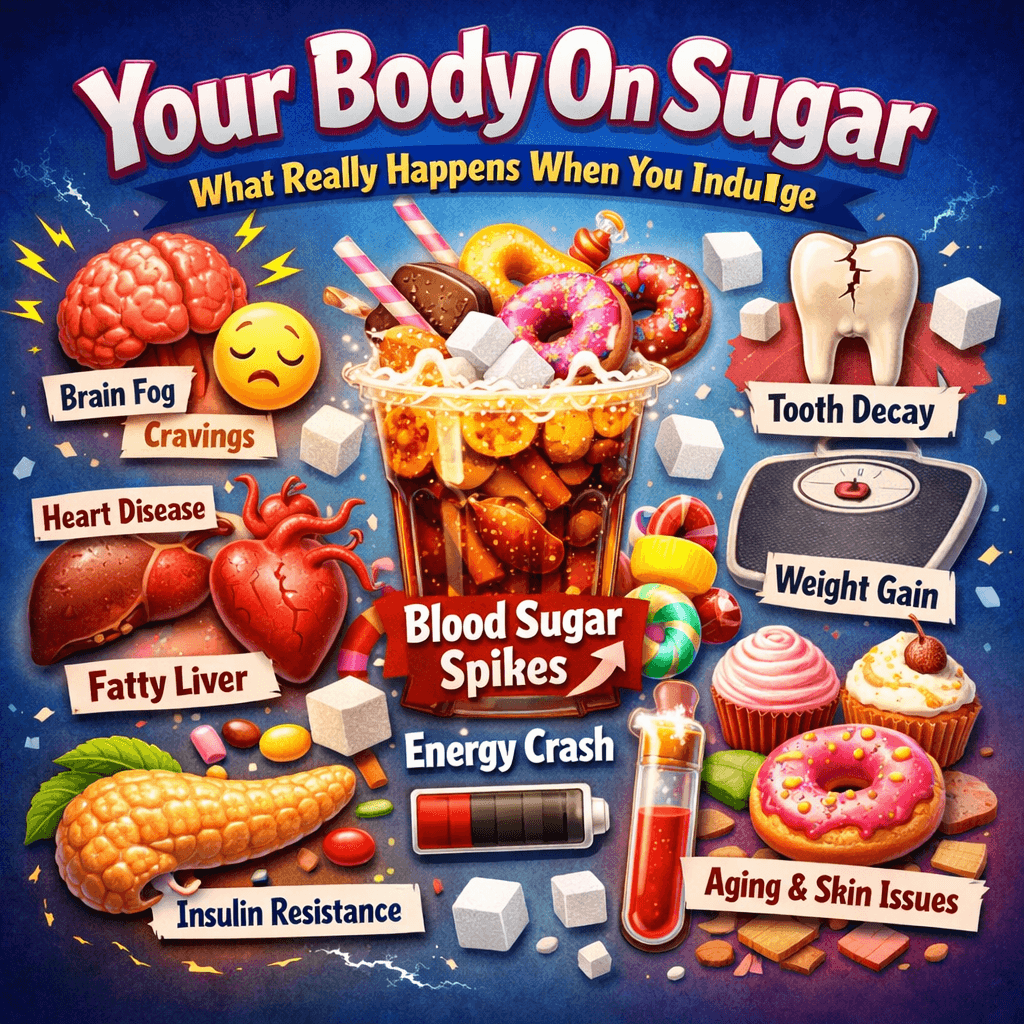
Sugar is more than just a sweet treat; it is a complex nutrient that fuels every cell in your body. Glucose, fructose and other simple carbohydrates are essential energy sources, but in modern diets sugar is ubiquitous and often consumed in large amounts. From soft drinks and desserts to salad dressings and breads, added sugars lurk in many packaged foods. These “extras” are not benign: over time, chronic high sugar intake can harm your metabolism, organs, brain and teeth, contributing to obesity, cardiovascular disease, type 2 diabetes, fatty liver disease, cognitive decline and more. This article explains what happens when you indulge in sugar and offers evidence‑based tips for moderating your intake.
Understanding sugar: natural vs. added sugars
Humans have always eaten sugars. Fruits, vegetables, dairy and whole grains contain natural sugars, which come packaged with fiber, water, vitamins, minerals and antioxidants. These whole foods cause a slow rise in blood glucose and provide steady energy. In contrast, added sugars are refined sweeteners (table sugar, high‑fructose corn syrup, honey, agave, maltose, etc.) intentionally added to foods to enhance flavor or shelf life. Added sugars are absorbed rapidly because they lack fiber, causing blood sugar spikes. They are found in sodas, candy, flavored yogurts, breakfast cereals, sweetened teas, energy drinks, sauces and even breads.
The different types of sugars
- Glucose: A simple sugar that circulates in your bloodstream and serves as the primary fuel for cells. Complex carbohydrates such as starch break down into glucose during digestion.
- Fructose: Another simple sugar found in fruit and honey. In whole fruit it is accompanied by fiber and nutrients, but in isolation (e.g., high‑fructose corn syrup) it is metabolized almost exclusively by the liver, which can lead to fat buildup and nonalcoholic fatty liver disease (NAFLD).
- Sucrose: Common table sugar composed of glucose and fructose. Because it is refined, it has no fiber or micronutrients.
- Lactose: Natural sugar found in milk and dairy products.
Natural sugars in fruits and vegetables are digested more slowly and do not cause sharp blood sugar or insulin spikes. By contrast, added sugars like high‑fructose corn syrup quickly raise blood sugar and trigger a strong insulin response. Excess fructose can also stimulate dopamine, the brain’s reward neurotransmitter, promoting cravings and emotional eating.
How the body metabolizes sugar
When you eat carbohydrates, enzymes in your digestive system break them down into simple sugars (primarily glucose). Blood sugar (glucose) rises, prompting the pancreas to secrete insulin, a hormone that signals cells to absorb glucose for energy or store it as glycogen or fat. Once blood sugar drops, another hormone called glucagon signals the liver to release stored glucose back into the bloodstream. This insulin–glucagon cycle keeps blood glucose within a narrow range.
Foods differ in how quickly they raise blood sugar. Simple carbohydrates such as table sugar and white bread are digested quickly and cause rapid spikes in blood glucose and insulin levels. High‑glycemic index foods produce strong blood sugar surges; repeated spikes can lead to insulin resistance, type 2 diabetes, heart disease and weight gain. When you indulge in sugary foods, this system is overworked, causing immediate effects (energy burst and crash) and long‑term metabolic consequences.
Energy spikes and crashes
Have you ever felt invigorated after eating candy and then suddenly sluggish? When you consume large amounts of sugar, blood glucose and insulin levels soar, providing a quick energy boost. However, this surge is followed by a rapid decline as insulin shuttles glucose out of the bloodstream. Healthline notes that sugary foods “spike blood sugar and insulin levels, causing an energy boost followed by a crash”. This roller‑coaster effect may lead to cravings for more sugar and cause fatigue, irritability and mood swings.
Long‑term effects of excess sugar
Overindulgence in sugar is not just about transient energy dips. Prolonged high sugar intake has far‑reaching effects on multiple organ systems.
1. Fatty liver and visceral fat
Fructose is metabolized primarily by the liver; when consumption exceeds the liver’s capacity to process it, the excess is converted into fat. Studies show that high fructose intake increases de novo lipogenesis, releasing very low‑density lipoproteins (VLDL) and promoting insulin resistance and fat accumulation. Over time, this can lead to nonalcoholic fatty liver disease (NAFLD). News‑Medical notes that fructose‑induced NAFLD can progress to nonalcoholic steatohepatitis (NASH), but a low‑fructose diet and lifestyle changes can reverse early stages. Healthline also reports that excessive fructose intake overloads the liver, leading to fat accumulation and NAFLD.
2. Weight gain and obesity
Sugary foods and beverages are calorie‑dense yet low in satiety. Consuming them increases total caloric intake without providing lasting fullness. The American Heart Association (AHA) warns that soft drinks, candy, ice cream and sweetened yogurts are major sources of added sugars. Excess sugar is stored as fat, especially around the abdomen. Blue Shield of California’s nutrition experts highlight that chronic high blood sugar promotes visceral fat accumulation, the dangerous fat surrounding internal organs. Visceral fat is strongly linked to metabolic syndrome and raises the risk of heart disease and stroke.
3. Insulin resistance and type 2 diabetes
Repeated surges of insulin from high sugar intake can cause cells to become less responsive to insulin’s signals. Insulin resistance means glucose remains elevated in the bloodstream. Blue Shield notes that chronic high blood sugar (hyperglycemia) contributes to inflammation and insulin resistance. Over time, the pancreas struggles to keep up, and type 2 diabetes may develop. The risk is heightened when sugary beverages or refined grains replace fiber‑rich foods.
4. Cardiovascular disease and stroke
Evidence links high added sugar intake to cardiovascular diseases. A Swedish cohort study highlighted that people consuming high amounts of added sugars had higher risks of cardiovascular diseases, and sugar‑sweetened beverages were particularly associated with increased risks of stroke, heart failure and atrial fibrillation. People with diabetes who drink sugary beverages have higher risks of early death and cardiovascular disease; replacing just one sugary drink per day with water or unsweetened coffee or tea reduces these risks. The connection is partly due to weight gain, elevated blood pressure, increased triglycerides and inflammation from excessive sugar consumption.
5. High blood pressure and gout
Sugary drinks and foods can increase uric acid production, contributing to gout and hypertension. Healthline notes that high sugar increases the risk of gout and kidney disease. Elevated uric acid not only causes painful joint inflammation but also raises blood pressure and harms kidney function.
6. Kidney disease
Chronic high sugar intake is linked to kidney disease. Healthline reports that kidney disease often arises due to diabetes or high blood pressure (both strongly linked to excess sugar). Hyperglycemia damages small blood vessels in the kidneys, reducing their filtering capacity and leading to diabetic nephropathy.
7. Dental problems and cavities
Your mouth hosts bacteria that feed on sugars, producing acids that erode tooth enamel. The Centers for Disease Control and Prevention (CDC) explains that drinking or eating sugary or acidic foods between meals increases the risk of cavities because oral bacteria produce acids that dissolve enamel. Sticky candies and sweet beverages are particularly harmful because they cling to teeth and bathe them in sugar.
8. Cognition and brain health
Sugar affects the brain in complex ways. Eating sugar triggers the release of dopamine, which provides feelings of pleasure and reward, similar to addictive drugs. This explains why sugar cravings can feel so compelling. Over time, high sugar consumption can lead to insulin resistance in the brain, impairing memory and cognitive function.
The UAB neuroscientists warn that chronic sugar intake may contribute to cognitive decline and even Alzheimer’s disease. A 2025 Fred Hutch study using fruit flies found that a high‑sugar diet caused insulin resistance in glial cells, brain support cells that clear damaged neurons. The high‑sugar diet reduced PI3K and Draper proteins needed for glial cleanup, leading to accumulation of neuronal debris and potentially increased risk of neurodegeneration. The same study showed that high sugar disrupts fat cell metabolism, sending harmful signals to glial cells and reducing their ability to “take out the trash”.
9. Mood and mental health
Refined sugars are absorbed quickly and can cause rapid fluctuations in blood sugar, leading to irritability, anxiety and fatigue. Because sugar temporarily raises dopamine levels, it can contribute to addictive eating patterns. The Northeastern dietitian notes that high fructose corn syrup stimulates dopamine, reinforcing cravings and emotional eating. Natural sugars from fruits and vegetables, which are digested more slowly, do not create the same mood swings or addictive response.
10. Guts and gut health
Excess sugar can disrupt your gut microbiome. Bacteria feed on sugar, and a diet high in added sugars can cause dysbiosis an imbalance of beneficial and harmful bacteria. The Northeastern article notes that too much sugar can upset your gut because bacteria feed on sugar, causing digestive problems. A balanced diet with fiber helps maintain a healthy microbiome.
How much sugar is too much?
The question of safe sugar intake is a moving target and guidelines have evolved over time.
- Dietary Guidelines for Americans 2020 to 2025 recommend limiting added sugars to less than 10% of total calories beginning at age 2. For a 2,000‑calorie diet, this equals roughly 50 grams (about 12 teaspoons) of added sugar per day.
- The American Heart Association (AHA) recommends that women limit added sugar to no more than 100 calories per day (about 6 teaspoons) and men limit to 150 calories (about 9 teaspoons). It lists sugar‑sweetened beverages, candy, cookies, ice cream and sweetened cereals among the highest sources.
- The 2025 to 2030 Dietary Guidelines for Americans take a stricter stance, stating that no amount of added sugars or non‑nutritive sweeteners is recommended. They advise that no single meal should contain more than 10 grams of added sugars and call for children to avoid added sugars until age 10.
- Northeastern’s Janice Maras notes that Americans average about 17 teaspoons of sugar per day, well above the USDA’s recommended 12 teaspoons and the AHA’s 6 to 9 teaspoon limit.
Because guidelines differ, it is helpful to aim for the lower end of these recommendations and prioritize quality carbohydrates (fruits, vegetables, whole grains) over refined sugars.
Sugar’s role in specific conditions
1. Nonalcoholic fatty liver disease (NAFLD)
NAFLD is increasingly common and strongly linked to excessive fructose consumption. News‑Medical explains that high fructose intake increases de novo lipogenesis more than glucose, leading to visceral obesity, NAFLD and metabolic syndrome. This condition can progress to nonalcoholic steatohepatitis and cirrhosis. Reducing fructose intake and adopting an active lifestyle can reverse early NAFLD.
2. Polycystic ovary syndrome (PCOS)
High sugar intake may aggravate PCOS by promoting weight gain, insulin resistance and inflammation. The Northeastern dietitian notes that too much sugar especially from added sugars can lead to polycystic ovary syndrome over time. Limiting added sugars and maintaining a healthy weight are integral to PCOS management.
3. Metabolic syndrome
Metabolic syndrome is a cluster of conditions: high blood pressure, elevated blood sugar, excess abdominal fat and abnormal cholesterol that increases the risk of heart disease and stroke. Blue Shield points out that overconsumption of sugar contributes to metabolic syndrome. When you consume too much sugar, insulin surges repeatedly, leading to insulin resistance, hyperglycemia and inflammation. Regular monitoring of fasting glucose, A1C and triglycerides can help identify metabolic syndrome early.
4. Cognitive decline and Alzheimer’s disease
Emerging evidence suggests a connection between chronic high sugar intake and cognitive decline. The UAB article states that insulin resistance in the brain may be linked to cognitive decline and Alzheimer’s disease. The Fred Hutch study further supports this, showing that high sugar diet impairs glial cells’ ability to clear neuronal debris, potentially increasing neurodegenerative risk.
How to reduce sugar intake: evidence‑based tips
The good news is that you can enjoy sweetness while safeguarding your health by making smart choices. Here are evidence‑based strategies:
- Read labels and know hidden sugars. Sugar hides under many names (e.g., sucrose, glucose, fructose, maltose, dextrose, high‑fructose corn syrup). Janice Maras recommends reading nutrition labels for “added sugars” and using the 5/20 rule: 5% daily value (DV) or less per serving is low; 20% DV or more is high. The Blue Shield article echoes this, advising vigilance because sugar lurks in sauces, breads and packaged foods.
- Limit sugary drinks. Soft drinks, energy drinks, sweetened teas and fruit juices are major sources of added sugars. Swapping them for water, sparkling water, unsweetened coffee or herbal tea can significantly reduce sugar intake. Even 100% fruit juice should be consumed in moderation because it lacks fiber.
- Cook at home and avoid processed foods. Restaurant sauces, salad dressings and frozen meals often contain added sugars. Preparing meals at home allows you to control ingredients and use natural sweeteners sparingly.
- Focus on whole foods. Whole fruits, vegetables, legumes and whole grains provide fiber, vitamins and minerals without causing blood sugar spikes. Fiber slows sugar absorption and enhances satiety, reducing cravings for sweets.
- Balance meals with protein and healthy fats. Eating protein and healthy fats stabilizes blood sugar and reduces hunger. Blue Shield recommends including protein at each meal (e.g., lean meats, fish, eggs, beans, nuts) and notes that fiber and protein together create a satisfying combination.
- Spread sugar intake throughout the day. Instead of consuming large amounts in one sitting, distribute natural sugars across meals. Maras suggests spreading sugar intake to avoid spikes.
- Limit high‑fructose corn syrup and refined grains. HFCS is metabolized in the liver and easily converted to fat, while refined grains like white bread and pasta behave similarly by causing rapid blood sugar spikes.
- Practice mindful eating and portion control. Savor small servings of sweets occasionally rather than consuming them mindlessly. The Swedish study indicates that moderate intake of sweet treats did not increase cardiovascular risk, whereas high consumption did.
- Boost activity levels. Regular physical activity improves insulin sensitivity and helps the body use glucose more effectively. Pair exercise with dietary changes for greater impact.
- Consult professionals and monitor health markers. Routine blood tests (fasting glucose, A1C, triglycerides) and consultations with healthcare providers or registered dietitians can help tailor strategies and catch problems early.
Sweet alternatives and smarter choices
If you have a sweet tooth, you don’t have to give up sweetness entirely:
- Enjoy whole fruits. They satisfy cravings with natural sugars, fiber and nutrients. Blend frozen fruits with plain yogurt for a healthy dessert.
- Use natural sweeteners sparingly. Small amounts of honey or maple syrup can be used in cooking, but they still count as added sugars. Stevia and monk fruit are non‑caloric sweeteners that can reduce caloric intake, though more research is needed on long‑term effects.
- Choose dark chocolate. Dark chocolate with a high cocoa content (70% or more) contains less sugar than milk chocolate and provides antioxidants. Healthline notes that limiting consumption of sweets like candy and chocolate can reduce cavities and weight gain.
- Incorporate spices. Cinnamon, nutmeg, vanilla and cardamom add sweetness perception without sugar.
Finding balance: natural sugar isn’t the enemy
It is important to distinguish between sugar in whole foods and added sugars. Natural sugars in fruits, vegetables and dairy are part of a healthy diet. The Northeastern dietitian underscores that these foods provide fiber, vitamins, minerals and antioxidants and cause a gradual rise in blood glucose, supporting overall health. Added sugars, by contrast, are stripped of nutrients and contribute unnecessary calories, weight gain and disease risk. Thus, you don’t need to fear all sugars focus on minimizing added sugars and choosing nutrient‑dense foods.
Conclusion
When you indulge in added sugars, your body enters a cycle of rapid blood sugar spikes and insulin surges, leading to energy crashes, cravings and potential mood swings. Over time, excessive sugar intake can cause insulin resistance, obesity, fatty liver disease, cardiovascular problems, metabolic syndrome, gout, kidney disease and cognitive decline. It also increases the risk of tooth decay because oral bacteria feed on sugar and produce acids that erode enamel.
Current guidelines advise limiting added sugars dramatically: the AHA suggests less than 6 teaspoons per day for women and 9 teaspoons for men; the new 2025 to 2030 Dietary Guidelines recommend that no amount of added sugars is considered part of a healthy diet. By focusing on whole foods, reading labels, choosing water over sugary drinks, and balancing meals with fiber, protein and healthy fats, you can enjoy sweetness responsibly and protect your long‑term health.
Sugar itself isn’t evil, our bodies need glucose to function. The problem arises when we indulge in excess added sugars that our bodies were not designed to handle. The key is mindfulness: recognize where sugars hide, understand their effects on your body and make conscious choices. With awareness and moderation, you can satisfy your sweet tooth and maintain good health.
Health Disclaimer
The information provided on this blog is for educational and informational purposes only and should not be considered medical, psychological, or professional healthcare advice. All content is general in nature and may not apply to your individual health circumstances.
While we strive to keep the information accurate and up to date, we make no warranties or guarantees regarding the completeness, reliability, or accuracy of the content. Any actions you take based on the information on this blog are strictly at your own risk.
Before making any decisions related to your physical or mental health, including the use of medications, therapies, exercises, or lifestyle changes, you should consult a qualified healthcare professional who can evaluate your specific condition, needs, and medical history.
Frequently Asked Questions
What happens in your body right after you eat something sugary?
Within minutes, your digestive system breaks carbohydrates down into glucose (or absorbs glucose directly), raising blood sugar. Your pancreas responds by releasing insulin, which helps move glucose from the bloodstream into cells for energy or storage. Harvard’s Nutrition Source explains how insulin helps regulate blood sugar and how problems begin when cells stop responding well to insulin (insulin resistance).
Does fruit “count” the same way as candy?
Whole fruit generally behaves differently because fiber and structure slow sugar absorption and increase fullness. Most health authorities treat whole fruit as a healthy carbohydrate source; the bigger issue is added sugars and highly sweetened beverages/foods.
Is all sugar the same?
Not in real-life eating patterns. Sugar inside whole foods (fruit, plain dairy) typically comes packaged with fiber, water, protein, and micronutrients that slow digestion and blunt spikes. Added sugars, on the other hand, can deliver sweetness and calories without the “buffer” that slows absorption.
What about fruit juice and smoothies?
Juice often removes the fiber “brake,” making it easier to consume a lot of sugar quickly. Smoothies can be better than juice if you keep the fiber (whole fruit/veg) and avoid adding sweeteners but large portions can still deliver a big sugar load.
Does eating sugar cause diabetes?
Sugar doesn’t “flip a switch” into diabetes overnight, but frequent high-sugar intake can contribute to weight gain and insulin resistance in susceptible people. Over time, insulin resistance can keep blood sugar and insulin elevated longer after meals and contribute to progression toward type 2 diabetes.
Does sugar make you gain weight?
Excess calories from any source can lead to weight gain. Added sugars are often linked with weight gain because they can increase calorie intake without improving satiety (especially in drinks and ultra-processed snacks). The risk is less about one dessert and more about the overall pattern.
Does sugar cause inflammation?
Chronic high blood sugar can contribute to inflammatory processes in the body, particularly in the context of insulin resistance and metabolic syndrome. The effect is typically strongest when added sugar is part of an overall ultra-processed, low-fiber diet.