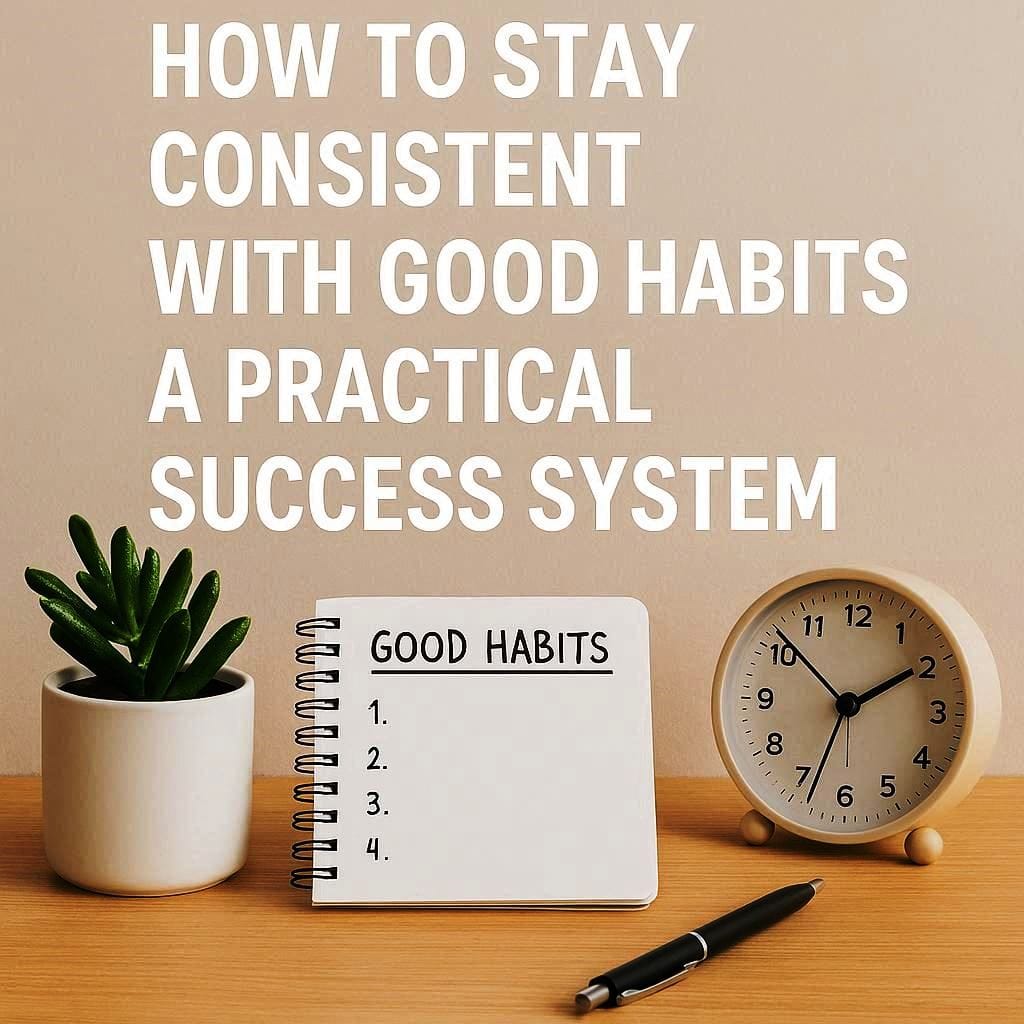
Consistency is the secret ingredient that turns good intentions into lasting results. Whether you’re trying to exercise regularly, read more books or plan your day better, a habit isn’t truly helpful until it sticks. Many people start strong and then falter when life gets busy. The good news is that staying consistent with good habits is less about willpower and more about system design. In this guide you’ll learn why consistency matters, how habits work and a practical step by step system for maintaining them over the long haul.
Why Consistency Matters
Habits shape our everyday behavior. According to researchers at Duke University, they account for roughly 40 percent of our daily actions. When you establish a positive habit, you reduce the mental effort needed to decide what to do next. This frees up cognitive resources for more complex tasks and helps build momentum. Pedro Pinto notes that habits reduce cognitive load and free mental resources for other activities. Because you don’t have to think about performing a habit, consistency provides the stability you need to achieve larger goals.
Consistency also helps fight the motivation myth. People often think they lack motivation when they really lack systems that make habits easy. James Clear, author of Atomic Habits, highlights research showing that willpower ebbs and flows; instead of relying on motivation, you should design habits that are so small they don’t require it. If you can show up every day without thinking about it, the habit becomes automatic.
Understanding Habit Formation and the Habit Loop
Before creating a system for consistency, it’s helpful to understand how habits form. A habit consists of three parts: a cue, a routine and a reward. The cue triggers the behavior, the routine is the action and the reward provides satisfaction or relief. Repeating this loop embeds the behavior in your brain. Over time, the cue automatically triggers the routine, making the habit feel effortless.
Studies suggest that forming a habit takes longer than many people think. A landmark study found that it can take 18 to 254 days to form a new habit, with an average of about 66 days. This means a new habit won’t be automatic after a week or two but daily repetition will make it stronger. Crucially, research also shows that missing a habit once does not affect long‑term progress. Consistency isn’t about perfection; it’s about showing up most of the time and getting back on track when you slip.
Common Barriers to Habit Consistency
Understanding why habits break down helps you design better systems. Common barriers include:
- Starting too big. Many people aim for extreme changes (e.g., “I’ll run five miles every day”) and burn out quickly. Research suggests beginning with incredibly small habits makes success more likely.
- Relying on motivation. Motivation fluctuates, so habits anchored to discipline alone often fail. Designing habits that require little effort keeps you on track even when motivation is low.
- Lack of cues. Habits need clear triggers. Without a cue, you’re more likely to forget or skip the routine.
- Inadequate environment. If your surroundings don’t support your habit for example, exercise equipment is hidden away you’ll face more resistance.
- All or nothing thinking. Believing you must be perfect leads to discouragement. Remember that missing once is okay; it’s missing twice that derails you.
A Practical Success System for Staying Consistent
Here’s a step by step framework to help you stay consistent with good habits. Adapt these steps to your specific habits and lifestyle.
1. Start with Tiny Habits
Begin with a version of your habit so small it feels almost trivial. Instead of promising to meditate for 20 minutes, meditate for one minute. Instead of committing to a 30 minute workout, start with five push‑ups. Tiny habits bypass the need for motivation and reduce the risk of failure. Once the small version feels natural, gradually increase the time or intensity. As James Clear notes, small improvements of one percent add up quickly.
2. Tie Habits to Reliable Cues
Habits need clear triggers. Choose an existing routine or time of day to cue your new behavior. For example:
- After breakfast: Practice a three‑minute meditation.
- After closing your laptop: Do five minutes of stretching.
- When you turn on the coffee maker: Write down your top three tasks for the day.
Time‑based cues (e.g., “every day at 7 am”) or action‑based cues (e.g., “after brushing my teeth”) create a reliable context. Habit researcher BJ Fogg calls this strategy “habit stacking,” where you attach a new habit to an existing one. Identifying and leveraging cues makes habits more automatic.
3. Prepare Your Environment
Your surroundings can either support or sabotage your habit. Arrange your environment to make the desired action easy and the undesired action difficult. For example:
- Place a book on your nightstand to remember reading before bed.
- Put a water bottle on your desk to encourage hydration.
- Keep your running shoes by the door.
- Remove sugary snacks from the pantry and replace them with fruit.
Environmental design works because it reduces friction and uses visual cues to trigger the routine. The easier it is to perform the habit, the more consistent you’ll be.
4. Track Your Progress
Recording your progress gives you a sense of achievement and accountability. Use a simple paper tracker, a calendar, a smartphone app or a habit‑tracking journal. Each time you perform your habit, mark it down. Over time, these marks create a “streak” that you’ll feel motivated to continue. Tracking also helps you notice patterns such as days when you’re more likely to skip and adjust your strategy accordingly.
5. Reward Yourself
The reward element of the habit loop reinforces the behavior. Choose a small, immediate reward for completing your habit. It could be something simple like:
- Enjoying a favorite snack after exercising.
- Listening to a favorite song after finishing your daily planning.
- Checking off a box in your habit tracker and appreciating the progress.
Immediate rewards strengthen the cue routine reward loop. Over time, the intrinsic benefits of the habit (feeling fit, being organized) become their own reward, but small extrinsic rewards help during the early stages.
6. Plan for Slip‑Ups
Consistency doesn’t require perfection. Research indicates that missing a habit once has no measurable impact on long‑term progress. However, missing twice can set a negative trend. Plan for obstacles by asking yourself:
- What events or emotions are most likely to disrupt my habit?
- What is the smallest version of the habit I can do on a busy day? (e.g., one minute of reading instead of ten)
- How will I get back on track after missing a day?
Having a contingency plan ensures you maintain momentum even when life happens. Embrace the mindset of “never miss twice.”
7. Increase Gradually
Once your tiny habit feels automatic, slowly increase its duration or complexity. For example, extend your meditation from one minute to three minutes, then five. Add one extra push‑up each week. Incremental increases keep the habit challenging enough to improve but not so difficult that it becomes intimidating. This approach also builds confidence and a sense of accomplishment.
8. Reinforce Your Identity
People are more consistent when their habits align with their identity. Rather than saying “I have to go to the gym,” tell yourself “I’m the kind of person who exercises daily.” This shift in self‑perception creates a deeper reason to continue. Identity based habits become part of which you are, making inconsistency feel like going against your values.
9. Use Social Accountability
Share your habit goals with a friend, join a group challenge or use an app that connects you with others. Social accountability provides encouragement and a sense of responsibility. Knowing someone else expects you to check in can increase your chances of sticking with the habit. Additionally, joining communities of people with similar goals (such as online forums or local clubs) provides support and advice.
10. Review and Adjust
Regularly review your habits to see what’s working. Every week or month, reflect on your progress:
- Did you stay consistent? If not, why?
- Were your cues reliable? Do you need to adjust the trigger or environment?
- Has the habit become too easy or too hard?
- Are your rewards still motivating?
Use your answers to refine your system. Successful habit maintenance is an ongoing process of observation and improvement.
Example Routines for Staying Consistent
Example 1: Exercise Habit
Goal: Walk and gradually incorporate strength training.
- Tiny habit: Start with five minutes of walking after breakfast.
- Cue: After finishing your morning coffee.
- Environment: Place your walking shoes by the door.
- Track: Check off the habit in a journal or app each day.
- Reward: Enjoy a refreshing smoothie or a favorite podcast while walking.
- Increase gradually: Add one minute to your walk each week and later incorporate bodyweight exercises (e.g., five squats) after the walk.
- Plan for busy days: If you can’t walk outside, walk around your living room or do a one‑minute stretch routine.
Example 2: Reading Habit
Goal: Read more books consistently.
- Tiny habit: Read two pages every night.
- Cue: After brushing your teeth.
- Environment: Keep a book on your pillow or e‑reader on your nightstand.
- Track: Log pages read in a notebook or digital tracker.
- Reward: Allow yourself an extra five minutes of leisure time after reading.
- Increase gradually: When two pages feel easy, read five pages or set a ten‑minute timer.
- Plan for interruptions: If bedtime is hectic, read during your lunch break or listen to an audiobook for a few minutes.
Example 3: Morning Planning Habit
Goal: Organize your day and increase productivity.
- Tiny habit: Write down your top three tasks for the day.
- Cue: Right after you sit at your desk or turn on your computer.
- Environment: Keep a notepad or digital to‑do app open when you start work.
- Track: Use a daily planner or app to cross off completed tasks.
- Reward: Treat yourself to a favorite beverage after planning.
- Increase gradually: Once writing three tasks becomes routine, add a brief review of yesterday’s successes and challenges.
- Plan for disruptions: If you’re travelling or start work late, jot down tasks on your phone and review them on the go.
Conclusion
Consistency is the bridge between intention and achievement. Habits form through a cue routine reward loop and require repeated practice to become automatic. Staying consistent isn’t about being perfect it’s about designing a system that supports your behavior. By starting with tiny habits, using reliable cues, shaping your environment, tracking progress, rewarding yourself, planning for slip‑ups and gradually increasing difficulty, you create a practical success system. Remember, missing once is okay; just avoid missing twice. Over time, your actions will reinforce your identity and lead to lasting change. Stay patient, celebrate small wins and refine your habits as you go.
Key Takeaways
- Habits account for about 40 percent of daily behavior.
- The habit loop consists of a cue, a routine and a reward.
- Forming a habit can take 18 to 254 days, with an average of 66 days.
- Missing a habit once has no measurable impact on long‑term progress.
- Start with tiny habits, and then increase gradually.
- Use reliable cues and environmental design to trigger habits.
- Reward yourself and plan for slip‑ups to maintain momentum.
- Review and adjust your habit system regularly to stay consistent.
Frequently Asked Questions
How long does it take to form a habit?
Research suggests it can take anywhere from 18 to 254 days, with an average of about 66 days, but consistency is more important than hitting a specific number.
What if I miss a day?
Missing a single day won’t derail your progress just get back on track the next day and try not to miss twice in a row.
How many habits should I start with?
Start with one tiny habit. Once that feels automatic, gradually add another small one to avoid feeling overwhelmed.
How can I make a habit easier to stick to?
Make the habit very small at first, tie it to a clear cue (like “after breakfast”), and design your environment so the habit is easy and obvious to do.
Do I need to track my habits?
Tracking your habits helps keep you accountable and motivated by showing your streaks and revealing patterns that may need adjusting.
What should I do on busy days?
Have a “minimum viable version” of your habit such as one minute of stretching so you can stay consistent even when short on time.
How do I reward myself for habits?
Use small, immediate rewards like a favorite snack, a break, or simply checking off a tracker; these reinforce the habit loop.
Can I increase my habit too quickly?
Yes. Increase habit duration or complexity slowly to stay consistent; jumping ahead too fast can lead to burnout.
What if I lose motivation?
Focus on systems, not willpower. Design habits that require little effort and see yourself as the kind of person who practices these habits consistently.
Related Articles
5 Daily Habits of Highly Successful People
How to Build Daily Habits for Success: A Step by Step Guide
30 Day Plan to Build Successful Habits: Easy Daily Routine Checklist
10 Daily Habits of Successful People for Better Focus and Productivity
Daily Routine for Success: What Highly Successful People Do Differently