Meditation isn’t just for monks or people with lots of free time. In an age where schedules are packed and digital notifications fill every moment, learning how to start a meditation practice can feel daunting. Yet research and centuries of lived experience show that the benefits of meditation are accessible to anyone including people who juggle jobs, families and endless to do lists. This article combines practical guidance with evidence‑based insights to show you how to build a sustainable meditation practice even if you feel there is no room in your day.
Understanding Meditation and Its Benefits
1. What meditation is
Meditation is a mind‑body practice that trains your attention and awareness. According to the Mayo Clinic, meditation has been used for thousands of years and originally served to deepen understanding of the sacred. Modern practitioners often meditate to relax and lower stress. During meditation you intentionally focus on a single object such as the breath, a mantra, or an image and allow distracting thoughts to pass without judgment. The goal is not to stop thinking but to cultivate calm and clarity by returning gently to your chosen focus.
2. The science backed benefits
Meditation’s benefits extend far beyond a few minutes of peace. A summary from Mindful.org notes that meditation reduces stress, improves focus, boosts emotional health, deepens self awareness, enhances sleep quality, strengthens immunity and builds mental resilience. Harvard Medical School points out that mindfulness practice can ease depression and anxiety and motivate healthier lifestyle choices, with a study finding that participants who practiced mindfulness for just 10 minutes a day reported nearly 20 % fewer depression symptoms and greater motivation to exercise and sleep better. The Mayo Clinic lists tangible physical and emotional benefits such as lower resting heart rate and blood pressure, better sleep and increased patience. Mindfulness also trains the brain to stay present; neuroscientist Amishi Jha has shown that 12 minutes of daily meditation improves the ability to pay attention.
Why busy people especially need meditation
Busyness doesn’t shield you from stress it multiplies it. Constant tasks and multitasking raise cortisol, a stress hormone linked to anxiety and health problems. Therapist Justin Sunseri notes that meditation lowers cortisol, which may decrease the risk of stress related illnesses. Entrepreneurs and professionals often experience chronic stress and find their happiness tied to achievements; meditation teaches them to be “calmly active and actively calm” and to anchor themselves in the present. Even a few minutes of practice can make a significant difference; cardiologist Dean Ornish observes that consistency matters more than duration “even a minute of meditation each day can make a meaningful difference”.
Common Barriers to Starting a Meditation Practice
1. Time constraints and prioritization
Busy schedules create the perception that there’s no time to meditate. An analysis of barriers among physicians found that the most common obstacles were time constraints (50.9 %) and prioritizing other tasks (51.5 %), while non meditators often cited low perceived benefits and lack of knowledge. Patients often report similar barriers: they struggle to find time, are unfamiliar with the practice or feel emotional discomfort when they try. If high‑achieving doctors find it challenging to make time, it’s no surprise that working parents, students and entrepreneurs face the same issue.
2. Misunderstandings about meditation
Many people believe that meditation requires hours of sitting in silence or an empty mind. This misconception discourages beginners. In reality, you do not need long sessions to experience benefits. The Ananda article notes that you can start with as little as five or ten minutes each day, and once daily meditation becomes a habit you can gradually lengthen your sessions. Harvard’s mindfulness guide emphasizes that setting a short time limit (5 to 10 minutes) is perfectly acceptable for beginners. Other misconceptions include thinking meditation is “woo‑woo” or that it requires special equipment; both are false. You need only a few minutes, a comfortable posture and an open attitude.
3. Difficulty focusing and staying motivated
New meditators often discover that their minds wander quickly. Sharon Salzberg recounts that her own attention wandered after just one breath. This is normal. The skill of bringing your attention back is precisely what meditation develops. Lack of motivation can also derail practice. Without immediate results, people may quit. Research on meditation barriers among physicians shows that none and past meditators report low perceived benefits. Recognizing incremental progress such as feeling slightly calmer or sleeping better helps sustain motivation.
Mindset: Consistency Over Duration
1. The power of even one minute
When you feel too busy to meditate, ask yourself, “Do I have just one minute?” Dean Ornish suggests this mini‑commitment; if you cannot spare one minute, it’s a sign that your life is out of balance, and meditating becomes essential. Once you sit down, you’ll often meditate longer than planned. This simple reframing shifts the focus from duration to consistency. In a Harvard Health article, Dr. James Stahl emphasizes that 10 to 15 minutes daily is enough and that consistency is key. A later study from Harvard even found that 10 minutes of daily mindfulness through a mobile app significantly reduced depression and anxiety.
2. Small steps build lasting habits
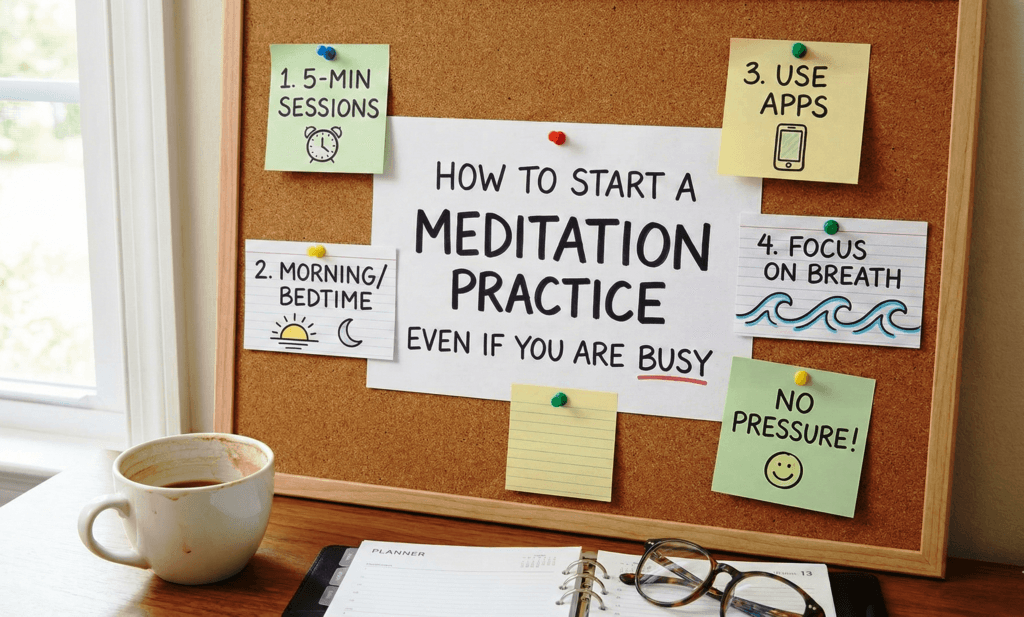
Begin with manageable sessions five minutes in the morning or evening. Once daily meditation becomes a habit, gradually increase to 15 to 20 minutes or add a second session. Mindfulness expert Bhante Gunaratana explains that habits form by consistent repetition. Reminders, such as pairing meditation with an existing habit (after brushing your teeth or before your first coffee), can make it easier to remember. Patience is crucial; like training a muscle, meditation takes time to strengthen your attention.
Step By Step Guide to Starting Your Practice
Below is a practical roadmap to start meditating even with a hectic schedule. Feel free to adapt these steps to suit your circumstances.
1. Set Your Intention
Decide why you want to meditate stress relief, better focus, deeper self‑awareness or improved spiritual connection. Knowing your purpose fuels motivation and helps you prioritize practice, even when you’re busy.
2. Choose a simple technique
These are the simple technique to start meditating when you are busy.
2.1. Breath‑focused meditation
Sit comfortably, set a timer for 5 to 10 minutes and focus on your natural breathing. Notice the sensation of air entering and leaving your nostrils or the rise and fall of your abdomen. When your mind wanders, gently bring your attention back to the breath. This basic technique is widely recommended for beginners.
2.2. Guided meditation
Use a meditation app or recording to lead you through the practice. Guided meditations often include relaxation, visualization and prompts to refocus. Harvard Health suggests downloading guided meditations or podcasts for 15 minute sessions and keeping them on your phone for easy access. Apps like Headspace, Calm, Insight Timer and the Healthy Minds Program offer short guided sessions that fit into busy schedules.
2.3. Mantra meditation
Repeat a calming word or phrase (a “mantra”) to maintain focus. The Mayo Clinic notes that mantra meditation is one of several types that share the goal of gaining inner peace. Choose a word like “peace,” “calm” and repeat it silently with each breath.
2.4. Body scan
Gently bring attention to each part of your body from head to toe, noticing sensations without judgment. Harvard’s guide recommends doing a body scan for 10 to 15 minutes as a midday break to release tension.
3. Create a conducive environment
If you’re a beginner, a quiet place helps reduce distractions. Sit in a chair, on the floor or even lie down; the Mayo Clinic emphasizes that you can meditate in various positions sitting, lying down, walking or even during other activities. Use cushions or a folded blanket for comfort. As you get more experienced, you can meditate anywhere during a commute, in a line or at work.
4. Plan your session time
Morning is often ideal because your mind is less cluttered, and you’re less likely to be interrupted. If mornings are impossible, meditate during lunch, after work or before bed. Harvard Health advises aiming for 10 to 15 minutes of mindfulness a day but acknowledges that even three or four sessions per week can be beneficial. Some people prefer to meditate twice daily morning and evening to bookend their day.
5. Use reminders and triggers
Habits form more easily when anchored to existing routines. Attach your meditation to triggers like brewing coffee, brushing your teeth, finishing lunch or arriving at your office. Setting phone reminders or calendar events also helps. If your schedule varies, carry ear buds and squeeze in five minutes whenever you have down time while waiting for a meeting to start or sitting in your car.
6. Start small, then gradually increase
Initial sessions may feel restless; that’s normal. Set a modest goal meditate for five minutes daily for one week. The following week, add another minute. Over time, work up to 10 to 20 minutes. People who practice mindfulness regularly at least three or four times a week experience a 30 % reduction in stress during their commute.
7. Embrace a forgiving attitude
When your mind wanders, simply acknowledge the distraction and return to your focus. Sharon Salzberg emphasizes kindness toward yourself; don’t judge or get frustrated. Each time you return to the breath, you strengthen your attention muscle. At the end of each session, pause for gratitude—notice how you feel and appreciate the time you’ve taken. Cultivating kindness helps maintain motivation, especially when you’re busy or stressed.
Integrating Meditation into a Busy Schedule
1. Micro mindfulness: tiny practices throughout the day
You don’t need long, uninterrupted blocks of time; micro‑mindfulness practices of one or two minutes can improve mood and focus. Take 30 seconds to focus on your breath before a meeting or meeting a client. Do a quick body scan while waiting for the kettle to boil. These micro breaks have cumulative benefits, gradually training your brain to switch from automatic pilot to present‑moment awareness. A study cited in the Journal of Occupational Health Psychology found that even short bursts of mindfulness can improve mood and focus.
2. Mindful transitions and daily tasks
Integrate mindfulness into routine activities such as driving, commuting, washing dishes or eating. Pay attention to the sights, sounds, smells and sensations involved. People who practiced mindfulness during their commute experienced a 30 % reduction in stress. When eating, savior the taste and texture of your food; mindful eating can reduce stress and improve digestion. These practices turn otherwise mundane moments into opportunities for awareness.
3. Morning rituals
Starting your day with mindfulness sets a positive tone for the rest of the day. Dedicate five minutes each morning to deep breaths, meditation or affirmations. Research has shown that morning mindfulness practices enhance mood and focus throughout the day. You can combine meditation with gentle movement like a sun salutation or stretching to wake up your body and mind.
4. Mindfulness apps and digital support
Technology can be a friend to busy meditators. Apps like Headspace, Calm, Insight Timer, Healthy Minds Program and UCLA’s Mindful Awareness Research Center provide guided meditations ranging from one minute to half an hour. Harvard Health notes that guided meditations on apps or podcasts make it easy to relax at the end of your day or check in at midday. Set app notifications to remind you to take short mindfulness breaks; a study published in The Lancet Psychiatry found that using mindfulness apps for just 10 minutes a day significantly reduced stress and anxiety.
5. Mindful listening and communication
Bring mindfulness into conversations by giving full attention to the person speaking. Resist planning your response or letting your mind wander. Professionals who practice mindful listening report better communication outcomes and reduced workplace conflict. During meetings, pause briefly before replying to stay present and choose your words thoughtfully.
6. Scheduled mindful breaks
Rather than working for hours without rest, schedule regular mindful breaks. Take a five minute walk, practice deep breathing or stretch between tasks. Workers who took mindful breaks reported higher energy and focus. Set a timer every 90 minutes to remind yourself to stand, breathe and reset your mind. These short pauses prevent mental fatigue and improve productivity.
7. Evening reflection and gratitude
End your day with a brief reflection. Think about three things you’re grateful for; journaling them can shift your mind toward positivity and relaxation. A study in the Journal of Psychosomatic Research found that ending the day with gratitude‑based mindfulness practices improved sleep and lowered stress. This nightly ritual encourages restful sleep and a sense of closure.
Tips for Overcoming Common Challenges
1. When you “don’t have time”
- Use mini sessions: If a 10 minute session feels impossible, meditate for one minute whenever you can. Dean Ornish suggests asking yourself whether you have just one minute to meditate; if not, it’s a sign to prioritize balance.
- Combine with existing tasks: Meditate during your commute, while waiting in line or between emails. Use micro‑mindfulness and habit stacking.
- Prioritize your well being: Recognize that meditation amplifies productivity, creativity and mental clarity. Skipping meditation when busy can backfire; the busiest times are when you need calm the most.
2. When your mind won’t stop
- Accept mind wandering: Everyone’s mind wanders. Gently bring attention back without judgement.
- Use an anchor: Focus on breath, mantra, sound or bodily sensation. If the breath feels boring, experiment with a different anchor (e.g., ambient sounds or the sensation in your hands).
- Try movement: Moving meditations like walking, tai chi or yoga can help if sitting still feels uncomfortable.
3. When you lack motivation
- Track progress: Keep a meditation journal noting how you feel before and after sessions. Recognizing subtle improvements sleep quality, patience, focus and reinforce the habits.
- Join a community: Enlist a friend, family member or colleague as a meditation buddy. Attend local or online meditation classes or join app based communities.
- Explore different styles: If breath meditation doesn’t resonate, experiment with mantra, loving‑kindness, body scans or guided visualizations. The Mayo Clinic lists several types guided, mantra, mindfulness, qigong, tai chi and yoga each sharing the goal of inner peace.
4. When emotions arise
Meditation can surface feelings you’ve suppressed. If sadness, anxiety or irritation emerges, acknowledge the emotion without pushing it away. Focus on your breath, and let the feeling pass naturally. If you have a history of trauma or mental health conditions, consult a healthcare professional; the Mayo Clinic advises discussing meditation’s pros and cons with your provider, as it may worsen certain mental health symptoms.
Exploring Different Meditation Paths
To keep your practice interesting, explore various forms of meditation:
- Mindfulness meditation: Focus on the present moment with openness, often using the breath as an anchor. This style is widely taught and backed by research.
- Mantra meditation: Repeat a calming word or phrase to still the mind. Mantras can be traditional (e.g., Sanskrit) or personal (e.g., “let go”).
- Guided imagery/visualization: Use mental images of places or experiences to relax. This technique engages the senses and often uses recorded guides.
- Movement‑based practices: Qigong, tai chi and yoga combine movement, breath and focus. They are especially suitable if sitting still is challenging.
- Body scan and progressive relaxation: Sequentially bring attention to body parts, releasing tension.
- Loving‑kindness (metta): Cultivate compassion by silently sending well‑wishes to yourself and others. This practice can enhance emotional well‑being and empathy.
You can also blend practices start with a few gentle yoga stretches, transition into breath meditation and finish with gratitude or loving‑kindness.
Beyond the Cushion: Living Mindfully
Meditation is not confined to your sitting practice. An effective meditation habit spills into everyday life.
- Be present in everyday tasks: Pay full attention while washing dishes, driving or walking. Use your senses to experience colors, sounds and textures.
- Respond rather than react: When stressed or angry, pause for a breath before speaking or acting. Mindful pauses reduce impulsivity and improve relationships.
- Focus on one task at a time: Multitasking fragments attention. Prioritize tasks and give them your full focus. Mindfulness improves productivity and clarity.
- Practice gratitude and compassion: Acknowledge positive moments and be kind to yourself and others. Gratitude journaling at night improves sleep and lowers stress.
The more you cultivate awareness outside of formal meditation, the more natural meditation will feel. Mindfulness becomes a way of living rather than just an activity.
Conclusion
Starting a meditation practice when you’re busy may seem impossible, but evidence and experience show that small, consistent steps make a powerful difference. Meditation reduces stress, improves focus, enhances emotional wellbeing and strengthens resilience. The most common barrier lack of time can be overcome with micro mindfulness, habit stacking and realistic expectations. Even one minute of meditation daily builds a habit, while 10 to 15 minutes consistently can transform your outlook and health.
You don’t need to wait for the perfect moment or an empty schedule. Start now. Find one minute today to close your eyes, breathe and anchor yourself in the present. Tomorrow, try two minutes. Over time, your meditation practice will become a refuge amid busyness a source of calm and clarity that enhances every aspect of your life.
Frequently Asked Questions
How do I start meditating if I have no time?
Start with 1 to 3 minutes a day. Attach it to an existing habit like morning tea, brushing your teeth, or sitting at your desk before work.
How long should beginners meditate each day?
Aim for 5 to 10 minutes. Consistency matters more than duration, especially in the first month.
Is 5 minutes of meditation actually enough?
Yes. Short daily sessions build the habit and can still reduce stress and improve focus over time.
What is the easiest meditation for busy beginners?
Breathe awareness. Sit comfortably, inhale slowly, exhale slowly, and gently return your attention to the breath when your mind wanders.
Do I need a quiet room to meditate?
No. You can meditate at your desk, in your car before entering work, or even while walking. The goal is attention, not perfect silence.
What is micro meditation?
Very short mindfulness breaks, usually 30 to 90 seconds. Examples include three deep breaths, a quick body scan, or noticing your senses between tasks.
What time of day is best for meditation?
Morning is often easiest for consistency, but the best time is the time you will actually use daily.
What if my mind keeps wandering?
That is normal. Each time you notice and return your focus, you are training attention. That returning is the practice.
Can I meditate lying down?
Yes, especially if you are tired or have discomfort sitting. Just be aware you may fall asleep, which is fine for relaxation focused sessions.
Are guided meditations good for busy people?
Sure. They reduce decision fatigue and help you stay on track. Choose short sessions, 5 to 10 minutes.
How long does it take to build a meditation habit?
Most people notice progress within 2 to 4 weeks of regular practice. Start small and keep it simple.
What are common mistakes beginners make?
Trying to meditate too long too soon, expecting a silent mind, and quitting after a few distracted sessions.