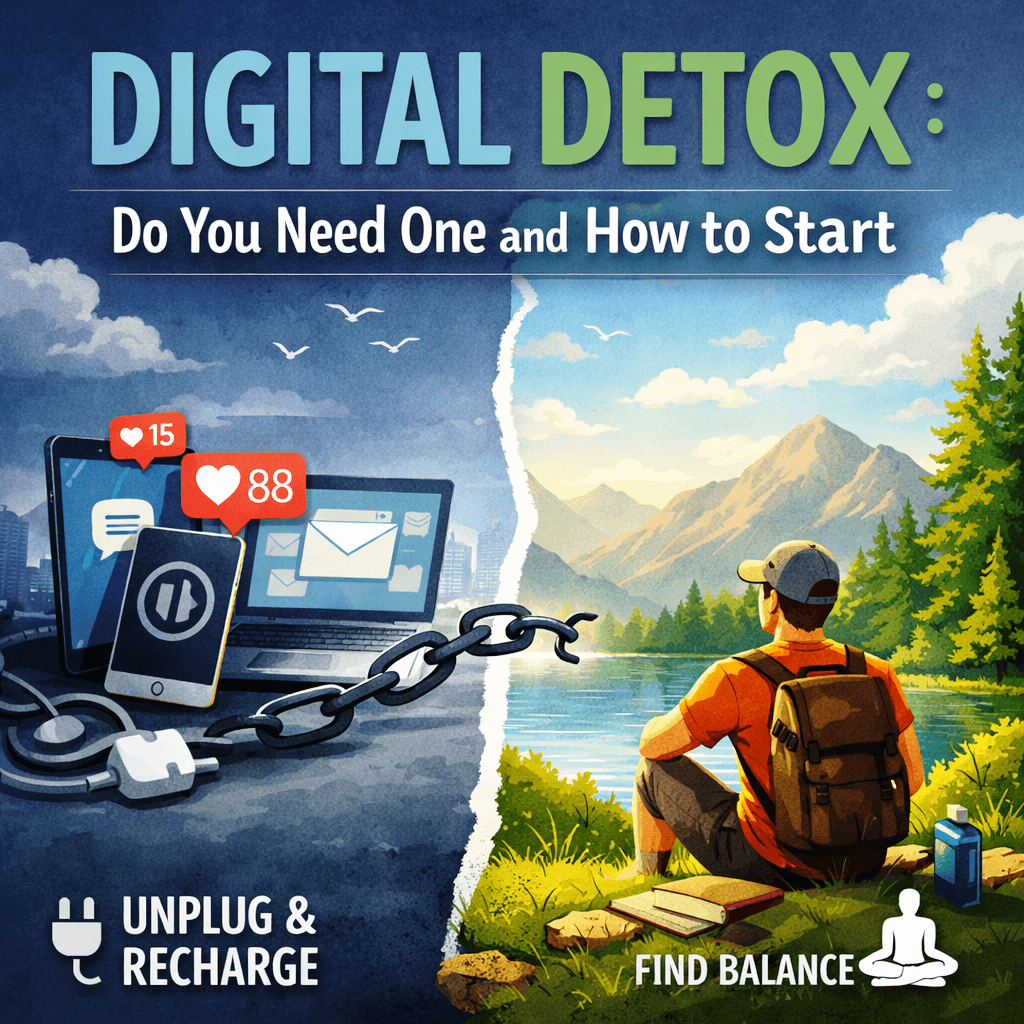
In our tech-saturated world, a digital detox intentionally disconnecting from screens has become an important wellness strategy. On average, people now spend over seven hours a day staring at screens. This constant connectivity can raise anxiety, disrupt sleep, and even shorten attention spans. Nearly one in five adults reports technology use as a major stressor. Even a short break can help: in one study, participants who cut their smartphone use by about half reported meaningfully less stress and anxiety, and about 20 extra minutes of sleep per night. Researchers note that you don’t have to quit devices entirely to see benefits even moderate screen time reduction can boost well-being. With mental health and technology so intertwined, learning how to unplug has never been more relevant. A digital detox doesn’t mean going off-grid forever; it means taking control of your tech habits to feel better mentally and physically.
Signs You Might Need a Digital Detox
Watch for warning signs that screen time is taking over your life. You may need a break if you notice one or more of these red flags:
- Chronic distraction and poor focus: You often start a task only to be sidetracked by notifications, and you struggle to concentrate on things you used to enjoy.
- Bedtime scrolling: You habitually scroll through social media or news feeds for long periods before sleep. (This habit can disrupt your sleep cycle and leave you feeling groggy.)
- Choosing devices over people: You pay more attention to taking photos or checking your phone than enjoying moments with friends and family. Real-life connections are suffering as a result.
- Anxiety without your device: You feel nervous, bored, or irritable when you haven’t checked your phone in a while a phenomenon sometimes called “nomophobia”. If you panic when your phone is out of reach, that’s a clear signal you’re overly attached.
- Life is suffering: Your smartphone use is affecting daily life perhaps you’re losing sleep, your work or grades are slipping, or you’re neglecting hobbies and social outings in favor of screen time.
If any of these fit you, screen time reduction might be in order. People who have tried unplugging report feeling more focused, energized, and balanced afterward.
Effects of Excessive Screen Time on Your Health
1. Psychological Effects
Heavy tech use takes a toll on mental health. Studies link high screen time with elevated stress, anxiety, and depression. Constant scrolling and social media comparisons can make worries worse. In fact, large reviews find that people who spend a lot of time on social media tend to feel more anxious, lonely, and unhappy. One clinical review points out that cutting back on phone and social media use often reduces depressive symptoms.
In extreme cases, young people who use devices more than five hours a day were found to have a 70% higher likelihood of suicidal thoughts than peers with low use. Conversely, even a brief digital detox can brighten your mood: one experiment found that people felt noticeably less anxious and stressed after two weeks of reduced phone use. Unplugging also improves attention; participants in that study could focus longer after the detox, effectively “turning back the clock” on attention span decline. In short, too much screen time can leave you feeling mentally foggy, anxious, and unsatisfied, whereas unplugging can quickly boost your mood and mental clarity.
2. Physical Effects
Your body pays the price too. Prolonged screen use often causes computer vision syndrome eye strain, dry eyes, blurred vision, and headaches. Keeping your head down to look at devices leads to “text neck,” causing neck, shoulder and back pain. Blue light from screens interferes with melatonin production and can make it hard to fall asleep, leaving you feeling tired the next day. More screen time usually means less exercise: by burying ourselves in devices we often skip walks, sports, or other activities that benefit our health.
Over time, this sedentary lifestyle can contribute to weight gain, poor posture, and chronic pain. By contrast, studies note that reducing screen time can improve sleep and physical well-being for example, people in a two-week detox slept about 20 minutes longer on average. When you cut down on screens, you make room for movement, better sleep habits, and time outdoors, all of which pay off in stronger physical health.
How to Start a Digital Detox (Step by Step)
Starting a digital detox may seem daunting, but small intentional steps can help you cut back and regain balance. Here’s a clear plan:
1. Take Stock and Set Goals
First, monitor your current habits. Check your phone’s screen-time statistics or use a tracking app to see where your time goes. Notice patterns do you reach for your phone first thing in the morning? Do you scroll mindlessly at lunch or during breaks? Based on this, set specific, realistic goals. For example, decide to cut your daily social media use in half, or restrict it to certain times of day. Kushlev’s research suggests starting by observing and then planning a modest reduction (even partial changes can have big impact).
2. Create Boundaries
Establish clear tech-free zones and hours. Make bedrooms and dinner tables screen-free, and avoid devices at least one hour before bed. Change your environment to help you unplug: charge your phone outside the bedroom, or turn it off/airplane-mode at night. Use built-in tools: enable app timers or do-not-disturb modes so you can’t endlessly scroll. For example, add timers on social apps and consider deleting or logging out of the ones you use impulsively. These measures remove temptations and help cement new habits.
3. Replace Screens with Offline Activities
Whenever you feel the urge to check your phone, do something offline instead. Carry a book or e-reader and read a physical book at your coffee break. Go for a walk, cook, practice a hobby, or do a quick meditation. Hands-on activities like painting, cooking or gardening have been shown to improve mood and reduce anxiety more than passive screen time. Meeting a friend face-to-face rather than texting can lift your spirits. Even simple swaps using a paper journal or listening to music instead of watching videos make a difference. These new routines will gradually displace your digital habits.
4. Use Tools to Track and Adjust
Be gentle with yourself perfection isn’t required. Start with one tech-free evening or a day without social media and see how it feels. Keep track of your progress: you might notice you sleep better or feel calmer. If you slip up (it happens!), don’t get discouraged. Studies show that even partial success is valuable in one experiment, 91% of participants reported improvement in mood or focus from simply cutting back, even if they didn’t fully quit their devices. Adjust your goals as needed. Over time, tiny changes (like setting weekly limits or regularly charging the phone in another room) will become second nature, leading to lasting improvements in concentration and well-being.
Above all, remember a digital detox is personal there’s no single “right” way to do it. If you find one approach hard (for example, if you worry about missing out), try a milder version or enlist a friend for support. Even small steps like turning off all notifications or using an analog alarm clock can help start the habit. The goal is steady progress in reducing smartphone use, not instant perfection.
Tips for Maintaining a Healthy Tech-Life Balance
Once you’ve kick-started a detox, keep the momentum going with these habits:
1. Regular Unplug Periods
Schedule consistent screen breaks. For instance, pledge to have one phone-free evening each week, a no-screen Sunday, or simply declare tech-free zones (no devices at the dinner table or in bed). These rituals make unplugging routine rather than a one-time event.
2. Curate Your Digital Environment
Audit your apps and notifications regularly. Delete apps that don’t serve a purpose, and turn off non-essential alerts. Fewer pings and icons mean fewer distractions. Organize what’s left in folders or fewer home screens so you see less clutter. Think of your phone as a tool, not a toy.
3. Nighttime Routine
Keep devices out of the bedroom and avoid screens before sleep. Use a traditional alarm clock instead of your phone, and make the last hour before bed a “digital sunset” read a book or practice relaxation instead. Better sleep hygiene is one of the biggest payoffs of a detox.
4. Be Intentional
Before you reach for your device, ask “Why am I doing this?” If it’s habit rather than need, pause. Cultivate moments of genuine presence notice when you feel the urge to check your phone out of boredom or anxiety. Turning these moments into chances for mindfulness (deep breaths, stretching, or simply observing the world around you) breaks the automatic scroll cycle. Each time you choose purpose over impulse, you reclaim more control over your time.
5. Nurture Real Connections
Use your newfound free time to strengthen face-to-face relationships. Have coffee with a friend instead of texting them, or play a board game with family instead of watching videos. Ironically, cutting back on digital “social” time encourages deeper real-world bonds. Make social plans, join clubs, or call someone human contact boosts well-being in ways that likes and comments cannot match.
6. Engage in Offline Hobbies
Keep up activities that don’t involve screens: sports, music, crafts, cooking, gardening, or journaling. These give you a sense of mastery and relaxation. Find what you love or try new interests. Over time, your brain will start craving these offline rewards instead of screen stimulation.
By integrating these tips into daily life, you turn a one-time detox into a long-term tech-life balance strategy. Small, consistent changes add up you’ll likely find you naturally check your phone less and feel more in control of your day.
Conclusion
The evidence is clear that excessive screen use can harm your mental and physical health. Fortunately, you don’t need drastic measures to reclaim well-being. As studies show, even screen time reduction by modest amounts can lead to noticeable improvements in mood, sleep, and attention. Every small step toward unplugging is an investment in your mental health, relationships and focus. Whether it’s setting a boundary tonight or planning a weekend detox, you have the power to break free from digital overload. Ready to unplug? Start with one simple change perhaps disabling notifications for a day or taking a short walk without your phone and notice how you feel. Reclaiming your time and attention will help you live more fully in the present. Your mind and body will thank you for every screen-free moment.
Frequently Asked Questions
What is a digital detox?
A digital detox is a planned break from screens (phone, social media, email, streaming, gaming) to reduce digital overload and rebuild healthier habits. It can be a few hours, a weekend, or a longer period whatever is realistic for you.
Will a digital detox reduce anxiety?
It can help, especially if your anxiety is fueled by constant alerts, doom scrolling, or comparison on social media. Many people report feeling calmer and more present after reducing phone use.
Can digital detox improve sleep?
Yes. Screens (and especially nighttime scrolling) can delay sleep. A practical rule is no screens 60 minutes before bed, plus charging your phone outside the bedroom.
What if I feel bored without my phone?
Boredom is normal at first your brain is adjusting. Treat boredom as a sign your mind is “coming down” from constant stimulation. Keep a short list of offline alternatives ready (walk, tea break, stretching, reading).
Does digital detox help with productivity?
Often, yes. Reducing interruptions can improve focus and help you finish tasks faster especially if you eliminate constant checking and multitasking.
What’s the difference between a digital detox and reducing screen time?
A digital detox is a deliberate reset period. Reducing screen time is the long-term habit you build afterward. Detox is the “reset,” balance is the “lifestyle.”
What should I do instead of scrolling?
Replace screen time with activities that “reset” your brain:
- Walking or light exercise
- Reading (paper book is best)
- Journaling
- Cooking, cleaning, or organizing
- Prayer/meditation or breathing exercises
- Meeting a friend in person
What are the best rules for a successful digital detox?
Try these practical boundaries:
- No phone during meals
- No phone in the bathroom
- No social media before noon
- One screen-free hour daily
- One screen-free half-day weekly
What if my job requires me to be online?
You can still detox strategically:
- Set “office hours” for email/Slack
- Use Do Not Disturb during deep work
- Batch-check messages (e.g., 3 times/day)
- Separate work and personal apps (or use a second profile/device if possible)