Success rarely happens overnight. In most cases, it’s the result of small, repeatable actions that compound over time. A daily routine for success is a structured way to align your actions with your goals. Highly successful people are intentional about their routines; they know that what they do each day shapes their results weeks, months, and even years down the line. They don’t leave their schedule to chance. Instead, they craft a simple system that helps them stay focused, healthy and productive. In this post, you’ll learn why a daily routine matters, discover specific habits that top performers use, and get a step‑by‑step plan to build your own routine.
Why a Daily Routine for Success Matters
Researchers have found that people with strong self‑control aren’t constantly battling temptation; instead, they build supportive routines so they have fewer difficult choices to makeWhen your day follows a predictable rhythm, you reduce decision fatigue and free up mental energy for deeper work. Here’s why a daily routine can make such a big difference:
- Consistency: Repeating the same core actions each day reinforces discipline and makes success feel achievable.
- Clarity: Knowing what comes next in your day reduces stress and confusion. You aren’t guessing what to do.
- Energy management: Scheduled breaks, exercise and sleep keep your energy levels steady, which helps maintain performance.
- Long‑term perspective: Regular reflection helps you learn from successes and setbacks, keeping you on track over the long term.
A well designed daily routine for success aligns your habits with your priorities, making it easier to focus on what really matters instead of reacting to distractions.
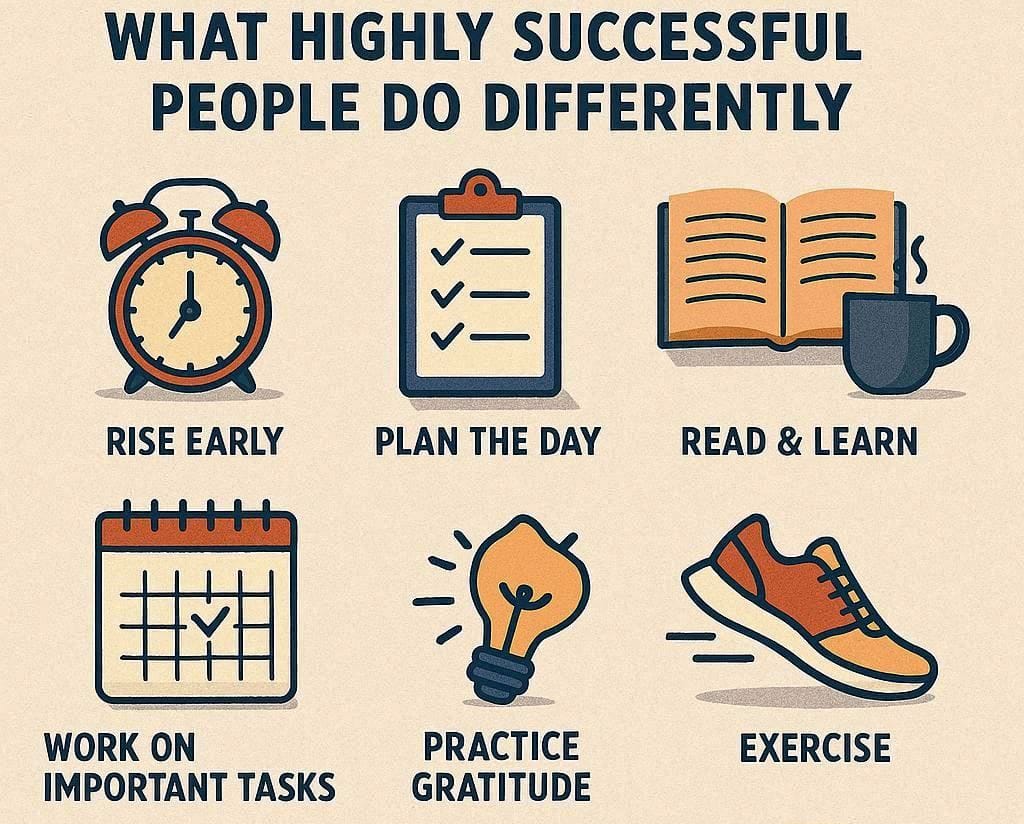
What Highly Successful People Do Differently
Success isn’t just about working hard. It’s also about working smart. Below are key habits that many high achievers share. You can adapt these ideas to your own life, keeping the ones that fit and adjusting the rest.
1. They Start the Day with Intention and a Consistent Wake‑Up Time
Successful people rarely roll out of bed and let the day dictate their mood. They set a tone from the moment they wake up. One major factor is simply waking up at the same time every day. A consistent wake‑up time anchors your body’s internal clock. According to Cottonwood Psychology’s article on habits, keeping your wake‑up time steady helps you feel more alert in the morning and calmer at night. On tough mornings, a fixed wake‑up time saves you from debating whether to hit snooze. Pick a time that realistically fits your life it doesn’t have to be 5 a.m. Consistency matters more than earliness.
After waking, highly successful people set a deliberate intention for the day. Tim Ferriss, author of The 4 Hour Workweek, starts his mornings with a quick win such as making his bed or meditating, which creates a sense of control and accomplishment that carries through the day. You can follow this by writing down one sentence: “Today, I will focus on ______.” This simple act shapes your mental state for the hours ahead.
2. They Protect a Simple Morning Routine
You don’t need an elaborate ritual. In fact, sticking to a short, predictable sequence helps you start the day calmly, even on bad days. Cottonwood Psychology suggests performing just three small actions in the same order for example, drink a glass of water, make your bed, and look at your calendar. These steps tell your brain the day has started, and they reduce the number of decisions you need to make early on. Such routines lower decision fatigue and conserve energy for more important tasks.
3. They Move Their Body and Prioritize Health
Top performers understand that physical health fuels mental performance. The Forbes article notes that successful individuals prioritize exercise, healthy eating and sleep because they know their energy levels directly impact their work. Sara Blakely, founder of Spanx, fits exercise into her routine through yoga, running or short home workouts. You don’t need to train like an athlete. A five minute stretch, a walk around the block or a few squats while the coffee brews can lift your mood and maintain your energy. Think of movement as an investment in your day’s productivity.
Nutrition and sleep also matter. Consistent sleep patterns help your body recover and keep your mind sharp. When you eat balanced meals and stay hydrated, your energy is stable. Make health a non‑negotiable part of your routine so you can enjoy the benefits of your success instead of burning out too early.
4. They Do One Thing for Their Future Self Every Day
Highly successful people often think in terms of “future me.” Each day, they do one small thing that their future self will appreciate laying out clothes for the next day, prepping a meal or writing a difficult email before it becomes urgent. This habit is powerful, especially on hard days; taking even a tiny step for tomorrow gives you a sense of control. Ask yourself each evening: “What is one small thing I can do that tomorrow’s me will thank me for?” Then do it, and let it be enough.
5. They Block Time for Deep Work
Deep work focused, uninterrupted time on important projects drives real progress. Arianna Huffington schedules blocks of time to focus on her most important tasks and avoids meetings and emails during these periods. Cottonwood Psychology recommends picking a 45 to 90 minute window when you have the most energy and guarding it like an appointment. Turn off notifications, close extra tabs, and communicate to others that you won’t be available. Even one or two hours of deep work can be more productive than an entire day of multitasking. On difficult days, lower your expectations but still show up for your deep work block even a 20 minute outline can keep your momentum.
6. They Take Real Breaks and Manage Their Energy
Scrolling social media isn’t a true break. Highly successful people take short, real breaks that allow their mind and body to rest. During a real break, you step away from your main task, stretch, walk, or simply look out the window without checking messages. These micro pauses keep your brain from hitting a wall and help you return to work with more clarity. Over time, this habit makes long days feel more balanced.
They also manage energy throughout the day by eating balanced meals, staying hydrated, and paying attention to their body’s signals. Instead of pushing through constant fatigue, they adjust their workload or take small restorative actions. Remember that energy, not time, is your most valuable resource.
7. They Simplify Money and Administrative Decisions
Money stress can drain mental energy. Successful people reduce this burden by keeping financial tasks on a regular schedule. According to Cottonwood Psychology, you might check your accounts at the same time each day or pay bills on a specific day each week. Setting up automatic payments for routine expenses also frees up attention. The goal isn’t perfection; it’s giving money a place in your schedule so it doesn’t intrude unexpectedly. You can apply the same strategy to other administrative chores like email or household tasks: designate a time to handle them, then focus on bigger priorities the rest of the day.
8. They Reflect, Review and Adjust
Instead of charging ahead blindly, successful people pause to reflect. Bill Gates is known for taking “think weeks,” stepping back from daily responsibilities to reflect on his goals and adjust his approach. You don’t need a whole week. A few minutes at the end of each day can be invaluable. Ask yourself three quick questions: What went well today? What was hard? What will I do differently tomorrow? Write down one to three priorities for tomorrow so you start your next day with clarity. This reflection prevents you from repeating mistakes and helps you celebrate small wins. Regularly checking in with yourself keeps your daily routine aligned with your long‑term goals.
Building Your Own Daily Routine for Success
Now that you know what highly successful people do differently, it’s time to create a routine that works for you. Remember, the best routine is the one you can stick to. Here’s a step by step guide:
Step 1: Clarify Your Main Goal
Ask yourself why you want a daily routine for success. Do you want to improve focus, reduce stress, start a business, or improve your grades? Having a clear reason will guide your choices.
Step 2: Choose Three Core Habits
Select the three habits that will have the biggest impact. For example, you might choose:
- Consistent wake‑up time and intention setting.
- Daily deep work block.
- Evening review and plan for tomorrow.
These three habits create a strong backbone. Resist the urge to add more until these feel automatic.
Step 3: Attach New Habits to Existing Activities
Habit researchers recommend coupling a new habit with an existing one to improve consistency. For example:
- After brushing your teeth, spend five minutes writing down your top priority.
- After lunch, start your deep work block.
- After dinner, perform your reflection and prepare for tomorrow.
Step 4: Track Your Progress
Use a simple checklist or habit tracker to note when you complete each habit. Seeing a chain of completed actions helps motivate you to keep going. Aim for consistency over perfection; if you miss a day, simply continue the next day.
Step 5: Adjust and Iterate
Every few weeks, review what’s working and what’s not. If a habit isn’t helping, modify it or replace it with something more useful. Your routine should evolve as your life changes.
Sample Daily Routine for Success
Here’s a flexible example. Adjust times to fit your life, but keep the sequence similar.
1. Morning (60 to 90 Minutes)
- Wake up consistently and hydrate (drink a glass of water).
- Set your intention (write one sentence about your focus for the day).
- Light movement (stretch or walk for 10 to 15 minutes).
- Review your top priorities (choose your three most important tasks).
- Begin your first deep work block (45 to 60 minutes of focused work).
2. Midday (Variable)
- Work in a deep work block (another 45 to 90 minutes).
- Take real breaks (stand, stretch, breathe).
- Eat balanced meals (fuel your body and brain).
- Check email or messages at scheduled times.
- Handle administrative tasks or money decisions at a set time.
3. Evening
- Wrap up work with gratitude note one thing that went well.
- Review and reflect ask what worked, what didn’t, and what to improve tomorrow.
- Do one thing for your future self (prep lunch or set out clothes).
- Wind down with a calming ritual dim lights, read, stretch or have tea.
- Sleep at a consistent time.
7 Day Starter Plan
To build momentum, start small. Here’s a one‑week plan:
Day 1: Set a consistent wake‑up time and avoid hitting snooze.
Day 2: Add a five minute intention session after waking.
Day 3: Introduce a 30 minute deep work block.
Day 4: Commit to at least one five minute movement break.
Day 5: Do one thing for your future self before bed.
Day 6: End the day with a three question reflection.
Day 7: Combine these habits to complete your first “routine loop.”
Continue practicing these habits for two weeks. Once they feel natural, adjust or add new habits as needed.
Customizing Your Routine for Different Lifestyles
1. Students
Morning: Consistent wake‑up time, prepare for classes, 30 minutes of studying a challenging subject.
Midday: Attend lectures, take real breaks, and schedule a deep study block.
Evening: Review lecture notes, prepare materials for the next day, reflect and plan.
2. Working Professionals
Morning: Wake up consistently, set intentions, deep work before meetings.
Midday: Take real breaks, schedule administrative tasks, check emails at designated times.
Evening: Reflect on the day, prepare for tomorrow, wind down with family time or hobbies.
3. Entrepreneurs
Morning: Intention setting, review key metrics, deep work on strategic tasks.
Midday: Communicate with team members, handle finances or decisions.
Evening: Reflect on progress, plan next steps, decompress before sleep.
The key is to align your routine with your most critical tasks and energy patterns.
Common Mistakes to Avoid
- Changing everything at once: Gradual changes stick better.
- Creating an unrealistic schedule: Your routine should fit your actual life.
- Confusing busy with productive: Focus on high‑impact tasks instead of filling your day.
- Quitting after a bad day: Everyone has off days. A routine isn’t about perfection; it’s about resilience.
- Ignoring your health: Skipping sleep or exercise undermines your productivity.
Conclusion
A daily routine for success is not about fitting into someone else’s schedule. It’s about designing a simple, repeatable pattern that aligns with your goals and values. Highly successful people start the day with intention, protect time for deep work, prioritize their health, do small things for their future selves, and reflect regularly. By borrowing these habits and tailoring them to your own life, you can build a routine that reduces stress, improves focus and sustains energy. Remember to start small, stay consistent, and adjust as you grow. Your daily choices, repeated over time, create the success you seek.
Frequently Asked Questions
How long does it take to build a routine?
Research suggests noticeable changes can appear in a couple of weeks, but long‑term habit formation often takes several months. The key is consistency.
Do I need to wake up very early?
No. The success lies in a consistent wake‑up time that suits your lifestyle, not in the exact hour on the clock.
What if my schedule is unpredictable?
Focus on “anchor habits” such as five minutes of planning, one deep work block, and a short evening reflection. Even small structure helps.
Can I change my routine later?
Absolutely, a good routine evolves with your life. Regular reflection helps you adjust and improve.
How do I start a routine if I’m always busy?
Start small. Choose one or two habits that will make the biggest difference, like setting a consistent wake‑up time and creating a short deep‑work block. Attach the new habits to an existing activity, such as planning your day right after breakfast. Track your progress and add more habits slowly.
How long does it take to build a new routine?
Some people feel improvements in a couple of weeks, but building strong habits often takes several months. The important part is being consistent and adjusting your routine when needed. If you miss a day, simply return to the routine the next day and keep going.
What if I can’t follow my routine every day?
Nobody is perfect. Life happens. When you miss a habit, don’t give up on the entire routine. Do the parts you can and return to the full routine as soon as possible. On tough days, even small steps like a five‑minute walk or writing down one priority help you stay on track.
Related Articles
5 Daily Habits of Highly Successful People
How to Build Daily Habits for Success: A Step by Step Guide
30 Day Plan to Build Successful Habits: Easy Daily Routine Checklist
How to Stay Consistent with Good Habits: A Practical Success System
10 Daily Habits of Successful People for Better Focus and Productivity