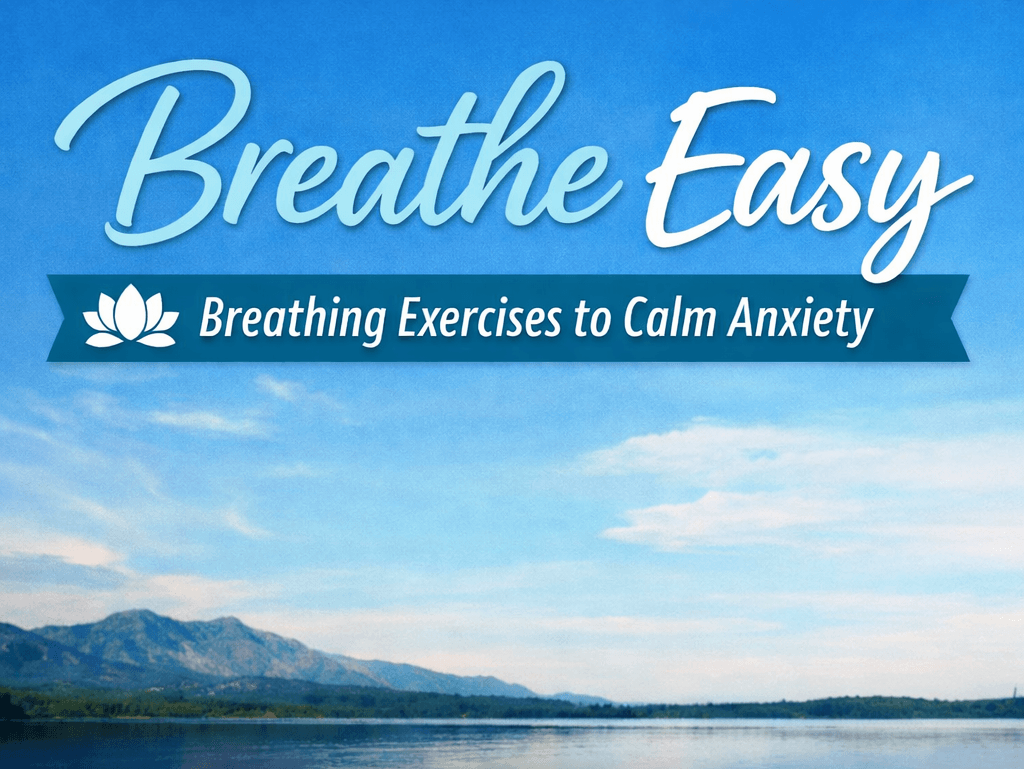
Anxiety can feel like it hijacks your body first tight chest, racing heart, shallow breaths then your thoughts follow. The good news is that breathing is one of the few automatic body functions you can also control on purpose. That makes it a powerful “switch” you can flip when anxiety spikes.
In this guide, you’ll learn practical, beginner-friendly breathing exercises to calm anxiety, plus the science behind why they work and how to turn them into a daily habit. Everything is laid out step-by-step, so you can try one immediately even if you’re feeling overwhelmed right now.
Important note: Breathing exercises are a helpful self-regulation tool, not a substitute for professional care. If you have severe anxiety, frequent panic attacks, breathing disorders (like asthma/COPD), heart conditions, or dizziness with breathwork, check with a clinician before doing long breath holds or intense techniques.
Why breathing helps anxiety
When anxiety rises, your body often shifts into a fight-or-flight state: faster heartbeat, tense muscles, and quick, shallow breathing. That breathing pattern can reinforce the alarm signal your brain notices the physical changes and concludes, “Something must be wrong,” which can amplify anxiety.
Slow, controlled breathing works in the opposite direction by nudging your body toward a rest-and-digest state. In plain language:
- Slower breathing can reduce the feeling of urgency in your body.
- Longer exhales can feel especially calming because exhalation is strongly associated with relaxation.
- Diaphragmatic (belly) breathing can reduce upper-chest “stress breathing,” which often feels tight and panicky.
The goal isn’t “perfect breathing.” The goal is to give your nervous system a steady signal: I’m safe enough to slow down.
The fastest way to choose the right technique
Not every breathing style feels good for every person, especially during anxiety. Use this quick matching guide:
1. No-Hold Calm Breathing (Extended Exhale)
This is one of the safest, simplest techniques and a great place to start especially if breath holds trigger anxiety.
Why it works: A longer exhale can act like a “brake pedal” for your stress response.
How to do it (2 to 5 minutes)
- Sit upright or lie down. Relax your jaw and shoulders.
- Inhale through your nose for a comfortable count of 3 to 4.
- Exhale gently through your mouth (or nose) for a longer count of 5 to 7.
- Repeat for at least 10 to 20 cycles.
Helpful cues
- Keep it smooth, not forced.
- Make the exhale feel like a slow “fogging a mirror” breath (gentle, steady).
Best for: sudden anxiety, tight chest, bedtime worry, anytime you want a “low-effort” calm-down tool.
2. Diaphragmatic Breathing (Belly Breathing)
If anxiety makes you breathe high in the chest, diaphragmatic breathing helps shift the pattern lower into the belly.
Why it works: It encourages a calmer breathing pattern and reduces the “gasping” sensation that can accompany stress breathing.
How to do it (5 minutes)
- Place one hand on your chest and the other on your belly.
- Inhale through your nose slowly and feel the belly hand rise more than the chest hand.
- Exhale gently and feel the belly soften.
- Continue slowly aim for a smooth rhythm.
Beginner tip: Don’t try to “inflate” the belly aggressively. Think soft expansion.
Best for: Chronic stress, physical tension, chest tightness, rebuilding a calmer baseline.
3. Breathing Technique 4-7-8 (Relaxation Breath)
This classic technique uses a slow inhale, a gentle hold, and a long exhale.
Why it works: The structured counts focus attention and the long exhale promotes relaxation. The hold can be calming for some people but uncomfortable for others listen to your body.
How to do it (up to 4 rounds)
- Inhale through your nose for 4.
- Hold the breath gently for 7 (skip the hold if it feels stressful).
- Exhale slowly through your mouth for 8.
- Repeat 2 to 4 rounds, then pause.
Make it easier: Try 4-0-8 (no hold) if breath holding worsens anxiety.
Best for: bedtime anxiety, stress spirals, winding down after stimulation.
4. Box Breathing (4-4-4-4)
Box breathing is structured and mentally anchoring, which can help when anxiety feels scattered.
Why it works: The predictable pattern can steady attention and regulate pace.
How to do it (3 to 5 minutes)
- Inhale through your nose for 4.
- Hold for 4.
- Exhale through your mouth or nose for 4.
- Hold for 4.
- Repeat.
If you’re sensitive to breath holds: Use 4-0-6-0 instead (no holds; longer exhale).
Best for: performance anxiety, pre-meeting nerves, restlessness, focus under stress.
5. Physiological Sigh (a quick “reset” breath)
This is a fast technique often described as a double inhale followed by a long exhale.
Why it works: It can quickly reduce the “air hunger” feeling and downshift intensity.
How to do it (1 to 2 minutes)
- Inhale through your nose.
- At the top, take a second small inhale (a “sip” of air).
- Exhale long and slow through your mouth.
- Repeat 3 to 10 times, then return to normal breathing.
Best for: acute anxiety spikes, feeling “keyed up,” stress surges during the day.
6. Coherent Breathing (Resonant Breathing)
This is a steady, slow rhythm often around 5 to 6 breaths per minute.
Why it works: It trains your system into a consistent calm pace. Over time, it can improve how quickly you recover from stress.
How to do it (5 minutes)
- Inhale for 5 seconds
- Exhale for 5 seconds
- Keep it smooth and quiet
Beginner option: Inhale 4, exhale 6 (slightly longer exhale).
Best for: daily anxiety management, building resilience, preventing spirals.
7. Alternate Nostril Breathing (Nadi Shodhana)
A gentle, traditional technique that can feel grounding and meditative.
Why it works: The ritual and focus can pull attention away from worry loops and into the body.
How to do it (3 to 5 minutes)
- Use your right hand. Rest the index and middle fingers near the bridge of the nose.
- Close the right nostril with the thumb. Inhale through the left nostril.
- Close the left nostril with the ring finger. Exhale through the right nostril.
- Inhale through the right.
- Close the right. Exhale through the left.
- Repeat slowly.
Avoid if: you’re congested or it feels frustrating use coherent breathing instead.
Best for: mental noise, overstimulation, light daily practice.
Common mistakes that can make anxiety worse
Breathing exercises should feel calming or neutral not like a struggle. If you notice dizziness, tingling, or increased panic, you may be over-breathing (hyperventilating) or trying too hard. Watch for these pitfalls:
- Forcing deep breaths (too large, too fast)
- Breathing only through the mouth in a rapid way
- Long breath holds when already anxious
- Trying to “win” at breathing instead of letting it be gentle
Fix: go smaller, slower, softer. Choose a no-hold technique and shorten your session.
A simple 5 minute routine (do this when anxiety hits)
If you want one go-to sequence, use this:
- 60 seconds: Physiological Sigh (3 to 6 cycles)
- 3 minutes: Extended Exhale Breathing (inhale 4, exhale 6 to 8)
- 60 seconds: Diaphragmatic Breathing (soft belly rise, relaxed exhale)
This covers fast relief first, then steady regulation, then a calmer baseline.
How to make breathing exercises a habit (so they work faster)
Breathing exercises are most effective when your nervous system already “knows the pathway.” Practice when you’re calm so it’s available when you’re not. Try this realistic habit plan:
1. The 7-day starter plan
- Day 1 to 2: 3 minutes/day of Extended Exhale
- Day 3 to 4: Add 2 minutes/day of Diaphragmatic Breathing
- Day 5 to 6: Add 2 minutes/day of Coherent Breathing
- Day 7: Test your “panic plan” (the 5 minute routine above) when mildly stressed, not at peak panic
2. Best times to practice
- After waking (sets your baseline)
- After work/school (switch from stress mode)
- Before sleep (reduces nighttime anxiety)
3. When to get extra support
Breathing is a strong self-help tool, but you deserve more support if anxiety is persistent or escalating. Consider professional help if:
- Panic attacks are frequent or intense
- Anxiety interferes with sleep, work, relationships, or appetite
- You avoid normal activities due to fear of anxiety symptoms
- You have chest pain, fainting, or breathing problems that need medical evaluation
If you ever feel at risk of harming yourself, seek immediate local emergency support.
Conclusion
Anxiety often begins in the body. That’s why breathing exercises can be so effective: they meet anxiety where it lives your nervous system, your chest, your heartbeat and gently guide it back toward steady. If you want the simplest place to start today, do this now:
- Inhale through the nose for 4
- Exhale slowly for 6 to 8
- Repeat for 2 minutes
Then try a second technique later diaphragmatic breathing, box breathing, or 4-7-8 and see what your body responds to best. The “best” breathing exercise is the one you’ll actually do consistently.
Frequently Asked Questions
Do breathing exercises really work for anxiety?
They can. Controlled breathing helps regulate the body’s stress response and can reduce physical symptoms like rapid heart rate and tight chest. Many people find it useful as a fast, portable coping tool.
What is the best breathing exercise for anxiety attacks?
For many people, the best starting point is Extended Exhale Breathing or the Physiological Sigh because they avoid long breath holds and work quickly. If you tolerate holds well, 4-7-8 can also be effective.
How long does it take for breathing to calm anxiety?
Some people feel a shift in 30 to 90 seconds with the right technique. Consistent daily practice can improve results over time because your body learns the calming pattern faster.
Can breathing exercises stop a panic attack?
They may reduce intensity and shorten the episode, especially if used early. If focusing on breath makes panic worse, use grounding strategies (name five things you see, feet on the floor) and return to gentle breathing later.
Is it better to breathe through the nose or mouth?
Many people find nose-inhale calming and stabilizing. Exhaling through the mouth can be useful for a slow release (like a sigh). If you’re unsure, start with inhale through the nose and exhale softly through the mouth.