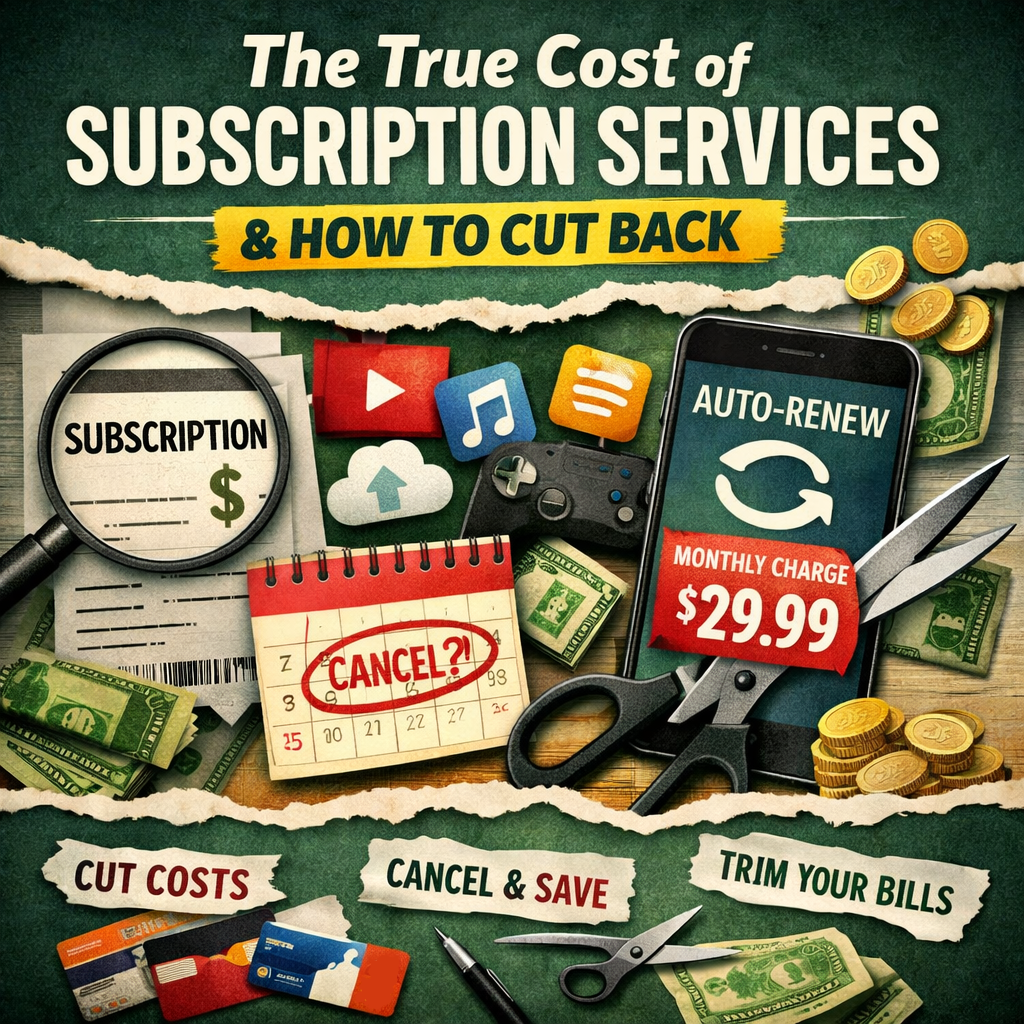
A decade ago you might have subscribed to a newspaper or a gym. Today your bank statement probably contains recurring charges for music, video streaming, cloud storage, productivity software, fitness apps, meal kits, grocery deliveries, and more. The subscription model has become the dominant way companies monetize digital and physical services because it produces predictable recurring revenue. Analysts estimate that the global subscription economy has grown nearly 600 % over the past decade and is on track to reach around US$1.5 trillion by 2025. Many consumers appreciate the convenience and predictable costs; in fact 73 % of subscribers prefer subscriptions because they offer predictable monthly bills. However, the proliferation of subscriptions has also produced an unexpected phenomenon subscription fatigue as people struggle to keep track of dozens of recurring payments.
The true financial cost: how much are we really spending?
1. Most people underestimate their subscription spending
Surveys consistently show a gap between what consumers think they spend on subscriptions and what they actually spend. In a large C+R Research study, participants were first asked to estimate their monthly spend on subscriptions and then to itemize each subscription. Respondents initially guessed they spent around US$86 per month, but once they broke down their recurring charges their actual average monthly spend was US$219, 2.5 times higher than the estimate. Nearly a third of respondents underestimated their spending by US$100 to 199. The study concluded that 74 % of consumers find it easy to forget about recurring subscription charges and 42 % admitted they had stopped using a subscription but kept paying for it. Automatic renewals contribute to this blindness about 72 % of people set their subscriptions to autopay, which means charges appear without any monthly reminder.
2. Average number and cost of subscriptions
While surveys differ on the exact number of subscriptions people hold, they all indicate that the typical household has several. A Forbes Home survey of 1,000 American streaming users found that 95 % of respondents pay for more than one streaming service and that the average household subscribes to about 2.9 streaming services. People in the Midwest have slightly more subscriptions (3.05), while high income households (over US$150,000) average 3.94 subscriptions. Another survey by Self Financial which considered all types of paid subscriptions found that respondents had 2.8 active subscriptions on average.
The cost of these subscriptions adds up quickly. Forbes reports that Americans spend about US$46 per month (US$552 per year) on streaming subscriptions. When combined with internet costs (about US$65 per month), streaming alone can exceed US$1,330 per year. Self Financial found that across all paid subscriptions (not just streaming) the average monthly cost is US$37. Although this figure is lower than the streaming‑only number from Forbes because it includes low cost subscriptions, it still represents a significant recurring expense. Importantly, half of Self’s respondents said no price increase would be acceptable, and around one third canceled subscriptions due to rising costs or high cost of living.
3. Wasted money on unused subscriptions and free trials
Unused subscriptions are a hidden drain on household budgets. In the Self Financial survey, 54.9 % of respondents admitted they had at least one paid subscription that they didn’t use about 0.8 unused subscriptions per person. These unused memberships collectively cost US$10.57 per month (down from US$32.84 in 2024). Streaming is particularly prone to waste. A Forbes Home report found that 45 % of Americans forgot to cancel a free trial, resulting in unexpected charges. Another survey by CableTV.com revealed that 48 % of Americans have forgotten to cancel a streaming free trial, and many have been charged multiple times. The survey noted that 43.7 % of these consumers felt they overspend on streaming services.
4. Subscription categories beyond streaming
When people hear “subscription,” they often think of Netflix or Spotify, but the subscription economy spans numerous sectors: software (Adobe Creative Cloud, Microsoft 365), gaming passes, music streaming, meal‑kit deliveries, grocery memberships (e.g., Instacart+), gym and fitness apps, digital news, beauty boxes, cloud storage, and even pet food. Research compiled by Marketing LTB suggests that the average consumer holds 5.6 active subscriptions across all categories. This figure aligns with the C+R Research finding that many consumers lose track of how many subscriptions they have. The diversity of services makes it difficult to monitor them all, increasing the risk of overspending.
Why we overspend on subscriptions
1. Convenience and autopay
Subscriptions appeal to our desire for convenience. Services are often priced at “affordable” monthly rates, making them seem insignificant individually. Companies encourage autopay because it reduces friction and improves retention. However, autopay also disconnects consumers from the act of paying. A PYMNTS study cited by Yahoo Finance found that 63 % of consumers use autopay for discretionary spending like streaming services, while only 22 % use autopay for rent and 33 % for utilities. Autopay adoption is higher among financially secure Americans (49.9 %) and lower among people who are “scraping by,” who automate bills only 26 % of the time.
Because payments are automatic, many people never review their monthly statements. Over 70 % of subscribers in the C+R study set all of their payments to auto‑renew, and 74 % said it’s easy to forget about these charges. Subscription services often exploit this inertia by offering free trials that roll into paid plans if not canceled. This design exploits the “set it and forget it” mindset, causing consumers to underestimate their costs.
2. FOMO and endless content
The modern subscription marketplace thrives on fear of missing out (FOMO). Streaming platforms release exclusive shows or movies to attract subscribers, then raise prices after hooking audiences. The Forbes Home survey observed that 44 % of people have subscribed to a streaming service just to watch a particular show or movie. With social media constantly discussing new series, many feel compelled to stay subscribed or risk being left out of cultural conversations.
3. Subscription sprawl and price creep
As more companies adopt subscription models, consumers face “subscription sprawl” a growing number of products and services that require recurring payments. According to the Shortform article summarizing industry research, companies now offer subscription only access to everything from AI tools to meditation apps and groceries. At the same time, providers are raising prices, intensifying fatigue. The Motley Fool’s state of streaming survey found that many Americans are willing to cut services if prices increase, with only 10 % saying they would not cancel any subscription regardless of price. Deloitte’s 2025 Digital Media Trends study reported that 36 % of viewers believe the content isn’t worth the price and that 48 % would cancel their favorite service if prices rose by just US$5.
4. Difficulty canceling
Canceling a subscription is often intentionally difficult. Providers may hide the cancellation option deep within account settings, require calling customer support, or bombard users with retention offers. Recognizing these tactics, the U.S. Federal Trade Commission introduced a “click to cancel” rule in 2024 that requires companies to make cancellation as easy as sign‑up. FTC Chair Lina Khan noted that businesses often make customers “jump through endless hoops just to cancel,” and the rule aims to end these tricks. Under the new regulation, sellers must clearly disclose terms, obtain explicit consent for negative‑option features, and provide a simple mechanism that immediately halts charges. Although the rule isn’t yet fully in force, it signals growing regulatory pressure to protect consumers from deceptive subscription practices.
5. Psychological biases
Beyond structural obstacles, behavioral psychology plays a role in subscription overspending:
- Sunk cost fallacy: People continue paying for a service because they’ve already spent money on it or invested time building a playlist/library, even if they no longer use it.
- Loss aversion: Canceling feels like giving up something of value, even if the subscription provides little benefit. Services exploit this by offering “exclusive” content and reminding users of what they’ll lose.
- Mental accounting: Small monthly charges (US$5 to US$15) feel trivial individually and are often categorized separately from big expenditures, so consumers underestimate the combined total.
- Endowment effect: Digital goods (photos stored in the cloud, playlists, ebooks) can create a sense of ownership. Fear of losing access keeps people subscribed.
The broader impact: more than just money
Subscriptions don’t just drain wallets; they also impact our time and attention. Forbes Home observed that Americans spend an average of three hours and 25 minutes streaming media each day almost 23 hours per week. Juggling multiple services and remembering what content is on which platform can create cognitive load, leading to frustration. In a Forbes survey, respondents described streaming as involving a “cognitive tax of juggling login info, recommender algorithms and dynamic content libraries”. The constant notifications and renewal emails from dozens of services contribute to digital clutter, making it harder to focus on priorities. There’s also an environmental impact: constant streaming and device usage require electricity and data center resources, though this cost is indirect.
How to audit your subscriptions
Taking control of subscription spending starts with awareness. Here’s a step by step approach:
1. List all your subscriptions
Review recent credit card or bank statements and note every recurring charge. Check for annual renewals (e.g., Amazon Prime, Costco) and monthly services (Netflix, Hulu, Spotify, meal kits, gym memberships, cloud storage). Don’t forget smaller app subscriptions (meditation apps, dating platforms) or “Prime” add‑ons.
2. Track usage
For each subscription, record how often you use it. The Forbes article on subscription fatigue suggests keeping a usage journal it can be as simple as a sheet of paper or a spreadsheet. If you haven’t used a service in the past month, it may not justify the cost. Self Financial’s survey found that convenience is the primary reason people maintain subscriptions; if convenience doesn’t translate into actual use, consider canceling.
3. Categorize by necessity and value
Group subscriptions into essentials (e.g., cloud backup, security software), high value (services you use daily or that bring joy), and low value or redundant. For example, if you subscribe to multiple music services, keep the one with the best library or interface. Many households can alternate streaming services subscribe to Netflix for a month to watch a specific series, then cancel and switch to Disney+ when another show airs. Forbes recommends “strategically canceling and signing back up when ready”.
4. Calculate the total
Sum the monthly and annual costs. Compare the number to your discretionary spending budget. If subscriptions consume more than you expected, set a cap. Research shows that 32 % of consumers say subscriptions now represent over half of their discretionary spending.
5. Use subscription tracking tools
If manually tracking subscriptions feels daunting, consider apps like Rocket Money (formerly Truebill), Mint, or Bobby. The C+R Research survey notes that only one in ten consumers currently use subscription tracking programs but highlights that they provide a snapshot of how many subscriptions you have and how much you pay. These apps can also send alerts when trials are about to end or negotiate lower rates.
Tips to cut back without feeling deprived
1. Cancel unused or low value subscriptions
Once you’ve identified unused services, cancel them immediately. Don’t wait until the end of the billing cycle some services prorate or let you keep benefits until the month ends.
2. Downgrade or switch tiers
Many services offer ad‑supported or basic tiers. In the Forbes piece on subscription fatigue, the author notes that Netflix’s ad‑free plan costs US$24.99/month but downgrading to the standard tier saves about US$7; switching to ad‑supported streaming can reduce the price to US$7.99/month. Consider whether Ultra HD resolution or simultaneous streams are worth the premium.
3. Rotate streaming services
If you subscribe to multiple video platforms, rotate them based on what you plan to watch. Wait until a season finishes, subscribe for one month, binge the series, and then cancel. This strategy takes advantage of services’ month to month flexibility. The Forbes Home survey found that most people are willing to cancel or rotate subscriptions if costs rise.
4. Seek free alternatives
Not all entertainment requires a paid subscription. Forbes suggests using Kanopy, which offers free streaming through many public libraries, and Tubi, an ad‑supported video on demand platform. Public libraries also lend digital ebooks, audiobooks, and magazines via apps like Libby or OverDrive.
5. Take advantage of bundles and family plans
Some companies bundle multiple services at a discount (e.g., Disney+ with Hulu and ESPN+). Family or household plans allow several people to share one subscription legally, reducing per‑person cost. However, be mindful of password‑sharing crackdowns; nearly one‑third of Forbes Home respondents had to create their own accounts after losing access to someone else’s subscription.
6. Opt for annual billing only if you’re certain
Annual plans often come with a discount, but they lock you in. Self Financial notes that Disney+ Premium costs US$189.99 per year versus US$18.99 monthly a saving of US$37.89, but only if you’ll use the service for all 12 months. If you’re likely to cancel mid‑year, monthly billing provides more flexibility.
7. Set reminders for free trials and renewals
Use calendar alerts or reminder apps to notify you a few days before a trial converts into a paid plan. According to CableTV.com, nearly half of people forget to cancel free trials, so proactive reminders can prevent unwanted charges.
8. Negotiate or seek discounts
Contact customer service and ask for a promotional rate or to match a competitor’s price. Many companies offer retention discounts when you attempt to cancel. Students, educators, and military personnel often qualify for discounted subscriptions always check for special rates.
9. Avoid impulsive sign‑ups
Pause before accepting free trials advertised on social media. Evaluate whether the service fills a genuine need or is simply marketing hype. Delay purchasing until you’ve researched alternatives and read reviews.
10. Review subscriptions regularly
Make subscription audits part of your financial routine monthly or quarterly. Forbes Home reports that two‑thirds of people review their streaming services within the past month, which helps them stay on top of costs. Regular reviews help you catch price increases and unused services before they snowball.
Adapting to regulatory changes and emerging trends
The FTC’s click to cancel rule indicates that regulators are taking consumers’ frustrations seriously. Once fully implemented, companies will have to provide simple online cancellation mechanisms and clear disclosures. This should reduce “subscription traps,” but it won’t eliminate the need for vigilance. Businesses are also experimenting with hybrid monetization, combining ad‑supported and premium tiers to capture different price points. As a result, consumers can expect more personalized pricing (as many as 58 % of subscription companies already use dynamic pricing) and bundling. Free ad‑supported streaming is growing rapidly; KPMG’s 2025 analysis cited by Forbes predicts most people will adopt these services to save money.
In parallel, subscription management apps are evolving. Rocket Money, Mint, and other tools now integrate with banks to automatically detect recurring transactions and suggest cancellations. They can also negotiate bills or switch you to a cheaper plan. As these apps gain popularity, they may become a standard part of personal finance.
Conclusion
Subscription services have transformed how we consume media, software, food, and other goods. They offer convenience and flexibility, but the true cost is often hidden in dozens of small charges that add up quickly. Studies show that consumers regularly underestimate their subscription spending by more than two and a half times and forget to cancel free trials. The average household subscribes to several services and spends tens or hundreds of dollars each month. As economic pressure mounts and prices rise, subscription fatigue is leading many people to reassess their digital habits.
The good news is that regaining control is possible. Start by auditing your subscriptions, tracking usage, and canceling services that don’t deliver value. Rotate streaming platforms, opt for lower tier or ad‑supported plans, share costs through family plans, and explore free alternatives like library resources and ad‑supported streaming. Use technology to your advantage subscription tracking apps and calendar reminders can help you avoid costly renewals. Finally, stay informed about consumer rights and regulatory changes such as the FTC’s click to cancel rule, which promises to make cancellations easier.
Approached mindfully, subscription services can enrich your life without draining your wallet. The key is to remain aware of their cumulative impact, reassess your needs regularly, and prioritize value over impulse or inertia. By cutting back on unused subscriptions and making intentional choices, you can enjoy the benefits of the subscription economy without succumbing to its hidden costs.
Financial Disclaimer
The information provided on this blog is for educational and informational purposes only and should not be considered financial, investment, tax, or legal advice. All content is general in nature and may not apply to your individual circumstances.
While we strive to keep the information accurate and up to date, we make no warranties or guarantees regarding completeness, reliability, or accuracy. Any actions you take based on the information on this blog are strictly at your own risk.
Before making any financial decisions, you should consult a qualified professional who can consider your specific goals, income, risks, and personal situation.
Frequently Asked Questions
What counts as a subscription service?
Any recurring charge monthly, yearly, weekly, or even “pay per cycle” for access to a product or service. This includes streaming, apps, cloud storage, software, gym memberships, meal kits, delivery passes, newsletters, gaming, and “premium” add-ons.
Why do subscriptions feel cheap but end up expensive?
Because each one is priced to feel small on its own. The real damage happens through stacking (multiple services), auto-renewal, and price creep over time.
What is subscription fatigue?
Subscription fatigue is the feeling of being overwhelmed by too many recurring services too many logins, too many renewals, too many bills leading to wasted spending and frustration.
What is subscription rotation and how does it work?
Rotation means keeping only 1 to 2 entertainment subscriptions active at a time. Watch what you want, cancel, then switch next month. You still get variety without paying for everything every month.
Are bundles actually cheaper or do they cause more spending?
Bundles can save money only if you already pay for most items in the bundle. If a bundle adds services you wouldn’t buy alone, it can increase total spend.
What’s a good subscription budget to aim for?
A practical method is to set a fixed cap (e.g., “entertainment subscriptions = $X/month”), then force trade-offs: if you add one, you cancel one. Your ideal number depends on income and priorities, but the cap is what stops creep.