Smartphones have become indispensable tools for work, education and social connection. They offer directions, enable bank transfers, stream our favourite music and keep us connected with loved ones across the globe. Yet the convenience of having the world in our pockets comes at a cost. Researchers have documented that excessive smartphone use can lead to physical discomfort, interfere with sleep, and contribute to feelings of loneliness, anxiety or depression. Behavioural scientists such as Kostadin Kushlev argue that the negative effects of smartphones stem from what we sacrifice when we choose to scroll: the hours of real world interaction, exercise or uninterrupted work that are displaced by our devices. This article explains why smartphones are so compelling, how to recognise when use crosses into addiction, and, most importantly, how to break the cycle and build healthier habits.
What Is Smartphone Addiction?
Smartphone addiction, sometimes called problematic smartphone use, is not yet an official diagnosis, but it shares features with behavioural addictions. People may feel compelled to check their phones repeatedly, lose track of time while scrolling, and experience distress when they cannot access their devices. Psychologists use terms like nomophobia (fear of being without a mobile phone) and problematic mobile phone use to describe behaviour that interferes with daily responsibilities and relationships. In many cases the problem stems from the digital environments accessed through the device social media, mobile games, gambling or shopping apps rather than from the phone itself.
Why Phones Are So Hard to Put Down
Neuroscience helps explain why smartphones are addictive. The brain’s reward system releases dopamine when we encounter novelty or social affirmation. Every notification, message or news update offers a small burst of novelty. Over time, this intermittent reinforcement trains us to check our phones compulsively. A 2025 review of smartphone dependence noted that excessive use is driven by dopamine‑mediated reward mechanisms similar to those underlying substance addictions. Moreover, smartphones are portable and always within reach; unlike a computer, they deliver this ‘dopamine hit’ wherever we go.
Kushlev’s Displacement, Interference, and Complementarity framework illustrates how smartphones impact our well‑being:
- Displacement: Time spent on phones displaces time for sleep, exercise, reading or face to face interaction. Overuse leads to missed opportunities for experiences that enrich our happiness and health.
- Interference: Even when we are with others, the device competes for attention. Notifications and the temptation to check our phones reduce the quality of conversations and relationships.
- Complementarity: Smartphones allow us to accomplish tasks more efficiently bank transfers, ordering coffee or navigating new places which can improve mood. However, these benefits have opportunity costs: relying on a device for directions, for example, limits chance encounters and social interactions.
Understanding that addiction stems both from neurological reward loops and from the design of digital platforms (built to capture attention) can help you approach change with self‑compassion. You are not weak or lazy; the odds are stacked against you. Fortunately, research points to practical strategies for regaining control.
Signs You Might Be Addicted
You may need to examine your phone habits if you experience one or more of the following:
- Preoccupation: You think about your phone constantly and feel drawn to check it even when the conversation or task at hand deserves your attention.
- Loss of control: Attempts to limit screen time fail; you check your phone repeatedly without realising how long you have been scrolling.
- Tolerance and withdrawal: You need to spend more time on your phone to achieve the same level of satisfaction, and you feel anxious or irritable when you cannot access it.
- Negative consequences: Excessive use interferes with work, study or relationships. You may neglect chores, arrive late for appointments or feel physically drained from staying up late on your phone.
If these signs sound familiar, you are not alone. More than 1 billion people in China access the internet primarily through smartphones, and around the world many people struggle to regulate their use. While the brain’s reward circuitry plays a role, environmental triggers, emotional issues and social pressures often contribute. The following evidence backed strategies can help you break free.
1. Track and Understand Your Usage
The first step to change is awareness. Keep a log of when and how you use your phone for non essential activities, noting what you were doing just before you picked it up and how you felt. Many smartphone operating systems now include built‑in screen‑time dashboards that show total hours spent, most‑used apps and number of pickups per day. Seeing this data in black and white can be eye‑opening. Ask yourself:
- Do you reach for your phone when you’re bored, lonely or anxious?
- Are there particular apps that consume most of your time (news, social media, games)?
- Are there times of day when your use spikes?
Understanding these patterns makes it easier to set realistic goals and identify alternative activities to fill that time.
2. Recognise and Address Your Triggers
HelpGuide’s self‑help guide emphasises recognising emotional triggers behind smartphone use. Excessive use often stems from stress, anxiety, depression or feelings of loneliness. For example, you might browse social media to numb yourself after a difficult meeting or to avoid uncomfortable feelings at home. While the phone offers immediate distraction, it does not resolve the underlying issue. Instead, try these steps:
- Identify emotional patterns: Reflect on what emotions or situations lead you to pick up the phone. Are you avoiding a task, feeling lonely or dealing with negative feedback?
- Develop healthier coping mechanisms: Replace smartphone use with activities that truly soothe and rejuvenate. Deep breathing, meditation, journaling or talking with a friend can help you process emotions.
- Address underlying problems: If you’ve struggled with other addictions or mental health issues, talk with a therapist. Recognising how smartphone use mirrors earlier substance use can reveal patterns to work on.
3. Strengthen Your Offline Support Network
Human beings thrive on face to face connection. Screen interactions can facilitate communication but cannot replace the calm and empathy generated by eye contact and physical presence. To reduce reliance on your device:
- Schedule regular social activities: Set aside dedicated time each week to meet friends or family in person; plan a shared meal, walk or hobby.
- Join local groups: Participate in sports clubs, book clubs, community volunteer projects or education classes. Meeting people with similar interests encourages conversation and reduces the urge to retreat into online spaces.
- Practice empathy: When you are with others, consciously put your phone out of sight. Focus on the conversation, maintain eye contact and truly listen. This not only improves your relationships but also reminds you of the warmth of real world connections.
4. Set Clear Boundaries and Goals for Phone Use
Breaking a habit rarely succeeds if you rely on willpower alone. Instead, set specific, achievable goals for when and how you use your phone. Here’s how:
- Designate phone‑free times: Turn off or silence your phone during meals, meetings, study sessions, at the gym and when driving. Make these boundaries non‑negotiable.
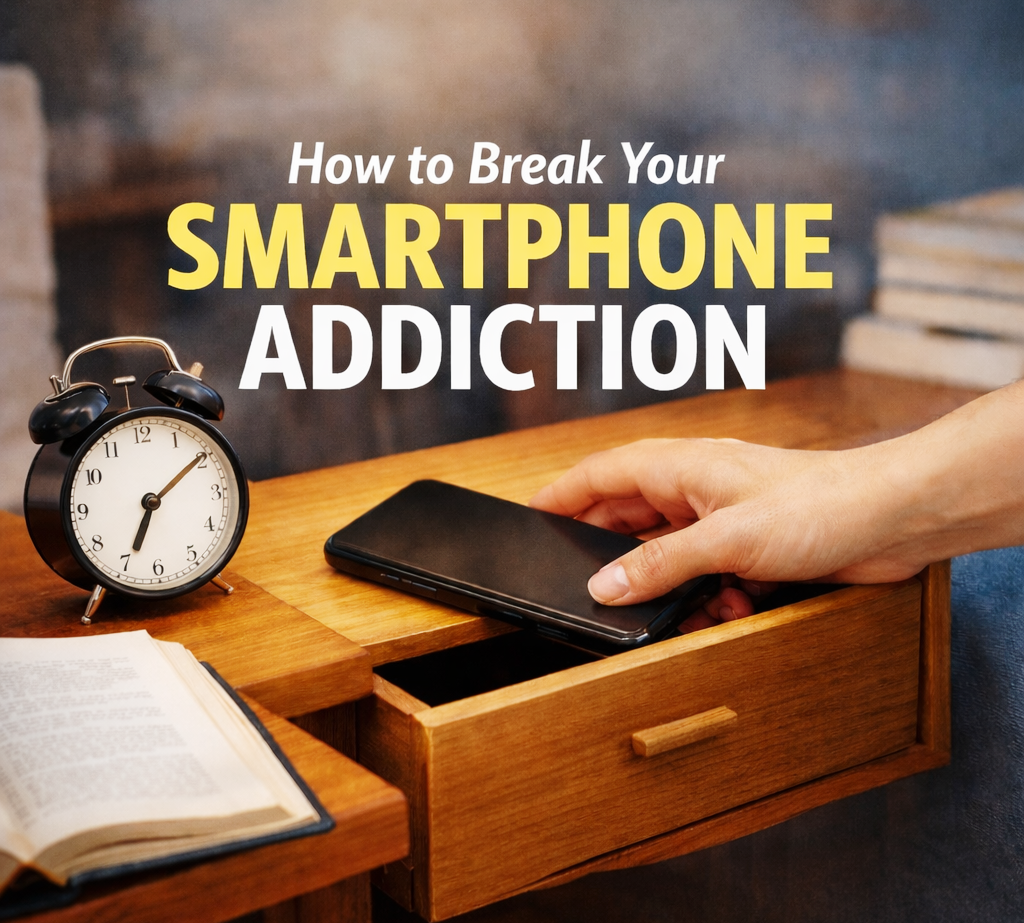
- Keep devices out of the bedroom: The blue light emitted by screens disrupts circadian rhythms and can delay sleep onset. Charge your phone in another room, and use a traditional alarm clock. Reading a paper book before bed improves memory compared with reading on screens.
- Limit check‑ins: Train yourself to check the phone less frequently. Start by extending the interval between checks to 15 minutes, then 30 minutes, then an hour. Apps that block access or schedule screen time can support this process.
- Delete time‑wasting apps: Remove social media and other distracting apps from your phone, or move them to a hidden folder so that checking them requires deliberate effort.
- Accept missing out: Understand that reducing phone use may mean missing some invitations or news. Accepting that you cannot keep up with everything is liberating.
5. Use Your Smartphone’s Built‑In Digital Well‑Being Tools
Modern smartphones include features designed to help manage screen time. Kushlev notes that Apple’s “Focus” modes can intelligently predict which notifications are important in different contexts, and that features like Do Not Disturb at bedtime help reduce interruptions. Other platforms offer similar tools. Consider the following:
- Notification control: Turn off non‑essential notifications. Avoid the red badge counters that signal unread messages, these small visual cues can trigger automatic checking.
- Batch notifications: Research shows that batching notifications, delivering them in set intervals instead of immediately, reduces stress and improves well‑being.
- Use Focus or Do Not Disturb modes: Activate work, driving or sleep modes to silence calls and messages, ensuring uninterrupted time for important tasks.
- Set screen‑time limits: Many phones allow you to impose time limits on specific apps; once you reach the limit, the app locks, forcing you to consciously override the restriction.
- Leverage digital well‑being dashboards: Use built‑in dashboards to review your daily and weekly usage patterns and adjust accordingly.
6. Enhance Self‑Control Through Mindfulness and Exercise
The 2025 review of smartphone dependence emphasises that improving self‑control is key to reducing impulsive smartphone use. Self‑control is a finite resource, but it can be strengthened like a muscle. Meditation, slow breathing, adequate sleep and regular physical activity help replenish self‑control. In particular:
- Mindfulness meditation trains you to observe urges without acting on them. Even a few minutes of focused breathing each day can improve awareness of compulsive impulses and build mental discipline. Mindfulness‑based interventions have been linked to improved emotional regulation and attention.
- Regular exercise improves executive function and reduces anxiety. Studies show that walking 20 minutes a day, three times per week for two weeks reduces anxiety in university students, and that higher‑intensity exercise like running yields even stronger benefits. Exercise may boost concentration because our ancestors evolved to sustain focus during physically demanding activities such as hunting.
- Sleep and nutrition: Adequate sleep and a balanced diet support self‑control. When you are tired or hungry, willpower diminishes, making it harder to resist scrolling.
By incorporating mindfulness and exercise into your routine, you build resilience against the dopamine‑driven tug of the smartphone.
7. Replace Screen Time with Fulfilling Activities
Reducing smartphone use is easier when you have meaningful alternatives. If you simply try to resist the urge, boredom or loneliness will drive you back to the screen. Consider these options:
- Hobbies: Take up a musical instrument, painting, gardening or cooking. Engaging your hands and mind reduces the appeal of passive scrolling.
- Reading: Enjoy a physical book or magazine. Research suggests that reading on paper leads to better comprehension and memory than reading on screens.
- Social activities: Host game nights, join a dance class, take language lessons or organise a walking group.
- Volunteering: Contributing to your community provides purpose and connection while occupying time that might otherwise be spent online.
8. Establish Phone‑Free Zones and Rituals at Home
Physical separation from your device reduces temptation. Try these strategies:
- Create a charging station outside the bedroom or living area. Plug your phone in there each evening and leave it until morning.
- Introduce the “phone stack” game during meals or social gatherings: everyone places their phones face down in a stack; whoever cannot resist checking first picks up the bill.
- Adopt family rules such as no phones during dinner or family time. For children and teens, model healthy habits; encourage outdoor play, board games or creative activities. Parents should investigate why children want to use devices and guide them toward constructive uses rather than banning phones outright.
- Use physical reminders like baskets or pouches near the door where everyone deposits their phones upon arriving home. Some schools use similar pouches during lessons to reduce distraction.
9. Seek Professional Help When Needed
If self‑help strategies are insufficient, or if your smartphone use causes significant distress, consider professional support. Psychotherapies such as cognitive‑behavioural therapy (CBT) and motivational interviewing help individuals recognise and change thought patterns that drive compulsive phone use. In severe cases, clinicians may consider pharmacological treatments like bupropion to modulate dopamine systems, though this should only be done under medical supervision. Non‑invasive neuromodulation techniques like transcranial magnetic stimulation (TMS) are also being explored for impulse control and may reduce cravings. Joining support groups or Internet/Tech Addiction Anonymous can provide community and accountability.
10. Maintain Perspective: Use Technology Mindfully
Smartphones are not inherently harmful; they enable connection, efficiency and creativity. Research shows that in some contexts phones make people happier for instance, participants who used phones to navigate unfamiliar routes completed tasks more efficiently and reported better moods. The goal is not to eliminate devices but to use them intentionally. Ask yourself when you pick up your phone:
- What specific task am I about to do?
- Is this the right moment to use the phone?
- What will I do when I finish the task?
Cultivating this pause between impulse and action helps ensure that smartphone use complements rather than controls your life.
Conclusion
Breaking smartphone addiction is a journey. Understanding the neurological and psychological forces at play removes self‑blame and empowers you to make deliberate choices. Start by monitoring your use, recognising emotional triggers and building an offline support network. Establish clear boundaries and take advantage of digital well‑being tools. Strengthen self‑control through mindfulness, exercise and restorative sleep, and replace screen time with enriching activities. In households and classrooms, create phone‑free zones and model balanced behaviour. When needed, seek professional help.
Above all, remember that smartphones are tools. By reclaiming your time and attention, you can use technology in ways that support your goals rather than undermine them. The small, hidden costs of overuse may add up, but consistent, mindful changes help you build a healthier relationship with your devices and with the people and world around you.
Frequently Asked Questions
What is “smartphone addiction,” really?
It’s typically compulsive or problematic phone use when you reach for your phone automatically, struggle to stop, and it starts harming sleep, focus, mood, productivity, or relationships. Clinically, many experts describe it as a behavioral addiction pattern (compulsion + loss of control + negative consequences), even if it isn’t always diagnosed the same way everywhere.
Should I quit cold turkey or reduce gradually?
For most people, gradual reduction works better because you still need your phone for real life. Think of it like nutrition: you’re not aiming for “never,” you’re aiming for controlled, intentional use (time windows + boundaries).
Do “digital detoxes” actually work?
They can help short-term, especially as a reset. But long-term success usually comes from building sustainable habits changing your environment, reducing triggers, and creating a healthier routine, rather than relying on willpower alone.
Does grayscale mode really help?
Often, yes. Grayscale reduces the “reward” your brain gets from bright colors and visual cues especially on social apps. It’s not magic, but it can lower cravings and mindless scrolling.
How do I deal with FOMO (fear of missing out)?
Reframe it as “choosing what matters.” When you reduce phone time, you’ll miss some updates and that’s normal. Most of what you “miss” is noise, not life-changing information. Replace FOMO with JOMO: the joy of missing out on distractions.
Is smartphone addiction linked to anxiety or depression?
It can go both ways. Some people use the phone to self-soothe difficult emotions, but overuse can also worsen mood through sleep disruption, comparison, and constant stimulation. If you notice strong anxiety or low mood, address both: phone habits and mental health supports.
What’s the fastest way to reduce my phone use today?
Try these quick wins:
- Turn off non-essential notifications (social media, shopping, news).
- Remove the most distracting apps from the home screen (or uninstall).
- Set one daily no-phone block (e.g., first 30 minutes after waking).
- Put your phone out of reach during focus work (drawer, another room).