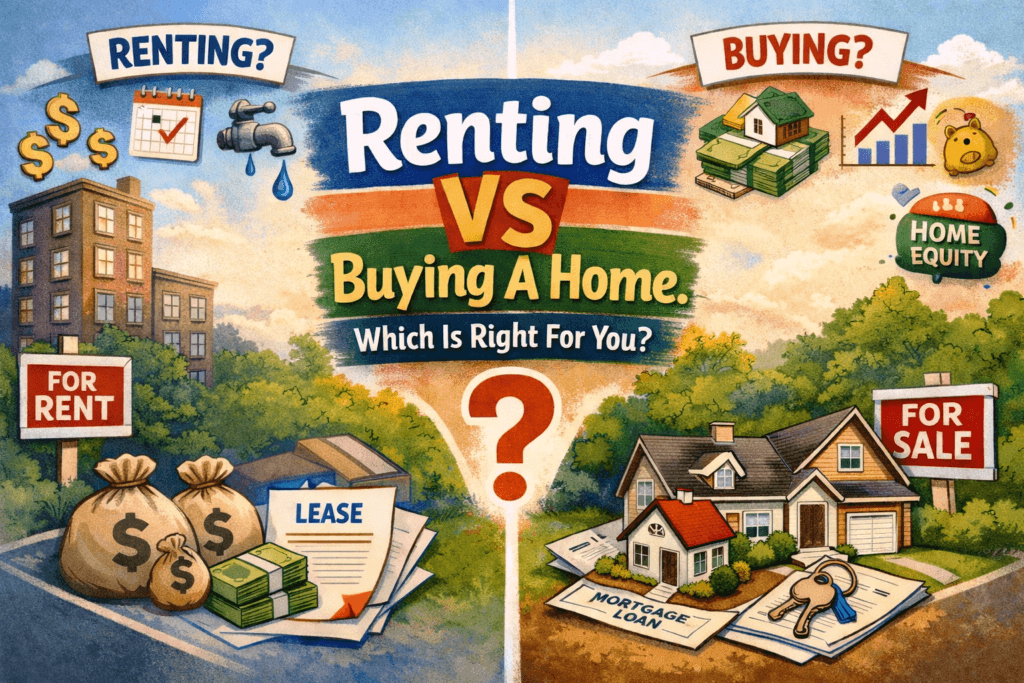
The perennial question of renting vs. buying a home remains just as relevant as it was a decade ago. Pandemic‑fueled housing booms, steep interest‑rate hikes and rapidly rising rents have transformed what used to be a fairly straightforward calculation into a multidimensional decision. This long‑form guide breaks down the financial and lifestyle considerations behind owning and renting, explains how today’s housing market dynamics influence the decision and offers practical tips to help you choose the right path.
The Housing Landscape
1. A cooling but still expensive market
After years of rapid price appreciation during the pandemic, U.S. home prices have largely stabilized. An article from a real‑estate economist at Zillow notes that in early 2024 rents were cheaper than mortgage and payments in nearly three out of five large metros even when buyers put down 20 %. The author explains that it takes renters four more years to save for a down payment now than it did pre‑pandemic, illustrating how high prices and student‑loan burdens have lengthened the path to homeownership. In December 2025 the median existing‑home price was $405,400, according to the National Association of REALTORS® (NAR) a figure only 0.4 % higher than a year earlier. This modest gain underscores how price growth has slowed but affordability remains stretched.
2. Mortgage rates: relief in sight
Interest rates spiked above 7 % in 2023, but they began easing during 2025 as inflation cooled. NAR data show that the 30 year fixed mortgage averaged about 6.19 % in December 2025. Lower rates triggered a 5.1 % jump in existing‑home sales that month and the strongest reading in nearly three years. The trade group forecasts that rates will average around 6 % in 2026. Similarly, Fannie Mae’s Economic and Strategic Research Group predicts rates will end 2026 near 5.9 %. Lower borrowing costs improve affordability by hundreds of dollars per month; NAR’s example shows a 30 year, $500,000 loan at 7 % costs $3,895 per month versus $3,672 at 6.25 %, a $223 difference.
3. Rents: growth slowing but still high
Rents surged alongside home prices during the pandemic, but growth has moderated. Zillow’s Observed Rent Index shows that multi‑family rents rose 2.55 % year over year, while single family rents climbed 4.8 % in 2024. In September 2024 the typical U.S. rent was about $2,050, an annual increase of 3.3 %. For many households, renting remains cheaper on a monthly basis than owning a comparable home; Zillow’s analysis found that even after a 20 % down payment, owning costs more than renting in about 60 % of major metros.
4. Supply and inventory
Home buyers still face limited inventory. NAR reports that housing inventories fell 18 % in December 2025 compared with November, though they remained up 3.5 % year over year. Tight supply supports prices but makes it harder for buyers to find affordable options. In contrast, a boom in apartment construction has led to flat or declining rents in many cities. However, analysts warn that this supply wave is cresting and rent growth could pick up again by 2027.
Financial Considerations: Renting vs. Buying
Deciding between renting and buying usually starts with the numbers: monthly costs, upfront expenses and long‑term wealth effects. Use calculators from reputable sites (e.g., Zillow, Fannie Mae or your local credit union) to estimate break‑even points based on your area, expected length of stay and investment assumptions. Below are core financial factors to weigh.
1. Monthly cost comparison
1.1. Mortgage payments vs. rent
Mortgage payments include principal, interest, property taxes, homeowners insurance and sometimes private mortgage insurance (PMI) or homeowner association fees. Zillow’s example shows a typical mortgage payment of $1,760 on a $361,000 home in September 2024 compared with a $2,050 median rent. But when rates were higher earlier in 2024, owning cost more in most metros.
1.2. Rent predictability
Renting often offers predictable monthly expenses because the lease spells out the payment and sometimes includes utilities. However, landlords can raise rent when your lease expires, and rent control laws vary by city.
1.3. Ownership costs
Homeowners pay property taxes, insurance, trash pickup, water, sewer, pest control and maintenance. Interest can dominate payments for the first decade of a 30 year mortgage; a $100,000 loan at 4 % costs about $72,000 in interest over 30 years. Maintenance and repairs add further costs. Home management platform Thumbtack estimates annual home upkeep at about $6,413. Remodeling projects recoup only about 60 % of their cost, according to Remodeling magazine.
2. Upfront expenses
2.1. Down payment and closing costs
Buying generally requires a down payment of 3 to 20 % and closing costs of 2 to 5 % of the purchase price. Guidance Residential notes that a 20 % down payment on a $200,000 home is $40,000 a challenging sum for many first‑time buyers. Fortunately, some loans allow down payments as low as 3 %, and assistance programs exist.
2.2. Security deposit
Renters typically pay a security deposit equal to one or two months’ rent, far less than a down payment. There are also no closing costs or mortgage origination fees. This lower barrier to entry frees up cash to invest elsewhere.
3. Equity and long‑term wealth
3.1. Building equity
When you buy, each mortgage payment gradually increases your ownership stake. Over time you also benefit from home value appreciation and the difference between your home’s eventual sale price and what you owe on the mortgage. Zillow notes that if you bought a $350,000 home with 20 % down, you would need to live there about five years and four months for buying to break even with renting; if rates fall or values rise faster, you could break even sooner.
3.2. Opportunity cost
Renting frees up capital that might have gone toward a down payment, allowing you to invest those funds in the stock market or retirement accounts. Zillow’s analysis assumes a 6 % annual return on invested cash. If your investments outperform home price growth, renting can be financially advantageous.
3.3. Risk of price declines
Home values generally rise over decades, but they can also decline. Zillow cautions that if prices drop and you’ve made a small down payment, you could end up underwater (owing more than the home is worth). Selling could be difficult if you need to move during a downturn.
Lifestyle Considerations
1. Flexibility and mobility
If your life is in flux or changing jobs, relationships or locations renting offers unmatched flexibility. You can typically move after your lease expires or even break it early with penalties. Zillow highlights that renters have more freedom to move. Guidance Residential notes that renting allows you to live in areas where buying is unaffordable and to relocate easily for work or personal reasons.
Buying, by contrast, ties you to a specific place. Real estate is an illiquid asset; selling can take months and involves transaction costs. Changing your mind about where you live can be expensive. If you anticipate relocating within three to five years, renting often makes more sense.
2. Personalization and control
Homeownership grants full control over renovations, decor and landscaping. You can remodel the kitchen, plant a garden or install solar panels. Renters lack this autonomy; landlords control major decisions about heating systems, fixtures and even wall colors. Some landlords allow customization, but permission is not guaranteed.
3. Stability and security
Owning a home provides a sense of stability and permanence. Guidance Residential notes that predictable mortgage payments protect you from sudden rent increases or eviction if your landlord sells. Homeownership also offers intangible benefits: a place to put down roots, host gatherings and build memories. Studies compiled by Habitat for Humanity (cited in the Guidance Residential article) suggest that children of homeowners tend to have better grades, lower stress and higher college attendance.
Renters enjoy flexibility but face uncertainty. Landlords can sell the property or convert apartments to condominiums, forcing tenants to move. Rent hikes can strain budgets, and you may have little say in how the property is managed.
4. Responsibility and maintenance
Buying means you’re on the hook for all maintenance. Repairs can be costly and time‑consuming from replacing a roof ($12,000 on average) to fixing broken appliances. Annual maintenance can run more than $6,400, and renovations recoup only about 60 % of their costs. Some homeowners enjoy DIY projects; others find them burdensome.
Renters generally call the landlord when something breaks. While responses may not always be prompt, you’re not financially responsible for most repairs. This convenience and cost certainty appeal to many busy professionals or those who don’t want to deal with home upkeep.
5. Community and family considerations
Homeownership can foster a stronger sense of community. Owning often encourages long‑term residency, participation in neighborhood associations and relationships with neighbors. Parents may prefer stable schooling districts and a yard for children or pets. Guidance Residential points out that homeownership can help build generational wealth and break cycles of poverty.
Renting in vibrant urban areas may offer better walkability, nightlife and short commutes, which can outweigh the benefits of a yard. If you prioritize being in a central location or exploring different neighborhoods, renting might better suit your lifestyle.
Economic and Market Factors
1. Interest‑rate outlook
Most forecasts expect mortgage rates to hover around 6 % in 2026. Fannie Mae projects rates will fall to 5.9 % by late 2026. The Mortgage Bankers Association and National Association of Homebuilders foresee rates around 6.2 % to 6.4 % (according to various industry reports, though not all data are publicly available). Lower rates could increase home sales and refinance activity; Fannie Mae expects mortgage originations to grow from $1.85 trillion in 2025 to $2.32 trillion in 2026.
2. Home price forecasts
Experts predict modest home price gains of 1 to 2 % nationally in 2026. Regional disparities remain: the Northeast may see stronger appreciation due to tight supply, while parts of Florida and Texas could cool as more homes hit the market. Longer‑term forecasts from Fannie Mae show existing and new home sales rising from 4.72 million in 2025 to 5.16 million in 2026, suggesting slow but steady growth.
3. Rent growth forecasts
With a large pipeline of new apartment units finishing construction, rent growth has cooled. However, discountpropertyinvestor.com warns that the supply wave is cresting; construction is slowing sharply and rents could see modest increases. This means renters may enjoy some short‑term bargaining power but should not expect rents to fall dramatically.
Situations Where Renting Makes Sense
1. Short‑term stays
If you plan to stay in a location for less than three to five years, renting usually saves money. This is especially true if you anticipate job changes or moves for education or family reasons. Zillow’s break‑even analysis shows that it takes more than five years for buying to beat renting under current market conditions.
2. Low savings or high debt
Buying requires significant upfront cash. If you’re still paying off student loans or credit‑card debt, renting allows you to improve your financial health before taking on a mortgage. Saving for a 20 % down payment on a modest $200,000 home equals $40,000; many households need years to reach that goal.
3. Uncertain income
Renting reduces financial risk when your income is variable. Homeownership ties you to a long‑term obligation; missing mortgage payments can lead to foreclosure. Renters may have easier options to downsize or move if circumstances change.
4. Desire for mobility
If you value the freedom to travel or experiment with different cities, renting is ideal. It allows you to explore neighborhoods without committing to a long mortgage.
Situations Where Buying Makes Sense
1. Long‑term stability
If you plan to live in one place for at least five to seven years, buying often builds wealth. Each mortgage payment increases your equity, and modest appreciation adds to your net worth. Historically, real estate has outpaced inflation over long periods.
2. Fixed housing costs
A fixed‑rate mortgage locks in your principal and interest payments for 30 years. While taxes and insurance may rise, you won’t face arbitrary rent increases. This predictability can aid budgeting and provide peace of mind.
3. Customization and pride of ownership
Owning allows you to renovate, garden and create a home that reflects your style. It offers a sense of accomplishment and connection to a community.
4. Tax benefits
Homeowners may deduct mortgage interest and property taxes if they itemize. While the standard deduction means fewer people itemize these days, high‑income households in expensive markets can still benefit.
5. Building generational wealth
Owning a home can pass wealth to heirs. Equity can be tapped via lines of credit or reverse mortgages in retirement. Studies suggest homeownership contributes to better educational outcomes for children and breaks cycles of poverty.
Weighing the Decision: A Personal Framework
1. Assess your finances
Calculate how much you can afford for monthly housing. Most financial advisors recommend spending no more than 30 % of your gross income on housing. Use affordability calculators from Zillow, Fannie Mae or local banks. Check your credit score and shop around for mortgage rates if you lean toward buying.
2. Factor in opportunity cost
Compare the projected appreciation of a home with expected returns from investing your down payment. If your local market has slow price growth and you can earn more by investing in index funds, renting might be wiser.
3. Consider your lifestyle
Think about career plans, family goals and community ties. If you crave stability, a yard and a personalized space, buying may enhance your quality of life. If you prioritize travel, career flexibility or living in trendy neighborhoods, renting could be more rewarding.
4. Plan for the unexpected
Whether you rent or buy, maintain an emergency fund covering three to six months of expenses. Homeowners should budget for repairs and maintenance; renters should prepare for potential rent increases or relocation costs.
5. Use professional advice
Speak with financial advisors, real‑estate agents and housing counselors who understand your local market. Housing is a personal decision; expert input can help you avoid costly mistakes.
Conclusion
The decision to rent or buy a home hinges on your financial situation, lifestyle preferences and view of the housing market. Data from NAR, Zillow, Fannie Mae and other sources show that while mortgage rates are easing and price growth is moderate, owning is still more expensive than renting in many metros on a monthly basis. However, the long‑term wealth‑building potential of real estate remains powerful, especially for those planning to stay put for several years and build equity.
Renting offers flexibility, lower upfront costs and freedom from maintenance. Buying provides stability, the opportunity to build generational wealth and the ability to shape your living environment. By carefully analyzing your finances, evaluating market conditions and reflecting on your personal goals, you can determine whether renting or buying is the right path for you.
Financial Disclaimer
The information provided on this blog is for educational and informational purposes only and should not be considered financial, investment, tax, or legal advice. All content is general in nature and may not apply to your individual circumstances.
While we strive to keep the information accurate and up to date, we make no warranties or guarantees regarding completeness, reliability, or accuracy. Any actions you take based on the information on this blog are strictly at your own risk.
Before making any financial decisions, you should consult a qualified professional who can consider your specific goals, income, risks, and personal situation.
Frequently Asked Questions
Is renting “throwing money away”?
Not necessarily. Renting pays for housing (a basic need) and can be a smart choice if you value flexibility, want lower upfront costs, or prefer not to take on maintenance and market risk. The real question is whether buying would create better long-term value for your timeline and finances.
What is the “breakeven point” in rent vs. buy?
The breakeven point is the time when the net cost of owning becomes equal to (or lower than) the net cost of renting after accounting for things like equity buildup, home appreciation, selling costs, maintenance, and the investment returns you could earn on money not spent buying.
What’s the biggest lifestyle advantage of renting?
Flexibility and simplicity: easier moves, fewer responsibilities for repairs, and typically lower upfront cash requirements.
What’s the biggest lifestyle advantage of buying?
Stability and control: predictable payment structure (especially with a fixed-rate mortgage), ability to customize, and less risk of a landlord selling or changing terms.
What if home prices drop after I buy?
Short-term drops matter most if you need to sell soon or bought with minimal down payment. If you plan to stay long-term and can afford payments, price fluctuations are typically less damaging though still emotionally stressful.
Can I buy a home if I’m self-employed?
Yes, but documentation requirements are often stricter. Lenders may want longer income history, stable cash flow, and clean tax/financial records.
What tools should I use to compare renting vs. buying?
Use a rent-vs-buy calculator and plug in local assumptions: purchase price, rate, taxes, insurance, HOA, maintenance, rent, rent growth, and expected time in the home. Then run best-case and worst-case scenarios.
What’s the simplest rule of thumb?
If you prioritize flexibility or may move soon, renting is often safer. If you’re stable, financially prepared, and plan to stay long enough, buying can be a strong long-term choice.
What costs do homeowners often underestimate?
Commonly underestimated items include:
- Routine maintenance and emergency repairs
- Property taxes increases over time
- Homeowners insurance (and disaster coverage if needed)
- HOA fees and special assessments
- Big replacements (roof, HVAC, appliances)
- Transaction costs when selling (agent fees, staging, repairs)
What costs do renters often underestimate?
Renters may underestimate:
- Rent increases at renewal
- Moving costs and deposits when changing homes
- Renters insurance
- Opportunity cost if rent is high and prevents saving/investing
- Lifestyle limits (space, pets, customization)