In a world where job security is uncertain and inflation continues to erode purchasing power. A side hustle can be more than just extra cash and it can be the beginning of a new career or a pathway to financial independence. A 2025 survey by SurveyMonkey found that 37 % of workers already have a side hustle and another 35 % are considering starting one. Bankrate reports that side hustlers earn an average of $885 per month, and freelancing platform Upwork notes that 81 % of C‑suite executives plan to adopt skills‑based hiring. Put simply, there has never been a better time to leverage your skills or hobbies into extra income.
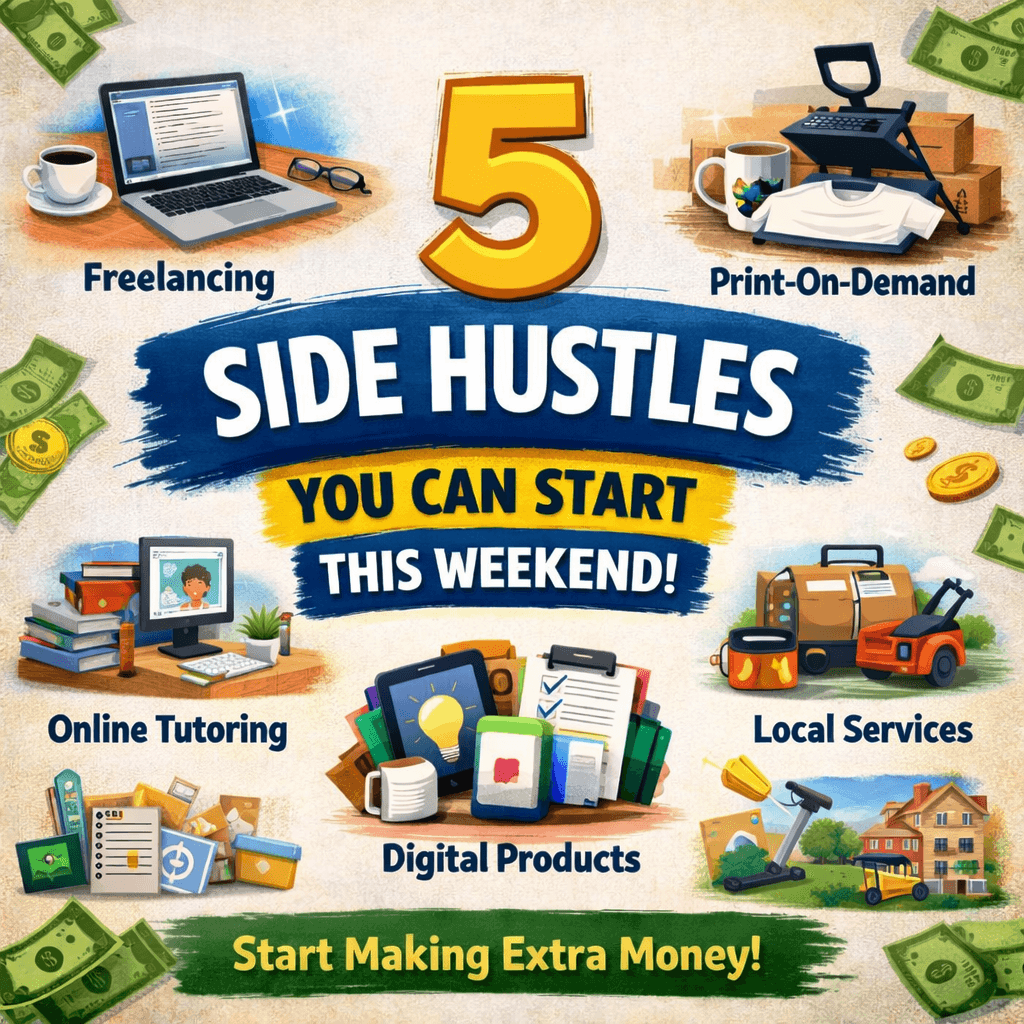
This guide presents five side hustles you can start this weekend. Each idea is backed by up‑to‑date statistics and includes simple steps to launch, tools you can use and potential earnings. Whether you want to monetize a creative passion or build a scalable online business, you’ll find a side hustle here that suits your skills and schedule.
1. Freelancing: Monetize Your Skills
Freelancing lets you convert existing skills like writing, graphic design, programming, social media management, bookkeeping or photography into paid projects. According to Dubsado’s State of Freelancing report, over 70 million Americans freelanced in 2025, representing more than one‑third of the workforce. The same report notes a 57 % surge in freelancers earning over $100 k since 2020 and that over 4.7 million freelancers now make six‑figure incomes. Companies are embracing this shift 99 % of businesses say they’ll continue hiring freelancers making freelancing a mainstream option rather than a last resort.
How to start
- Identify your service. List your marketable skills. Common freelance categories include writing, editing, graphic design, web development, video editing, bookkeeping, virtual assistance, translation and digital marketing.
- Create a simple portfolio. Assemble samples of your work on a free website (e.g., WordPress or Wix) or a portfolio platform such as Behance or Dribbble. Highlight your best projects and any results you achieved (e.g., increased traffic or sales).
- Join freelance marketplaces. Platforms like Upwork, Fiverr, Freelancer and Toptal connect freelancers with clients worldwide. Upwork’s research shows that companies are moving toward skills‑based hiring, making these marketplaces ideal for landing your first clients.
- Set your rates. For beginners, charge competitive rates that reflect your experience. Research what others in your niche charge. As you build a reputation, you can raise your rates.
- Deliver great service. Reliability and communication are essential. Provide quality work on time, ask clarifying questions when needed and request testimonials from satisfied clients.
Income potential and tips
Freelancing income varies widely. Dubsado’s survey notes that 4.7 million freelancers earn over $100 k, but many others use freelancing to earn an extra $500 to $2,000 per month. To maximize earnings:
- Specialize. Niching down to a specific industry (e.g., medical writing or UX design) allows you to charge higher rates.
- Upskill. Take online courses to improve in‑demand skills such as AI prompt engineering, SEO or data analysis.
- Build client relationships. Repeat clients save you time on marketing. Offer retainers or package deals to secure recurring work.
2. Sell Print‑On‑Demand Merchandise
POD services allow you to design products like T‑shirts, mugs, phone cases, tote bags without holding inventory. When a customer orders, the POD company prints and ships the item, and you keep the profit. Industry research from Precedence Research values the print‑on‑demand market at $12.96 billion in 2025 and forecasts it to reach $102.99 billion by 2034, growing at a 26 % compound annual growth rate (CAGR). North America dominates the market with a 36 % revenue share, while Asia Pacific is the fastest‑growing region.
How to start
- Choose a niche and product types. Pick a theme (funny quotes, local pride designs, fandom art or motivational messages) and select products to feature.
- Create designs. Use graphic design tools such as Canva, Adobe Illustrator or Procreate. Keep your target audience in mind.
- Select a POD platform. Printful, Printify, TeeSpring, Redbubble and Gelato handle production and shipping. Compare pricing, product selection and integration options with marketplaces like Etsy or Shopify.
- List products on online marketplaces. Create a Shopify or Etsy store or integrate POD with Amazon Merch. Optimize product descriptions with relevant keywords and include high‑quality mockup images.
- Promote your store. Use social media (Instagram, TikTok, Pinterest), run Facebook or Google ads and collaborate with influencers. Consider offering limited‑edition drops to create urgency.
Income potential and tips
Your earnings will depend on design quality, audience size and marketing. New sellers might earn $200 to $1,000 per month, while top sellers can make six figures. Tips for success:
- Focus on customer feedback. Monitor reviews and adjust designs accordingly.
- Leverage trends. Seasonal events (Ramadan, Eid, national holidays) and social movements can inspire designs that resonate.
- Expand product lines. Introduce new items, such as embroidered clothing or eco‑friendly materials, to increase average order value.
3. Create and Sell Digital Products
Digital goods like ebooks, templates, online courses, photography presets, software, music or digital art can be created once and sold infinitely. Shopify reports that digital products generated more than $124 billion in 2025. Profit margins are high because there are no production or shipping costs; in fact, profit margins can reach 90 % after fees. Additionally, the global e‑learning industry is projected to be worth $848 billion by 2030, while the global ebook market alone reached $18.02 billion in 2025.
Types of digital products to consider
- Online courses. Package your expertise into structured lessons. Platforms like Udemy, Teachable or Gumroad handle hosting and payments.
- Ebooks and guides. Write a comprehensive guide on a subject you know well marketing, recipes, gardening or career development and sell it as a PDF.
- Templates and tools. Design résumé templates, budgeting spreadsheets, Canva templates or Notion planners that others can reuse.
- Stock photography or digital art. Sell photos, illustrations, icons or music files on marketplaces such as Etsy, Creative Market or Artlist. The stock photography market reached $5.09 billion in 2025 and is projected to grow to $7.27 billion by 2030.
How to start
- Identify your expertise or passion. Choose a topic where you have knowledge or creativity.
- Research demand. Use keyword tools (Google Trends, Semrush, Ubersuggest) or browse marketplaces to see what digital products sell well and where there are gaps.
- Create your product. Use tools like Microsoft Word, Canva, or video editing software. Keep your product high quality and easy to use.
- Choose a selling platform. Sell on your own website (via WooCommerce or Shopify) for full control, or use platforms like Gumroad, Etsy, Udemy or Amazon Kindle Direct Publishing.
- Price strategically. Test price points to find the sweet spot. Offer a free teaser or low‑priced product to build your email list.
- Promote via content marketing. Blog posts, social media tips, YouTube tutorials and email newsletters build authority and drive traffic. Consider offering affiliate commissions to influencers who promote your digital product.
Income potential and tips
Digital product earnings vary. A popular template or course can generate $500 to $5,000 per month. To maximize:
- Bundle products. Offer packages (e.g., course + workbook + templates) at a higher price.
- Upsell and cross‑sell. Add complementary products at checkout.
- Leverage licensing. License your stock photos or music for commercial use to earn recurring income.
- Protect your work. Use watermarks and digital rights management to discourage piracy.
4. Offer Online Tutoring or Teach a Skill
Remote education has grown dramatically in the post‑pandemic era. Research and Markets reports that the global online tutoring market was valued at $8 billion in 2024 and is projected to reach $18.2 billion by 2030, growing at a 14.6 % CAGR. Advances in video technology, AI‑powered personalization, increased internet access and the demand for lifelong learning all contribute to this rapid growth. Online tutoring offers flexible scheduling, minimal start‑up costs and the ability to reach students worldwide.
How to start
- Select a subject or skill. You can teach academic subjects (math, science, languages), exam preparation (IELTS, SAT, CSS), professional skills (coding, graphic design) or hobbies (music, photography, cooking).
- Decide on delivery format. Options include live one‑on‑one lessons via Zoom, group classes or self‑paced courses. Use platforms like Zoom, Google Meet or specialized tutoring platforms (Wyzant, Preply, Varsity Tutors).
- Set up a profile on tutoring platforms. Join marketplaces such as Preply, Tutor.com or Cambly. Include your qualifications, subjects, teaching style, availability and rates.
- Prepare teaching materials. Create lesson plans, slides, practice exercises and assessments. Use interactive tools (whiteboards, quizzes) to enhance engagement.
- Advertise your services. Promote through social media, local parent groups, LinkedIn and educational forums. Encourage students to leave positive reviews.
Income potential and tips
Rates vary by subject and expertise. English tutors might charge $10 to $25 per hour, while specialists in coding or test prep can earn $40 to $100 per hour. To increase earnings:
- Offer package deals. Sell sessions in bundles (e.g., five classes for the price of four).
- Teach small groups. Small group sessions allow you to charge each student a lower rate while increasing your hourly earnings.
- Create supplemental materials. Sell worksheets, recorded lessons or practice exams as digital products.
- Leverage time zones. Teach students in different countries to fill your schedule.
5. Pet Sitting and Dog Walking
More households own pets than ever before. Straits Research notes that 67 % of U.S. households owned a pet in 2024, up from 56 % in 1988. This rise in pet ownership, alongside increasing disposable income and the humanization of pets, is driving demand for pet‑care services. The global pet‑sitting market was valued at $3.13 billion in 2024 and is projected to grow to $7.13 billion by 2033, with a 9.56 % CAGR. Pet owners pay for reliable care when they travel or work long hours. Average U.S. pet‑sitting visits cost $20 to $40 per visit.
How to start
- Research local regulations. Some cities require pet‑sitting licenses or permits. Check animal‑care regulations in your area.
- Set up a profile on platforms. Apps like Rover and Wag! connect pet owners with sitters and walkers. These platforms offer insurance coverage, secure payments and features like GPS tracking and photo updates.
- Determine your services and rates. Decide whether you’ll offer dog walking, overnight sitting, drop‑in visits or house sitting. Set rates based on local averages and your experience.
- Get insured and bonded. Liability insurance protects you from potential claims, and bonding assures clients you’re trustworthy. Platforms often provide coverage, but independent sitters may need their own policy.
- Promote locally. Hand out business cards at pet stores, veterinary clinics and dog parks. Encourage satisfied clients to leave reviews.
Income potential and tips
You can earn $15 to $40 per walk or visit, and overnight sitting can bring $50 to $100 per night. To maximize earnings:
- Offer additional services. Provide basic grooming, administering medication or plant‑watering to add value.
- Use technology. GPS tracking, photo updates and digital scheduling reassure clients and save time.
- Build trust. Meet pets and owners beforehand, provide references and keep emergency contact information on file.
- Offer loyalty discounts. Reward regular clients to encourage repeat business.
Conclusion
The side hustles above offer a range of entry points from digital‑first ventures to in‑person services and each can be started in a weekend. Freelancing leverages your current skills, while print‑on‑demand and digital products allow you to monetize creativity at scale. Online tutoring channels your knowledge into a high‑growth market, and pet sitting provides an outlet for animal lovers to earn from caring for furry friends.
Although these side hustles differ in setup and earnings potential, they share common success factors: understanding your audience, delivering quality service or products, and continuously learning. Take the first step this weekend and start building a side hustle that fits your lifestyle and financial goals.
Financial Disclaimer
The information provided on this blog is for educational and informational purposes only and should not be considered financial, investment, tax, or legal advice. All content is general in nature and may not apply to your individual circumstances.
While we strive to keep the information accurate and up to date, we make no warranties or guarantees regarding completeness, reliability, or accuracy. Any actions you take based on the information on this blog are strictly at your own risk.
Before making any financial decisions, you should consult a qualified professional who can consider your specific goals, income, risks, and personal situation.
Frequently Asked Questions
What’s the easiest side hustle to start this weekend?
For most beginners, the fastest-start options are freelancing (if you already have a marketable skill like writing, design, video editing, bookkeeping) and pet sitting/dog walking (if you’re comfortable with animals and can find local clients). Both can be started with minimal setup and low upfront costs.
How do I choose the best side hustle for me?
Start by matching the hustle to your constraints: how many hours you have each week, whether you prefer online or local work, and whether you like client interaction. If you want fast cash, focus on services. If you want scalable income over time, consider digital products or print-on-demand. The best choice is the one you can execute consistently for at least 30 days.
Do I need a website or portfolio to get my first clients?
You do not need a full website to begin. A simple one-page portfolio using a Google Doc or Notion page can work, and for many services, a few strong samples are enough. If you do not have past work, create two or three mock examples that demonstrate your ability and clearly communicate what results you can deliver.
Will I have to pay taxes on side hustle income?
In most places, yes side hustle income is generally taxable. A practical approach is to track all income and expenses from day one, keep receipts, and set aside a portion of earnings for taxes. If you are unsure about rules in your country, consult a local tax professional or official guidance to stay compliant.