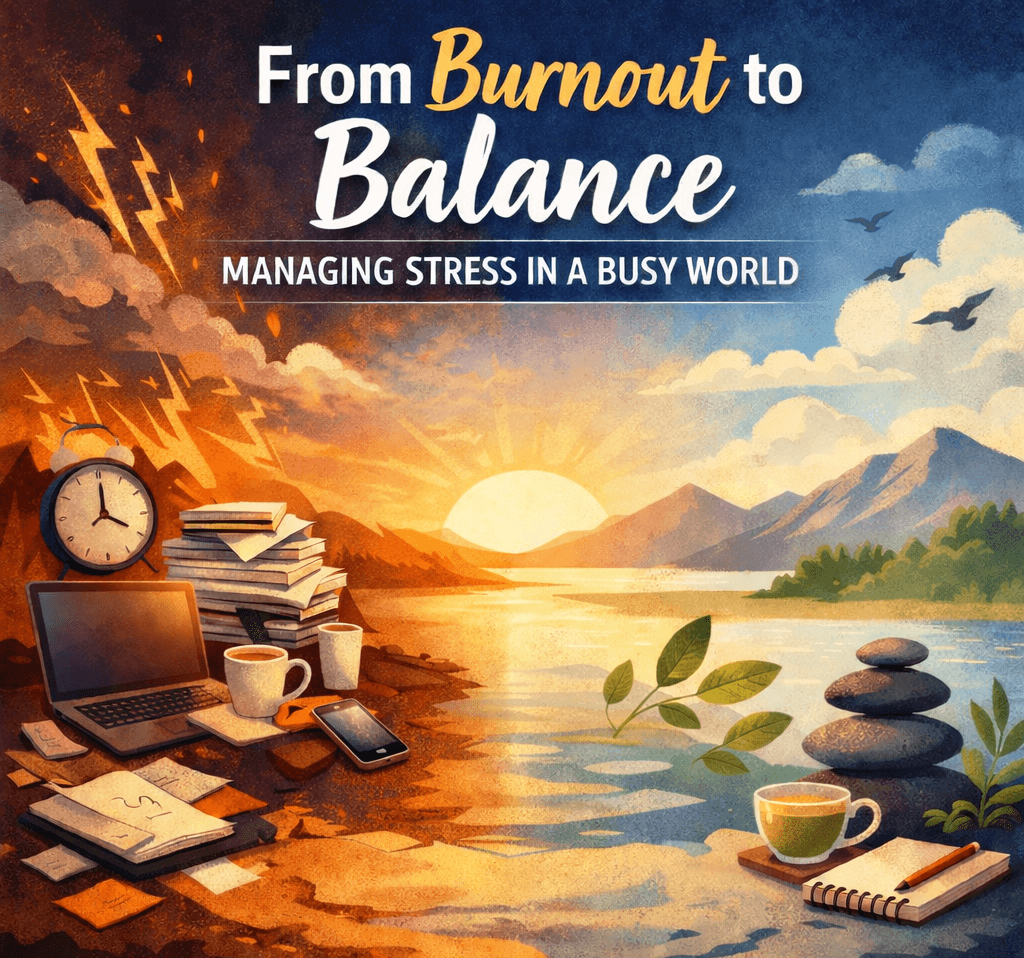
Modern life is fast. Technology connects us to work around the clock, and social media keeps us constantly informed. The result is a world where many people feel that there is always more to do and never enough time to do it. In this environment, stress and burnout have become common experiences. While stress is a natural response to challenges, chronic stress can evolve into burnout a state of emotional, mental and physical exhaustion that drains motivation and diminishes productivity. This article explains the difference between stress and burnout, explores the causes and prevalence of burnout, and offers evidence‑based strategies to move from overwhelm toward balance.
Understanding Stress
Stress is not always bad. The World Health Organization (WHO) defines stress as “a state of worry or mental tension caused by a difficult situation” and notes that it is “a natural human response that prompts us to address challenges and threats”. A moderate amount of stress can sharpen focus and help us perform daily tasks; however, too much stress or stress that persists for long periods can cause physical and mental health problems.
Common signs of stress include difficulty relaxing, anxiety, irritability, headaches, stomach troubles and trouble sleeping. People may lose appetite or eat more than usual, and chronic stress can worsen existing health conditions and increase substance use. Stressful situations are normal during job interviews, exams, unrealistic workloads or conflicts; stress usually reduces when the situation improves or when people learn coping strategies. Learning to manage stress effectively can reduce these negative impacts and prevent burnout.
What Is Burnout?
Burnout is an occupational phenomenon recognized by the WHO. In the International Classification of Diseases (ICD‑11), burnout is defined as a syndrome “resulting from chronic workplace stress that has not been successfully managed”. It has three dimensions:
- Exhaustion feelings of energy depletion and extreme tiredness.
- Mental distance or cynicism increased mental distance from one’s job, feelings of negativism or cynicism toward work.
- Reduced professional efficacy reduced productivity and a sense of being ineffective at work.
Burnout develops when people face prolonged stress without adequate recovery. The term was introduced in the 1970s by psychologist Herbert Freudenberger, who noted that helping professionals who sacrifice themselves for others often become exhausted and overwhelmed. Although burnout is not classified as a separate disease, its symptoms overlap with mental‑health disorders like depression and anxiety. Burnout can affect anyone not only doctors or nurses but also career‑driven employees, homemakers and students.
Causes of Burnout
The causes of burnout are often linked to workplace conditions and lifestyle habits. InformedHealth explains that burnout can develop when people are constantly overworked or under‑challenged, face continuous time pressure or experience conflicts with colleagues. Extreme commitment to work without attending to personal needs is another major contributor. Modern work environments that reward over‑achievement and constant availability can worsen these factors. For example, remote or hybrid workers often struggle to disconnect, and excessive screen time blurs the line between work and personal life, making it difficult to recharge.
Recognizing the Signs
The first step toward preventing burnout is recognizing its warning signs. According to InformedHealth, symptoms of burnout include:
- Exhaustion feeling drained, overwhelmed, lacking energy and often experiencing physical complaints such as pain and digestive problems.
- Alienation from work becoming cynical or negative about working conditions or colleagues and distancing oneself emotionally from one’s job.
- Reduced performance struggling to concentrate, feeling listless, lacking creativity and perceiving normal tasks as extremely burdensome.
These signs overlap with those of depression and anxiety, which makes it important to consult a healthcare professional when symptoms are persistent or severe.
Prevalence and Impact of Burnout
Growing data show that burnout is widespread. The 2025 NAMI (National Alliance on Mental Illness) Workplace Mental Health Poll found that employees report high rates of burnout, stress and overwhelm, yet fewer describe their mental health as poor. About one in four employees said they had considered quitting their jobs due to mental‑health concerns, and 7 % actually quit because of these issues. The survey also revealed that nearly half of employees worry about being judged if they share mental‑health struggles at work.
Another study by Eagle Hill Consulting in November 2025 reported that 55 % of U.S. workers are experiencing burnout. The same research indicated that 72 % of respondents said burnout reduces their efficiency, 71 % said it hurts job performance, and 65 % said it weakens customer service. Burnout is more common among younger generations rates were highest among Gen Z (66 %) followed by Millennials (58 %) and remote employees reported higher rates of burnout than those working in person. Despite these concerns, only 42 % of burned‑out workers told their manager about their burnout, and nearly half of those who did received no help.
These statistics underscore the importance of addressing burnout at both personal and organizational levels. Ignoring burnout can lead to reduced productivity, increased turnover, physical and mental health problems, and a loss of talent.
Moving from Burnout to Balance: Strategies for Managing Stress
Managing stress and preventing burnout requires a combination of self‑care practices, boundary setting and supportive workplaces. The following evidence‑based strategies provide a framework to help individuals transition from burnout toward balance.
1. Establish Healthy Boundaries
One of the biggest drivers of burnout is the inability to disconnect from work. The STOP method, highlighted in a 2025 Forbes article, offers a simple framework for creating work‑life boundaries. The acronym stands for:
- Shut down from work log off at the end of the day, notify colleagues that you are offline and silence notifications.
- Track your successes take note of what went well during the day to counteract the tendency to focus only on unfinished tasks.
- Offload mentally write down outstanding tasks or ideas to clear your mind before starting your evening.
- Plug into the present moment engage in activities like meditation, deep breathing or mindful movement to transition into personal time.
The article emphasizes that remote workers in particular benefit from this method, as it helps create a clear separation between work and personal life. Additional tips include having a morning routine, creating a designated workspace and being strict with your boundaries. Employers can support their staff by encouraging employees to switch off during leave, setting clear expectations about after‑hours communication and making work‑life balance part of company policy.
2. Maintain a Daily Routine
A consistent routine promotes a sense of control and helps you use your time efficiently. The WHO suggests setting time for meals, family, exercise, chores and recreational activities to prevent feeling overwhelmed. Knowing when your workday starts and ends makes it easier to detach from work and dedicate time to other important areas of life.
3. Prioritize Sleep and Physical Health
Adequate sleep is critical for mental and physical recovery. WHO advises going to bed and waking up at the same time each day, making your sleeping area quiet, dark and comfortable, limiting electronic devices before bedtime, and avoiding large meals, caffeine and alcohol before sleep. The U.S. Centers for Disease Control and Prevention (CDC) emphasises that adults should aim for seven or more hours of sleep per night. Sleep restores the body and helps reverse the effects of stress.
Physical activity is another potent stress‑relief tool. Regular exercise whether walking, running, dancing or yoga helps reduce stress and improves mental health. The CDC recommends at least 150 minutes of moderate‑intensity physical activity per week, which can be broken into 20 to 30 minute sessions.
4. Eat Well and Hydrate
Nutrition affects emotional and physical well‑being. The WHO encourages a balanced diet with regular meals, plenty of fruits and vegetables and adequate hydration. The CDC recommends consuming lean proteins, whole grains and low‑fat or non‑fat dairy, while limiting foods high in unhealthy fats, salt and added sugars. Limiting alcohol and avoiding smoking or drug misuse further supports stress management.
5. Develop Relaxation and Mindfulness Skills
Relaxation techniques activate the “relaxation response,” a state of rest opposite the stress response. Harvard Medical School outlines six evidence‑based techniques that can reduce stress:
- Breath focus taking slow, deep breaths while disengaging from distracting thoughts.
- Body scan combining breath focus with progressive muscle relaxation to release tension.
- Guided imagery picturing soothing scenes or experiences to calm the mind.
- Mindfulness meditation sitting comfortably, focusing on breathing and bringing attention to the present moment.
- Yoga, tai chi and qigong combining rhythmic breathing with postures or flowing movements to distract from racing thoughts and improve flexibility.
- Repetitive prayer silently repeating a short prayer or phrase while focusing on breathing.
Harvard researchers recommend experimenting with multiple techniques to see what works best and practicing for at least 20 minutes a day. Even brief sessions can create a reservoir of calm to draw upon in stressful moments.
Mindfulness meditation is particularly effective; research suggests it can reduce anxiety, depression and pain. Apps and online programs make it easier to learn mindfulness exercises. Yoga and similar practices not only reduce stress but also improve physical flexibility and balance.
6. Connect with Others and Practice Gratitude
Strong social ties can buffer the effects of stress. WHO recommends staying connected with family and friends and sharing your feelings with people you trust. The CDC advises talking with people you trust about your concerns, spending time outdoors and engaging in activities you enjoy. Social support can be informal (friends and family) or formal, such as support groups and counseling services.
Practicing gratitude is another simple but effective strategy. The CDC notes that daily gratitude exercises writing down things you are thankful for improve physical and emotional well‑being. Keeping a journal of positive experiences can help shift focus away from stressors and toward what is working well.
7. Limit Exposure to News and Digital Overload
Continuous exposure to negative news and constant connectivity can increase stress. WHO suggests limiting time spent following news on television and social media if it increases stress. The CDC similarly advises taking breaks from news and social media and making time to unwind. Creating “tech‑free” zones at home or setting specific times when devices are turned off can help you recharge. Charging phones in another room at night, avoiding screens before bed and designating areas for relaxation can improve sleep and reduce mental clutter.
8. Seek Professional Help When Needed
Stress and burnout are complex, and self‑help strategies may not be enough for everyone. WHO advises seeking support from a trusted health‑care provider or community leader if you have trouble coping. Mental‑health professionals can provide therapy, counseling, medication or referrals to other resources. If you experience persistent exhaustion, feelings of hopelessness, suicidal thoughts or other severe symptoms, contact a health professional immediately.
9. Create a Supportive Work Environment
Individuals can do a lot to manage stress, but organizations also play an essential role. The NAMI poll revealed that many employees worry about being judged for expressing mental‑health concerns at work. Only 13 % of employees told their manager that work demands were hurting their mental health, and more than half didn’t know whether their employer offered mental‑health benefits. Employers can take several steps:
- Normalize conversations about mental health and encourage employees to share concerns without fear of judgment.
- Provide mental‑health training and benefits. Workplaces that offer mental‑health training report a decrease in workers’ worries about being judged.
- Set clear expectations about after‑hours communication and encourage employees to fully disconnect during leave.
- Address workload and staffing levels to prevent chronic overwork. The Eagle Hill survey found that employees cite both workload and interpersonal dynamics as contributors to burnout.
- Model work‑life balance. Leaders who respect boundaries and prioritize well‑being set the tone for their teams.
Conclusion
Achieving balance in a busy world is not about eliminating stress entirely; it is about managing stress effectively and preventing chronic stress from evolving into burnout. Recognizing the early signs of stress and burnout, establishing boundaries, nourishing physical health, practicing relaxation techniques, connecting with others and seeking support when needed all contribute to resilience. Employers also have a responsibility to create environments where employees can thrive without sacrificing their mental health.
Stress and burnout do not have to be permanent states. With awareness, intentional habits and supportive workplaces, individuals can move from feeling overwhelmed to living a more balanced and fulfilling life. When we prioritize our well‑being and support one another, we not only improve our own quality of life but also build healthier, more productive communities and organizations.
Frequently Asked Questions
What’s the difference between stress and burnout?
Stress is your mind and body’s response to demands or challenges. It can be short-term and sometimes even motivating. Burnout is typically the result of chronic, unmanaged workplace stress and is marked by exhaustion, mental distance/cynicism about work, and reduced professional efficacy.
What are the most common signs of stress?
Common signs include irritability, anxiety, trouble concentrating, headaches or body pain, stomach issues, changes in appetite, and sleep problems. If stress becomes persistent, it can affect daily functioning and contribute to anxiety or depression.
Can burnout happen outside of work?
People use the word “burnout” broadly, but the formal definition (ICD-11) frames burnout as an occupational phenomenon specifically related to workplace context.
How common is burnout right now?
Recent surveys suggest burnout is widespread. For example, Eagle Hill Consulting reported 55% of U.S. workers experiencing burnout in late 2025. Workplace mental health polling also shows high rates of “burnout,” “stress,” and “overwhelm,” with many employees hesitant to speak up at work.
Does mindfulness or meditation actually help?
Many people benefit from mindfulness practices that focus attention on the present moment. Research-backed relaxation methods (including mindfulness meditation) are widely used to reduce stress and improve emotional regulation.
Is burnout the same as depression?
No. Burnout and depression can overlap in symptoms (fatigue, reduced performance), but they are different concepts. If you suspect depression persistent low mood, loss of interest, feelings of worthlessness talk to a qualified clinician for a proper assessment.
Why don’t employees talk about burnout at work?
Workplace surveys show many employees worry about judgment or career impact if they disclose mental health struggles. Building psychological safety and normalizing support is critical.
What are the classic signs of burnout?
Burnout often shows up as:
- Exhaustion (feeling drained and emotionally depleted)
- Detachment/cynicism (increased mental distance from work)
- Reduced performance (lower productivity, creativity, and focus)
What’s the fastest way to reduce stress in the moment?
Try a “downshift” technique for 2 to 5 minutes:
- Slow, deep breathing (longer exhale than inhale)
- Body scan (release tension muscle-by-muscle)
- Guided imagery (visualize a calming place)