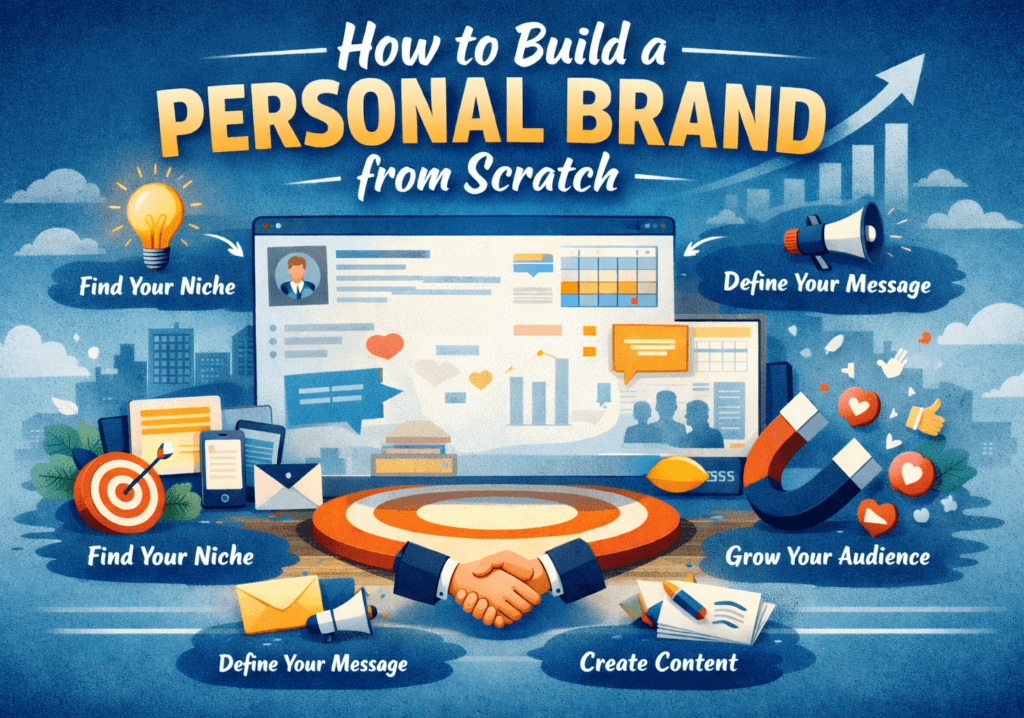
In today’s hyper‑connected world, your name is your most valuable asset. Recruiters, clients, and potential collaborators often form first impressions based on your digital footprint. Building a personal brand is the process of intentionally shaping that footprint so that it reflects your values, expertise and personality. According to Shopify’s business blog, a personal brand is “a cultivated, formalized expression of your outward professional self” that lives within you but is meant to connect with others. In other words, it is more than a résumé or a social media bio; it is how your story, style and values are communicated across platforms.
This guide brings together insights from marketing experts and professional advisers to explain why personal branding matters and how to build one from scratch. It covers key traits and trends, debunks common myths, and provides a practical step‑by‑step approach. Whether you are a freelancer, business owner or job seeker, the strategies below will help you create an authentic, sustainable brand that opens new opportunities.
Why Personal Branding Matters
1. A reputation that unlocks opportunities
Career consultancy Robert Walters notes that your personal brand is essentially your professional reputation and serves as the foundation for unlocking new opportunities. Hiring managers now routinely research online profiles before interviews, and potential collaborators gauge your expertise through your digital presence. A strong brand helps you stand out in a crowded marketplace, fosters trust and can lead to career growth or business expansion.
2. It’s about authenticity, not self‑promotion
Personal branding is often misunderstood as egotistical self‑promotion. In reality, effective brands are grounded in authenticity and value. The HeyOrca article on personal branding emphasizes that it is not solely about self‑promotion; rather, it should be “authentic and valuable for your audience”. People respond to brands that demonstrate empathy, reliability and expertise. A personal brand therefore expresses who you are, what you stand for and how you can help others.
3. It’s becoming essential in the digital age
Trends shaping personal branding include the rise of AI tools and the importance of authenticity. AI can optimize your online profiles and suggest keywords, but every post contributes to your digital footprint. It is therefore vital to curate content that aligns with your values. Another trend is the growth of micro‑communities; engaging with niche groups on LinkedIn or industry forums can be as impactful as reaching a large audience. These trends highlight the need to be intentional and strategic when building your brand.
Understanding Personal Branding
1. What is a personal brand?
Shopify defines a personal brand as more than a résumé or elevator pitch: it is a story that reflects your character, values, strengths and relationship with your community. Seth Godin describes a brand as a set of expectations, memories, stories and relationships that influence decisions. Applied to individuals, this means that your personal brand is how people perceive you based on your communication, actions and content.
2. Myths about personal branding
Misconceptions can hinder your progress. The HeyOrca blog busts several myths:
- “Personal branding happens overnight.” Building credibility takes time and consistency. Quick wins are possible, but sustained effort is required.
- “Personal branding is only for celebrities.” Anyone can develop a brand regardless of industry or experience. In fact, professionals with niche expertise often benefit the most.
- “Personal branding is just self‑promotion.” Authentic branding focuses on serving and engaging your audience rather than bragging.
- “You must be extroverted.” Introverts can thrive by leveraging their strengths in writing or one‑on‑one interactions instead of video.
3. Traits of a strong personal brand
Robert Walters highlights qualities that make a brand resonate:
- Authenticity and consistency: People gravitate towards genuine stories. Sharing case studies or personal anecdotes can position you as both knowledgeable and approachable. Consistency in tone and messaging helps others recognize and remember you.
- Expertise and reliability: Demonstrating knowledge in your field shows competence, while following through on commitments builds trust.
- Creativity and soft skills: Creativity helps you present ideas in fresh ways. Soft skills like empathy, adaptability and effective communication blend interpersonal and professional strengths, making your brand relatable.
Step‑by‑Step Guide to Building Your Personal Brand
The following framework combines strategies from Copyblogger’s 2025 guide, Shopify’s nine‑step plan and insights from HeyOrca. Use it as a blueprint, adapting each stage to your goals and audience.
1. Self‑Assessment and Brand Discovery
Before creating content, take time for self‑reflection. Summarize who you are and what you stand for. Shopify suggests interviewing yourself or asking a friend questions such as:
- What are your passions, interests and desired industry?
- What adjectives do not describe you?
- What are your defining characteristics and core values?
- What makes you unique?
- What are your short‑ and long‑term goals?
These questions help you clarify your strengths, values and unique selling proposition (USP), which will guide your brand identity.
1.1. Identify your niche and unique value proposition
Copyblogger’s Charles Miller argues that selecting a specific niche is crucial because it positions you as an expert rather than a generalist. He advises evaluating three factors when choosing a niche:
1.1.1. Earning potential
Assess the financial value of solving a problem for your audience. A large following doesn’t always translate to revenue; focus on a niche where people are willing to pay for solutions for example, a marketer targeting high‑net‑worth entrepreneurs can earn more than someone catering to high school students interested in niche music genres.
1.1.2. Interest
Choose a topic you are passionate about, since you will create content almost daily. Lack of interest leads to burnout for example, an avid marketer may naturally gravitate toward marketing advice.
1.1.3. Expertise
You don’t need decades of experience; even a few months of dedicated learning can position you ahead of most people. Sharing your experiments and lessons learned can make your content engaging for example, a newcomer to UX design can document their learning journey and offer insights.
By answering Copyblogger’s questions “What problem do I solve?”, “Who do I solve it for?” and “How much is it worth?” you can craft a UVP that differentiates you from competitors.
1.2. Validate your ideas
After your self‑assessment, ask peers, colleagues or clients to validate your niche and message. They can offer an outside perspective on your strengths and help ensure your brand resonates. This stage ensures you’re building on a foundation that others find credible and compelling.
2. Define and Understand Your Target Audience
Your brand exists to serve an audience. Both HeyOrca and Shopify emphasize the importance of defining whom you’re speaking to before you start creating content:
2.1. Develop personas
Personas are semi‑fictional representations of your ideal audience. Ask questions such as who will find your content useful, where they are located, their job titles, their challenges and the platforms they use. Tools like HubSpot’s persona templates can help you outline these details.
2.2. Clarify your “why” and value proposition
Shopify notes that answering why you are building a brand helps you determine your audience. Are you seeking clients, investors or employers? Understanding their needs and pain points will help you tailor your content and messaging.
3. Craft Your Brand Identity and Messaging
Your brand identity encompasses visual elements (colors, fonts, logo) and how you communicate (tone, voice, messaging). Consistency across channels builds recognition.
3.1. Professional brand identity
Copyblogger’s second step stresses designing a professional brand identity. Using consistent fonts and colors across your website and social media profiles creates cohesion and credibility. A high‑quality headshot and a clear, concise bio that communicates what you do and who you serve can increase trust. Avoid overcomplicating your bio; potential clients should immediately understand your offering. To get started, use free design tools like Canva to create banners and visual assets. If budget allows, work with a photographer or designer to produce a professional headshot and refine your brand look.
3.2. Messaging and storytelling
Shopify highlights that brand messaging should be specific, clear, consistent and authentic. When visitors land on your website or social profile, they should instantly grasp what you do and why it matters. Avoid jargon or vague statements; instead, use plain language that articulates the problem you solve and the value you offer. Keep your tone consistent across platforms confusing or conflicting messaging undermines trust. Storytelling brings your brand to life. Share personal stories, challenges you’ve overcome and lessons learned. These narratives humanize your brand and showcase your values. Keep different versions of your story ready short forms for social bios and longer forms for blog posts or press kits. Ensure that your story’s tone reflects your personality.
4. Choose Platforms and Build Your Online Presence
Your audience determines where you should be active. HeyOrca advises starting with one or two platforms that align with your audience and content preferences. Claim your username on major platforms but avoid spreading yourself too thin. Consider these guidelines:
4.1. Social media channels
If your target audience is professionals, focus on LinkedIn. Creatives may prioritize Instagram or TikTok. Choose platforms where you enjoy creating content; if you dislike video, focus on written posts or podcasts.
4.2. Personal website or blog
A personal website gives you ownership over your content and isn’t subject to algorithm changes. Use it as a hub to showcase your portfolio, blog posts and contact information.
4.3. Professional profiles
Optimize your LinkedIn, industry forums and other professional platforms. Use keywords relevant to your niche and ensure your profile picture and bio align with your brand.
5. Develop a Content Strategy Rooted in Value
Content is the engine of personal branding. Consistently providing value positions you as an expert and keeps your audience engaged.
5.1. Create valuable, original content
HeyOrca identifies three building blocks for a successful content strategy: create valuable, original content, balance short‑ and long‑form formats and be consistent. Share insights, opinions and solutions to the challenges your audience faces. Use a mix of formats short posts for awareness and longer pieces for deeper education. Copyblogger provides frameworks to overcome writer’s block and make content creation efficient. Each post should either evoke an emotional response or be immediately useful. Emotional frameworks include failure stories, personal experiences, contrarian takes and “past vs present” comparisons. Useful frameworks include lists of tools, how‑to guides, success tips and common mistakes. As you gain experience, develop your own perspectives to inject uniqueness.
5.2. Repurpose content across platforms
Content repurposing accelerates growth. Instead of creating separate posts for each channel, adapt one piece of content into multiple formats. Charles Miller recommends starting with a tweet and repurposing it into LinkedIn and Instagram posts, carousels or blog entries. He suggests using tools to capture screenshots of your tweets for sharing on visual platforms. Publish the same core message with platform‑specific tweaks unique hooks or captions for maximum reach.
5.3. Incorporate SEO and keywords
When creating longer posts or blog articles, research relevant keywords. Miller uses SEO tools like Keywords Everywhere to identify topics with sufficient search volume. Including keywords in your titles and throughout your content improves discoverability. Write blog posts targeting specific keywords that align with your expertise; this helps attract search traffic and new followers.
6. Engage and Build Relationships
Community is built in the comment section, not just in the posts themselves. HeyOrca’s CEO Joe Teo emphasizes the importance of engaging with readers and building relationships. Respond to comments thoughtfully, ask questions and show genuine interest in your audience’s perspectives. Share other people’s content, comment on posts outside your own feed and participate in discussions to expand your network.
Robert Walters underscores the value of strategic networking. Use LinkedIn to connect with industry leaders, attend virtual or in‑person events and join niche communities. When networking, come prepared with a concise elevator pitch and focus on listening as much as speaking. Follow up with meaningful connections after events to nurture relationships.
7. Monitor, Adapt and Seek Feedback
Building a personal brand is a continuous process. Both HeyOrca and Robert Walters emphasize monitoring your performance and adapting based on results. Track metrics such as engagement (likes, shares, comments), follower growth and website traffic. Document qualitative wins too did a post lead to a collaboration or job offer? Seek feedback from mentors, colleagues or your audience to refine your content and approach. Flexibility allows your brand to evolve with your goals and market trends.
Additional Tips and Considerations
1. Differentiate personal and professional boundaries
Shopify cautions that you may want to differentiate between your personal and professional brands to protect privacy or avoid burnout. Decide how much of your personal life you want to share and which aspects are off‑limits. If your business is closely tied to your personal brand, you can still center your clients’ experiences in your marketing.
2. Leverage AI wisely
AI tools can assist with keyword research, profile optimization and content generation. However, remember that every piece of content contributes to your digital footprint. Use AI as a tool to enhance your work, not to replace your voice. Authenticity remains the differentiator that resonates with audiences.
3. Embrace micro‑communities
Personal branding isn’t just about amassing a large following. Engaging with niche communities such as LinkedIn groups or industry forums can be just as impactful. These micro‑communities allow deeper interactions, targeted networking and stronger relationships. Focus on providing value within these circles to build a loyal audience.
4. Don’t rush branding is a marathon
Personal branding is a long‑term endeavour. HeyOrca reminds us that it doesn’t happen overnight. Consistency and persistence are key. Celebrate small milestones such as a meaningful comment, a collaboration or a successful event and keep iterating.
Conclusion
Building a personal brand from scratch might seem daunting, but it is achievable with deliberate effort. Start by reflecting on your values, strengths and unique offering. Define a specific niche and identify the audience you want to serve. Craft a professional identity that communicates your message clearly and consistently across channels. Produce valuable content using proven frameworks, repurpose it across platforms, and optimize your long‑form posts for SEO. Engage authentically with your community, network strategically and track your progress. Finally, stay flexible monitor metrics, adapt your strategy and remain true to your story.
When done right, a personal brand becomes an asset that opens doors to new clients, job opportunities and collaborations. It enables you to share your expertise with the world, build meaningful relationships and make a lasting impact. Start small, remain consistent and watch your brand grow.
Frequently Asked Questions
What is a personal brand, in simple terms?
Your personal brand is the way people perceive you and your reputation, expertise, values, and the experience others associate with your name. It’s shaped by what you publish, how you communicate, and how consistently you show up online and offline.
Do I need a big following to have a strong personal brand?
No. A strong personal brand is about trust and clarity, not follower count. A small but relevant audience (e.g., 1,000 ideal clients or hiring managers) can create more opportunities than 100,000 random followers.
What if my niche has low earning potential but I love it?
You can still build a brand, but you may need a monetization angle (e.g., coaching, paid community, sponsorships, digital products) or a pivot to a related niche with stronger demand. A practical compromise is “what you love” and “what people pay for.”
What if I’m not an expert yet can I still build a personal brand?
Yes. You can build a brand around learning in public: share experiments, progress updates, and practical takeaways. The key is honesty be clear about your level and focus on helping others with what you do know.
What platforms should I start with?
Start with one primary platform (where your audience already is) and optionally one secondary platform for repurposing. If you’re writing-focused, consider LinkedIn and a blog/newsletter. If you’re visual, consider Instagram or YouTube.
How long does it take to build a personal brand?
You can see early traction in a few months, but durable personal brands are built over time. Most people notice meaningful results after 3 to 6 months of consistent execution and clearer positioning.