In today’s fast-paced world, taking care of your mental well-being is just as important as caring for your physical health. Whether you’re working professional facing tight deadlines, a student overwhelmed by exams, or a busy parent juggling responsibilities, mental health days have emerged as a legitimate form of self-care. Historically, mental health wasn’t widely accepted as a valid reason to miss work or school, but that view is changing.
Many companies now acknowledge mental health as a workplace priority, with some leaders even calling it “the crisis of our time,” and schools in several states have begun allowing excused mental health days for students. This shift comes as no surprise surveys show that burnout is widespread (about 65% of employees reported experiencing burnout in 2023) and that it negatively impacts job performance for the majority of workers. One in six youths experiences a mental health disorder each year, affecting their ability to perform in school. Clearly, taking time to reset your mental state is not only legitimate, but often necessary for long-term well-being and productivity.
As psychiatrist Dr. Margi Shah explains, “Mental health days can reduce feelings of burnout and loneliness as well as reduce your risk of a mental health crisis… They can also improve your morale, productivity and resiliency when you return”. In short, a mental health day is not about being lazy or weak it’s about proactively caring for your health so you can be your best self in the long run.
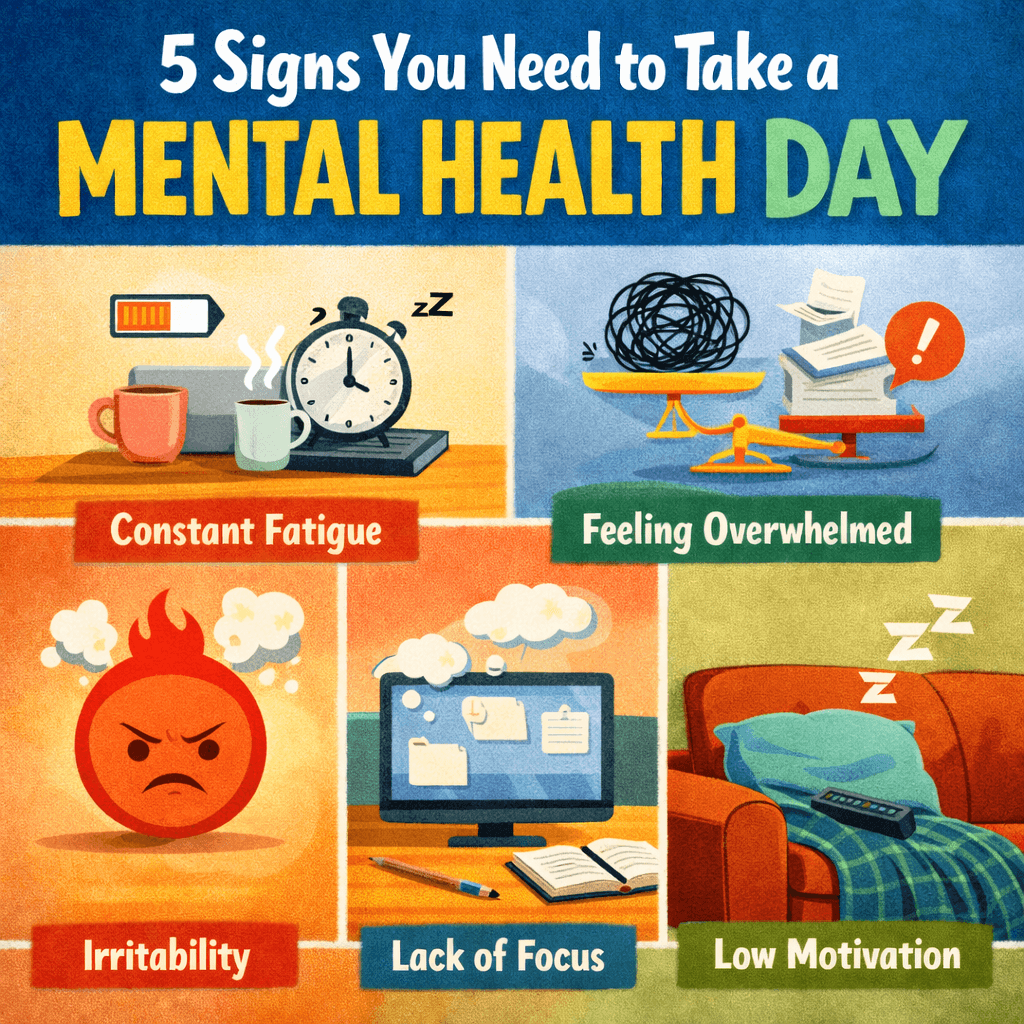
In this post, we’ll discuss five clear signs that you may need to take a mental health day. If you recognize yourself in any of these, consider giving yourself permission to unplug and recharge. Remember, there is no health without mental health, and taking a day for self-care can make a world of difference.
1. Constant Exhaustion and Lack of Energy
Feeling physically and mentally drained like this person overwhelmed by work is a strong indicator that you may need a mental health break. Chronic exhaustion often signals that your mind and body are overworked and need rest.
One of the earliest signs that you need a mental health day is persistent exhaustion. This isn’t just the ordinary sleepiness after a late night; it’s a deep fatigue that doesn’t go away even with rest. You might wake up tired every day, rely on caffeine to get through the afternoon, or feel like you’re dragging yourself through your routine. This kind of burnout-related exhaustion can be physical (your body feels heavy and worn out) and mental (you have trouble thinking clearly or mustering any enthusiasm). Stress and long hours without adequate downtime can leave you in a constant energy deficit. In fact, feeling “worn out physically or emotionally” is a hallmark of burnout. If you’ve been throwing yourself into work projects or study marathons and now feel utterly spent, take note.
From a psychological standpoint, chronic stress activates your body’s fight-or-flight response, which over time can disrupt your sleep and sap your energy reserves. It becomes a vicious cycle: stress leads to poor sleep, and poor sleep leaves you even more vulnerable to stress. You might even experience insomnia or restless sleep despite being exhausted. As Dr. Shah notes, burnout can make you “ready to go to sleep” but still result in “poor quality” rest that leaves you “perpetually tired”. If you find that no amount of coffee or weekend sleep seems to restore your energy, it’s a red flag that you need a break. A mental health day devoted to rest and relaxation can help interrupt this cycle. It gives your body a chance to recuperate and can reset your sleep schedule so you start getting truly restorative sleep.
Practical example: Imagine a project manager who has been working 10-hour days for weeks. Now they wake up feeling bone-tired, hit snooze multiple times, and by mid-day they feel like they’re running on fumes. Or consider a college student after final exams who feel too drained to enjoy activities they normally love. In both cases, the constant fatigue is a signal that their mind and body need a timeout. Taking a mental health day to sleep in, do relaxing activities, or simply do nothing at all can replenish that lost energy. Listen to your body if it’s chronically saying “I’m exhausted,” it’s time to prioritize recovery. As the Mayo Clinic notes, fatigue and changes in sleep habits are common effects of stress. Don’t ignore persistent exhaustion; treat it as you would a fever or physical pain by pausing and caring for yourself.
2. Difficulty Concentrating and Dropping Productivity
When your focus and productivity take a nosedive, it may be your mind signaling that it’s overworked. Perhaps you used to be organized and on top of your tasks, but lately you find yourself staring at the screen unable to concentrate, forgetting simple things, or procrastinating on duties that used to be easy. Your to-do list keeps growing because you just can’t seem to tackle it. This is a telltale sign of mental fatigue. Stress and burnout impair our cognitive functions like memory, attention, and decision-making. In other words, an overtaxed mind struggles to focus and perform effectively.
You might notice you’re working the same number of hours but getting far less done than usual. Little mistakes slip into your work, or you have to reread emails and documents because you can’t absorb the information the first time. Small tasks that used to take 20 minutes now stretch out for hours. In students, this might manifest as reading the same paragraph of a textbook repeatedly without comprehending it, or struggling to finish assignments that used to come easily. For parents managing a household, you might start misplacing items or forgetting appointments because your mind is overwhelmed by mental clutter.
Burnout makes it hard to plan your tasks, focus on doing them and follows through, resulting in lower productivity. You may find yourself actively avoiding new projects or responsibilities simply because you feel mentally maxed out. Psychologically, this happens because chronic stress floods the brain with stress hormones, which can interfere with the prefrontal cortex the area responsible for concentration and planning. Over time, high stress can even weaken your problem-solving abilities and creativity. Essentially, your brain is telling you “I can’t function at full speed anymore.” Taking a mental health day can provide a much-needed mental reset, allowing you to return to work or study with a clearer head and fresh perspective.
Practical example: Think of an office worker who finds their email inbox overwhelming they start avoiding opening emails because every message feels like too much. They notice at the end of the week that many tasks are half-done or delayed. Or a high school teacher grading papers who realizes they’ve read the same sentence five times and still don’t know what it says. When productivity drops despite your best efforts, it’s not a sign of laziness; it’s often a sign of cognitive overload. Rather than pushing yourself harder and risking more errors, recognize that stepping away for a day can actually boost your efficiency in the long run. After a mental health day of recharging, people often return with improved concentration and motivation, able to tackle their responsibilities with renewed energy. Remember, even computers need a reboot when they get sluggish our brains are no different.
3. Heightened Anxiety, Moodiness, or Feeling Overwhelmed
Do you feel like small setbacks are suddenly overwhelming? Are you more anxious about work or school than usual, or find yourself feeling down, irritable, or even emotionally numb? Significant changes in your mood or emotional state are strong indicators that you may need a mental health day. Burnout and chronic stress can fuel anxiety and depression you might notice excessive worry about job performance or grades, a persistent sad or hopeless mood, or a sense of being emotionally fragile. For instance, criticism that wouldn’t have bothered you much before might now trigger tears or panic. Or maybe you feel nothing at all a kind of emotional flatness or numbness where you’re just going through the motions without joy or interest. These are all signs that your mental health is suffering under prolonged stress.
It’s important to distinguish normal ups and downs from a pattern that’s out of character for you. Perhaps you’re usually even-tempered, but lately you’re snapping at friends and family or feeling on edge all the time. Chronic stress makes it “more difficult to control your reactions”, so things that normally wouldn’t bother you suddenly become triggers for anger or tears. You might also experience classic anxiety symptoms: your mind races with worries (even during off-hours, you can’t stop thinking about that project or exam), your heart beats faster, or you feel tense for no clear reason. On the flip side, some people encounter a sense of detachment or emotional exhaustion caring less about things you used to value, which is a defense mechanism against relentless pressure. Emotional numbness can accompany burnout, often manifesting as cynicism or a feeling of emptiness where you’re just checked out to protect yourself from stress.
If you find yourself in this emotional state overly anxious, persistently sad, chronically irritable, or drained of feeling it’s a definite sign you need time to decompress. A mental health day can give you breathing room to calm your nerves and lift your mood. Use the day to engage in activities that help you relieve stress: maybe that’s going for a long walk in nature, practicing mindfulness or yoga, journaling your feelings, or simply watching a comfort movie under a blanket. Stepping away from stressors for a day can prevent emotional overwhelm from snowballing. It can also remind you that your identity is more than your job or role as a student/parent, helping you regain perspective and emotional balance.
Important: Keep in mind that while a mental health day can alleviate temporary feelings of anxiety or sadness, it’s not a cure-all for serious mental health conditions. Clinical depression or anxiety disorders won’t be “fixed” by a single day off, and they may require professional treatment. If you’ve been experiencing severe symptoms (such as persistent hopelessness, panic attacks, or thoughts of self-harm) or your emotional difficulties last for weeks, please reach out to a mental health professional. That said, if you’re feeling a moderate level of burnout-related anxiety or blues, a day of rest and self-care can be a powerful first step toward feeling better.
4. Physical Signs of Stress (Headaches, Illness, Sleep Problems)
Stress doesn’t just affect your mind it speaks through your body as well. If you’ve been noticing more physical ailments or changes in your body, it could be your body’s way of telling you that you need a break. Common stress-related symptoms include frequent tension headaches, migraines, stomachaches or digestive issues, unusually high blood pressure, or unexplained aches and muscle tension. Perhaps you’ve developed a nervous stomach before work or class, or you have chest discomfort that your doctor has ruled as anxiety-related. Another red flag is if you’re getting sick more often than usual. Chronic stress can weaken your immune system, making you more susceptible to colds and other illnesses. So, that string of recent sick days or constant feeling of coming down with something might not just be bad luck it could be stress taking a toll on your body.
Sleep disturbances are another big physical sign. Maybe you can’t fall asleep because your mind is racing, or you wake up at 3 AM worrying about the next day. Alternatively, you might be oversleeping, finding it hard to get out of bed at all. Both insomnia and excessive sleep can be driven by stress and burnout. Over time, poor sleep quality further erodes your physical health, leading to daytime fatigue (tying back to Sign #1) and a host of other issues. It’s a vicious cycle: stress harms your sleep and body, and a run-down body and tired mind are less equipped to handle stress, which then worsens.
Pay attention to what your body is telling you. Are you experiencing stress headaches by mid-day? Is your neck or back perpetually knotted with tension? Do you get a wave of nausea on Monday mornings or before exams? These somatic symptoms are just as important as emotional symptoms. In fact, the Mayo Clinic lists headaches, muscle pain, chest pain, fatigue, upset stomach, and sleep problems among the common effects of stress on the body. If you’re ticking off several of these boxes, it’s a clear sign that you could benefit from a mental health day. Think of these symptoms as warning lights on your car’s dashboard ignore them too long and you risk a bigger breakdown.
Taking a mental health day can help interrupt this stress cycle. Use the day to focus on physical self-care: sleep in or take a nap, do some gentle exercise or stretching to release tension, take a long bath, or get a massage if possible. Even simple relaxation techniques can help like deep breathing exercises or progressive muscle relaxation to calm your nervous system. By the end of a well-spent mental health day, you may find that your headache has eased, your stomach is more settled, and your overall tension is reduced. Those are signs that your body finally got a chance to heal and restore its balance. Remember, your mind and body is deeply connected; caring for one is caring for the other. If your body is showing “wake-up call” signs like pain or fatigue, heed the call and give yourself time to recuperate.
5. Increased Irritability, Cynicism, or Detachment from Others
Have you turned into someone you barely recognize snapping at loved ones, feeling cynical about everything at work or school, or withdrawing from social interaction? A marked change in your attitude or engagement with others can be a major sign that you need a mental health day. When stress reaches a tipping point, patience often runs thin. You might find that little things set you off: the kids spilling juice, a coworker’s harmless question, or even a minor traffic jam might provoke an outsized angry response. “If you’ve been snapping at friends, family or coworkers over small or nonexistent problems…it can also be a sign of stress,” notes one health expert. Irritability and anger are common when our mental reserves are depleted, because it’s harder to regulate emotions when stressed.
Another sign is developing a negative or cynical outlook. You may catch yourself thinking, “What’s the point of this job? Nothing I do matters,” or feeling resentment toward your boss, teachers, or even the people you care about. Burnout often includes feelings of cynicism or detachment you start to emotionally distance yourself as a coping mechanism. For example, you might become “sarcastic and cynical about your work or your future” with your employer, or a student might feel cynical about school and stop caring about their grades. This mental state is a protective façade for the exhaustion and frustration underneath, but it can damage your relationships and overall happiness.
You might also notice yourself withdrawing from social activities. Whereas before you enjoyed lunch with colleagues or chats with friends, now you isolate yourself because interacting feels like too much effort. Loved ones may comment that you seem “checked out” or not present. In extreme cases, some people experience emotional numbness or blunting they stop feeling joy and even stop feeling upset, essentially running on autopilot. Psychologically, this can happen when the brain tries to shield itself from relentless stress by shutting down emotional responses. Long-term stress without relief can lead to burnout characterized by exhaustion, cynicism, and reduced motivation, and emotional numbness can develop as a defense. So if you sense you’ve grown indifferent or disconnected, that’s a serious sign of burnout.
All of these shifts irritability, cynicism, isolation are signals that your mental health needs attention. Taking a mental health day can help you “refill your reserves of patience and understanding”. With a day of distance from stressors, you can gain perspective on which problems are truly big and which ones you can let go. Often, after resting and doing something enjoyable, you return less on edge and more like yourself again.
You might use the day to reconnect with a friend or family member in a relaxing setting, reminding yourself that you’re supported and not alone. Or you might spend it journaling or in therapy, to process negative feelings in a healthy way. A break can prevent further damage to your relationships and attitude. Importantly, it can interrupt the downward spiral of negativity. By catching cynicism and irritability early, you can reset before it hardens into a toxic mindset. Remember, “you don’t feel like yourself” when you’re severely stressed so give yourself permission to take a step back and recover that self who is patient, optimistic, and engaged with life.
How to Take a Mental Health Day Effectively (and Guilt-Free)
Recognizing you need a mental health day is the first step; actually taking one is next. Here are some tips to make your mental health day as restorative as possible:
1. Plan the Day for Self-Care
Treat a mental health day as a day to truly nurture your well-being. That could mean sleeping an extra hour, doing a favorite hobby, taking a nature walk, practicing meditation, or simply lounging on the couch with a good book. Choose activities that replenish your energy and bring you calm or joy. It might help to think of what you’ve been longing to do but haven’t had time for due to work or school. This day is your chance. Even doing nothing at all giving yourself permission to rest can be incredibly healing if you’re always on the go. The key is to break from your usual stressors.
For example, if you sit at a computer all day, maybe your mental health day involves physical activity or time outdoors. If you’ve been socially overloaded, perhaps you spend the day solo with a phone-free retreat. Identify what you need most to feel like yourself again.
2. Unplug and Set Boundaries
A mental health day works best when you truly disconnect from work or school responsibilities. That means not checking work email, not doing homework, and setting an away message if needed. Remember, the goal is to give your mind a full break. If you spend the day thinking about what you’re missing at the office or replying to messages, you won’t reap the benefits. It might feel strange to step away, especially if you’re used to being “on,” but remind yourself that one day off will not make everything fall apart. In fact, you’ll likely return more productive (as 88% of HR professionals agree, mental health benefits improve productivity). Mentally give yourself permission to be off-duty. Think of it as putting your oxygen mask on first; you can’t help others or do your job well if you’re running on empty.
3. Communicate as Needed (Without Oversharing)
Do not have to broadcast that you’re taking a mental health day if you’re not comfortable. “You aren’t obligated to tell your employer that you’re taking a mental health day if you don’t feel comfortable sharing that information,” advises one health resource. You can simply call in sick or use a personal day as you normally would mental health is part of your health, so a generic “I’m not feeling well today” is perfectly acceptable. If you have a supportive boss or school that encourages wellness, you might choose to be honest and say, “I need to take a day to recharge.” More workplaces and schools understand this now, so stigma is slowly fading. Do what feels right for you.
If you’re a parent or caregiver, arrange for someone to help with your duties that day if possible, so you can truly focus on yourself. Setting these boundaries and communicating them ensures that you won’t be disturbed during your day off and can relax without guilt.
4. Avoid Using the Day for Catch-Up Chores
It can be tempting to use a day off to catch up on laundry, errands, or other chores you’ve been neglecting. While a little life admin is fine if it eases your stress, be careful not to turn your mental health day into just another busy day of work (even if it’s housework or busywork). The primary purpose of this day is recovery. If a messy environment stresses you, sure, do a quick tidy-up. But don’t overschedule yourself with tasks that aren’t truly nourishing. It’s okay if you don’t “accomplish” anything tangible on this day. Resting is an accomplishment. Think of this as a being day, not a doing day.
5. Practice Self-Compassion
Perhaps most importantly, be kind to yourself on your mental health day. Let go of any guilt or stigma you feel about taking time off. Remind yourself that you have taken sick days for a fever or a stomach flu without shame your mental health deserves the same care. If you start feeling anxious about work piling up or studies you’re missing, gently remind yourself that this break will make you more effective when you return. Some people find it helpful to do a brief mindfulness exercise in the morning, setting an intention like, “Today I give myself permission to rest and heal.” By framing the day as an investment in your well-being, you can enjoy it fully and reap the benefits.
Finding Support and Looking Ahead
Taking a mental health day can provide immediate relief, but what if you find you need more than just a day? First, if your symptoms persist or you find yourself needing mental health days very frequently, consider reaching out for professional support. There is absolutely no shame in this; just as you’d see a doctor if a physical illness kept coming back, a therapist or counselor can help with ongoing stress, anxiety, or depression.
Many workplaces offer Employee Assistance Programs (EAPs) or mental health benefits where you can get counseling sessions or referrals. Schools and universities often have counseling centers or support groups for students. If you’re a student and mental health struggles are regularly interfering with attendance or performance, talk to a school counselor or teacher. Some school systems now explicitly allow mental health days because they recognize students sometimes need time to care for themselves. In fact, states like Illinois allow students up to five mental health days per year as excused absences a sign that seeking help and taking time is encouraged, not something to hide.
Know that you’re not alone. There are numerous resources and people ready to help. Organizations like the National Alliance on Mental Illness (NAMI) provide education, support, and even advocate for policies that normalize mental health days for students and workers. If you’re feeling in crisis or having thoughts of hopelessness, reach out to a crisis line (for example, in the U.S., you can call or text 988 to reach the Suicide & Crisis Lifeline). Friends and family can also be allies sometimes simply letting someone you trust know that you’re struggling can bring relief and understanding.
Finally, after your mental health day, take a few minutes to reflect on what caused you to need that break and how you might improve your routine going forward. It might be a cue to adjust your work-life balance, to practice saying “no” to extra commitments, or to integrate small self-care habits into your daily life (like regular exercise, short breaks during work, or mindfulness practices). Think of a mental health day as a reset button and a learning opportunity. It reminds us that we have limits and that maintaining mental wellness is an ongoing process, not a one-time fix. Going forward, pay attention to those signs of stress we discussed, even the subtle ones, and give yourself permission to rest before you hit a breaking point.
Conclusion
Your mental health is a critical part of your overall health and success. Recognizing the signs that you need a mental health day is an act of self-awareness and courage. Taking that day and using it well is an act of self-care that can prevent burnout and help you return to your roles as employee, student, parent (or all of the above) with renewed energy and a better mindset. In today’s culture, mental health days are increasingly seen for what they are: legitimate, proactive measures to maintain wellness.
By listening to your mind and body, and seeking support when needed, you’re not only improving your own life but also setting an example that mental health should be prioritized. So if the signs are there, take that day off without guilt. You’ve earned it, you need it, and you’ll likely come back stronger, healthier, and happier which is a win for both you and everyone around you.
Remember: Taking a mental health day is not a luxury or an indulgence; it’s a form of preventive healthcare. Just as you would treat a fever or injury, treat your psychological strain with care and urgency. By doing so, you’re investing in a more resilient, focused, and fulfilled version of yourself. Your mind will thank you, your work or studies will benefit, and your loved ones will get to enjoy the real you not the stressed-out you. So watch for these signs, and when they appear, give yourself the permission to pause. Your mental well-being is worth it.
Frequently Asked Questions
What is a mental health day?
A mental health day is a planned day off (or a lighter day) to recover emotionally and mentally, reduce stress, and prevent burnout. It’s not “being lazy” it’s proactive self-care that helps you function better long term.
How do I know it’s stress vs. something more serious?
If your symptoms are intense, persistent (e.g., most days for 2+ weeks), or affect your ability to function, it may be more than temporary stress. Consider speaking with a mental health professional especially if you’re experiencing panic attacks, severe depression, or feeling unsafe.
Is it okay to take a mental health day even if I’m not “burned out” yet?
Yes. The best time to take one is often before you hit a breaking point. Think of it like taking rest when you feel a cold coming on, not after it becomes severe.
What should I do on a mental health day to actually feel better?
Focus on recovery, not productivity. Helpful options include:
- Sleeping in or restoring your sleep schedule
- Gentle movement (walk, stretching, yoga)
- Hydration and nourishing meals
- Reducing screen time and doom-scrolling
- Journaling, prayer/meditation, or quiet time
- Talking to a trusted friend or therapist
- Doing one calming activity you enjoy (music, reading, nature)
What should I avoid on a mental health day?
Try to avoid:
- Overloading the day with errands and obligations
- “Catching up” on work all day (defeats the purpose)
- Excessive social media, doomscrolling, or conflict-heavy conversations
- Heavy alcohol or anything that worsens anxiety/depression afterward