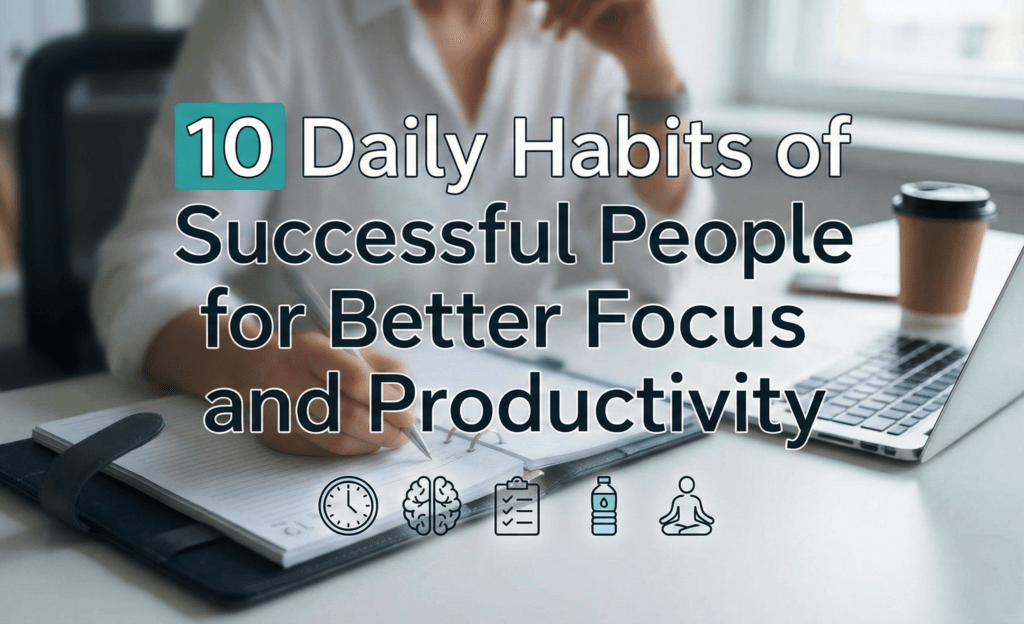
Success isn’t usually the result of one dramatic change. Most high achieving people credit their accomplishments to the small, repeatable routines that shape their days. In fact, research suggests that around 40 % of our daily actions are habitual, allowing us to free up mental energy for higher‑level thinking. When those habits are aligned with your goals, you enjoy more focus, greater productivity and a healthier mind body balance.
This guide draws on studies from universities and health organizations to identify ten daily habits that improve focus and productivity. Each habit is explained in simple, practical terms so you can start incorporating them right away.
1. Start with a purposeful morning routine
Many successful people don’t just wake up early; they start the day with intention. A quiet morning offers space to set priorities before distractions begin. The Smart Growth Guide notes that high achievers use this time to meditate, stretch or review their goals rather than scrolling through their phones. A calm morning routine signals to your brain that you’re in control and prepares you to handle the day’s demands.
How to do it
- Wake at a consistent time. Pick a wake‑up time that feels realistic for you, even if it’s just 15 minutes earlier than usual. Consistency trains your internal clock.
- Include one centering activity. Spend a few minutes meditating, stretching or breathing deeply. Even a short meditation can calm the mind and improve self‑awareness.
- Review your top priorities. Write down the two or three tasks that will make the biggest difference today. Having clear priorities early prevents decision fatigue later.
2. Plan and prioritize your day
Time can slip away quickly if you don’t direct it. Researchers at the University of Pennsylvania explain that effective time‑management practices such as making lists, prioritizing tasks and scheduling them boost productivity, improve focus and reduce stress. Without a plan, you’re more likely to react to the urgent rather than work on what really matters.
How to do it
- Write a daily to‑do list. List everything you need to accomplish.
- Choose your top three priorities. Tackle these high‑impact tasks first while your energy and focus are highest.
- Block time for each activity. Schedule tasks on your calendar so you know when you’ll work on them. Even short time blocks provide structure.
- Review and adjust. Halfway through the day, reassess your list, mark off finished tasks and adjust priorities if necessary.
3. Move your body every day
Exercise doesn’t just tone muscles; it energizes the mind. Research compiled by the Brookings Institution shows that regular physical activity makes people happier, smarter and more energetic. Exercise increases mitochondria in cells and stimulates new brain cell growth, and even modest activity in a randomized trial improved energy levels and reduced fatigue. Moving your body daily sharpens focus and reduces stress hormones.
How to do it
- Aim for at least 10 to 20 minutes of movement. This could be a brisk walk, yoga session or body‑weight exercises at home.
- Choose activities you enjoy. You’re more likely to stick with exercise if it feels fun dancing, cycling or gardening count.
- Incorporate mini‑workouts. Take stretch breaks or a quick stroll during your workday to reset your brain.
4. Practice mindfulness or meditation
Mindfulness trains your attention to stay in the present moment. The Mayo Clinic lists many benefits of meditation, including reducing stress, increasing self‑awareness, improving focus and promoting emotional health. A landmark study by Harvard and Massachusetts General Hospital found that an eight‑week mindfulness program increased grey matter in the hippocampus (important for learning and memory) and decreased grey matter in the amygdala (involved in stress). These physical changes help you manage stress and stay focused.
How to do it
- Start small. Sit quietly for 5 minutes, focusing on your breath. When your mind wanders, gently bring it back.
- Use guided meditations. Apps or free online recordings can guide you through mindfulness exercises.
- Integrate mindfulness into daily tasks. Try mindful walking or mindful eating notice the sensations as you walk or savor each bite.
5. Read and feed your mind
Reading is a powerhouse habit for both relaxation and cognitive growth. According to research summarized by Ness Labs, reading for just six minutes can reduce stress by up to 68 % and improves memory, vocabulary and attention spans. A study from Rush University Medical Center found that older adults who engaged in mentally stimulating activities like reading showed slower memory decline even when their brains contained Alzheimer’s plaques and tangles. Regular reading keeps your brain sharp and enhances creativity.
How to do it
- Read 10 to 20 pages a day. Choose books, articles or long‑form pieces related to your goals or interests.
- Use audiobooks. Listen while commuting or doing chores to turn downtime into learning time.
- Reflect on what you read. Jot down key points or action ideas to reinforce retention and application.
6. Protect your focus avoid multitasking
In the digital age, constant interruptions can sabotage deep work. A 2025 analysis of office workers found that employees are interrupted nearly 100 times per day, losing about 1.5 hours simply refocusing after each interruption, and task switching can reduce productivity by up to 40 %. When you jump between emails, chats and tasks, your brain burns extra energy and produces lower‑quality work.
How to do it
- Turn off non‑urgent notifications. Silence your phone and email alerts when focusing on important tasks.
- Use time‑blocking techniques. Work in focused intervals (e.g., 25 minute “Pomodoro” sessions) separated by short breaks.
- Batch similar tasks. Answer emails or return phone calls in one block instead of sprinkling them throughout the day.
7. Prioritize sleep
Sleep isn’t a luxury it’s a cognitive necessity. The Sleep Foundation explains that getting sufficient high quality sleep supports attention, memory, problem‑solving and creativity, whereas sleep deprivation leads to drowsiness, reduced attention span, diminished emotional processing and risky decision‑making. In other words, you can’t perform at your best if you’re running on empty.
How to do it
- Aim for 7 to 9 hours of sleep. Go to bed and wake up at the same time each day, including weekends.
- Create a calming bedtime routine. Limit screen time an hour before bed, dim the lights and try gentle stretches or reading.
- Optimize your sleep environment. Keep your bedroom cool, dark and quiet. Use earplugs or white‑noise machines if needed.
8. Reflect, reset and reward yourself
Consistency isn’t about perfection; it’s about continual progress. Keeping track of your progress and rewarding yourself strengthens the habit loop. Research on habit formation shows that tracking your actions helps maintain momentum and missing one day doesn’t erase your progress. Rewarding yourself for completing a routine reinforces the positive feedback loop.
How to do it
- Track your habits daily. Use a simple checklist or app to record whether you completed your habit. Seeing a streak builds motivation.
- Plan for slip‑ups. If you miss a day, don’t punish yourself just start again the next day and aim not to miss twice in a row.
- Celebrate small wins. Reward yourself with a short break, a favorite snack or a fun activity when you hit milestones.
9. Stay connected and contribute to others
Humans are wired for connection. A Harvard T.H. Chan School of Public Health article notes that social connection helps people live longer and healthier lives, and being socially disconnected is linked to higher risks of heart disease, stroke, anxiety, depression and dementia. Volunteering and other prosaically behaviors also lead to better cognitive and physical health. Building meaningful relationships and helping others nurtures well‑being and provides emotional support during stressful periods.
How to do it
- Nurture close relationships. Spend quality time with family and friends; have regular face‑to‑face conversations.
- Join communities. Participate in groups, clubs or volunteer programs to meet people with shared interests and strengthen your social network.
- Be kind to others. Simple acts of generosity listening, mentoring, helping a colleague benefit both the giver and receiver and foster a sense of purpose.
10. Keep learning and embracing growth
Successful people maintain a beginner’s mindset. Whether it’s learning a new skill, taking an online course or exploring a hobby, continuing to learn keeps your brain engaged and adaptable. While formal research on daily learning isn’t cited here, lifelong learning has been associated with improved cognitive reserve and can make you more resilient to change.
How to do it
- Schedule learning sessions. Spend 15 minutes a day on a new skill coding, language learning, public speaking or creative arts.
- Mix formats. Use books, podcasts, online courses or community workshops to keep learning interesting.
- Apply what you learn. Teach a colleague, start a project or implement a small improvement in your work to turn knowledge into skill.
Conclusion
These ten habits show that success grows from the steady accumulation of small daily actions rather than sporadic bursts of effort. Studies indicate that a habit may take anywhere from 18 to 254 days to form, with an average around 66 days, and missing one day doesn’t ruin the habit. The key is to start small, stay consistent and build a system that supports your goals. Over time, your routines will become automatic, freeing your focus for creative thinking, problem‑solving and growth.
Key Takeaways
- Purposeful mornings set the tone for the day wake up consistently, meditate and plan.
- Daily planning improves productivity and reduces stress.
- Exercise boosts energy and brain function.
- Mindfulness reduces stress and rewires the brain for better memory and emotional control.
- Reading cuts stress and preserves cognitive function.
- Avoid multitasking; task switching drains productivity.
- Sleep supports attention, memory and decision‑making.
- Track and reward your habits to strengthen the routine.
- Social connections improve health and longevity.
- Continuous learning keeps your mind sharp and adaptable.
By weaving these practices into your day, you’ll cultivate the focus, energy and resilience needed for long‑term success.
Frequently Asked Questions
Do I have to wake up early to be productive?
No. Success comes from starting your day with purpose. High achievers often use the quiet morning hours to meditate, stretch or review goals, but the exact wake-up time matters less than having a consistent, intentional routine.
How long does it take to build a habit?
Studies show a habit can take anywhere from 18 to 254 days to form, with an average of around 66 days. Regular practice is more important than hitting a specific day count.
What’s the minimum amount of exercise needed?
Even short bouts of movement help. Research suggests moderate daily activity, such as a brisk walk or light workout, boosts energy and reduces fatigue.
Is meditation necessary for focus?
Short mindfulness sessions can improve attention and reduce stress. An eight-week mindfulness program even increased grey matter in brain areas tied to learning and memory.
Does reading really improve productivity?
Yes. Reading for just six minutes can reduce stress by up to 68 % and slows memory decline later in life, which indirectly supports focus and productivity.
Should I stop multitasking completely?
It’s better to avoid constant task switching. Office workers interrupted frequently lose about 1.5 hours each day refocusing, and switching tasks can cut productivity by up to 40 %.
How much sleep do I need?
Aim for 7 to 9 hours. Adequate sleep improves attention, memory, problem-solving and creativity. Sleep deprivation reduces attention and impairs decision-making.
What if I miss a day of my new habit?
Missing one day won’t erase your progress. Habit research shows that tracking your actions and rewarding yourself helps maintain momentum even if you slip up.
Do social connections really matter for productivity?
Yes. Strong social ties help you live longer and healthier; isolation increases risks of heart disease, anxiety and depression. Volunteering and other prosaically actions also boost cognitive and physical health.
Related Articles
5 Daily Habits of Highly Successful People
How to Build Daily Habits for Success: A Step by Step Guide
30 Day Plan to Build Successful Habits: Easy Daily Routine Checklist
How to Stay Consistent with Good Habits: A Practical Success System
Daily Routine for Success: What Highly Successful People Do Differently