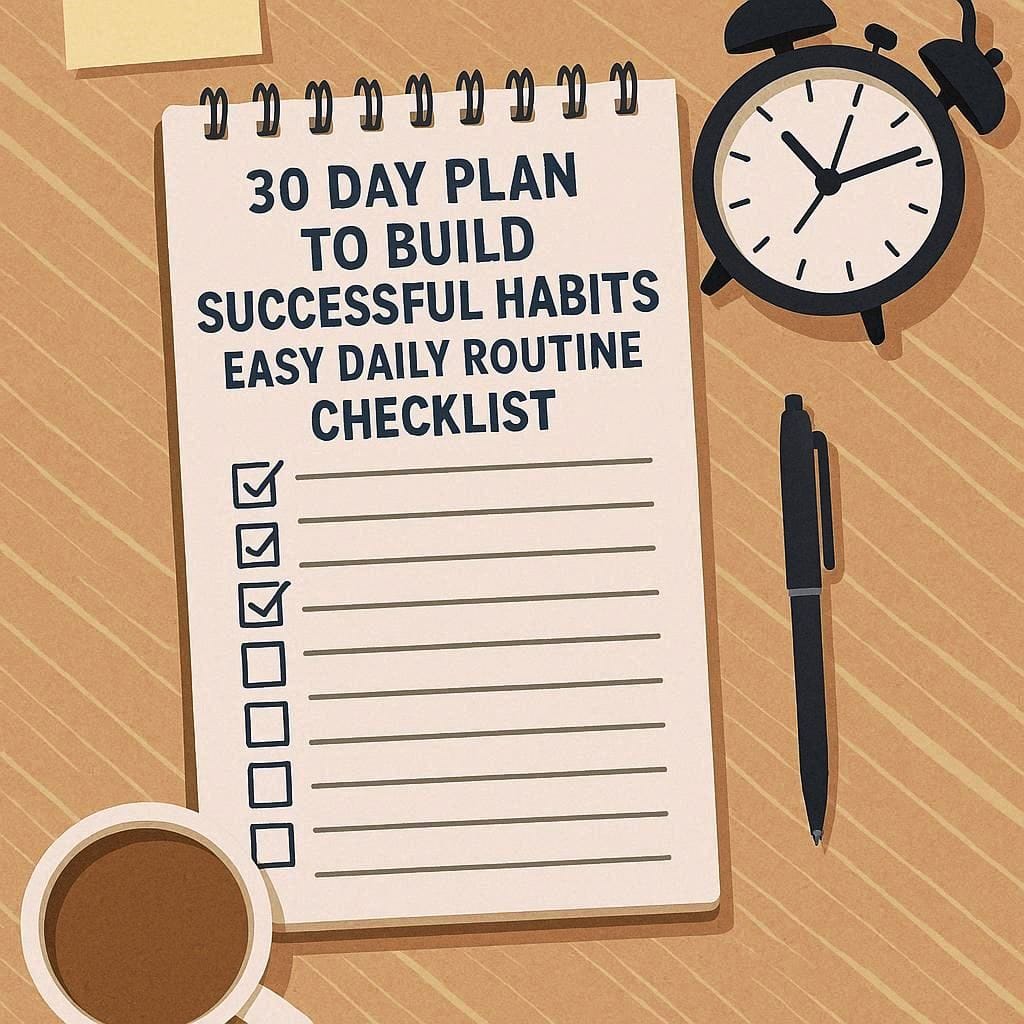
Success isn’t usually the result of one huge breakthrough. Instead, it’s the product of simple, consistent actions repeated over time. These repeated actions habits are the foundation of what we accomplish and how we feel. In this guide you’ll find a detailed 30 day plan designed to help you build successful habits, broken down into weekly themes and daily actions. The language is clear and practical, so whether you’re a beginner or looking to reboot your routine, you’ll have an easy checklist to follow.
Research shows that habit formation takes longer than the often quoted “21 days.” A 2009 study found that participants took 18 to 254 days to build new routines, with an average of about 66 days. But that doesn’t mean you should wait two months to start seeing results. The first 30 days are crucial because they build momentum and consistency. By the end of a month, the behavior becomes easier, and you can decide whether to deepen, expand or adjust the habit.
What are Habits and Why Do They Matter?
A habit is a behavior repeated so often that it becomes automatic. You don’t need to think about brushing your teeth each morning you just do it. According to health educators, positive habits make us more efficient and consistent and help us achieve goals. Healthy routines such as exercising regularly, eating balanced meals and getting enough sleep also contribute to overall well‑being.
Building habits deliberately allows you to:
- Reduce mental load. Automating small tasks frees up mental energy for more complex decisions.
- Increase consistency. Doing something at the same time each day makes it more predictable and easier to maintain.
- Achieve long‑term goals. When large goals are broken down into tiny daily actions, they become manageable and attainable.
- Improve health and well‑being. Positive habits support physical and mental health.
Why a 30 Day Plan?
Thirty days is long enough to build momentum without feeling overwhelming. While true automaticity may take around two months on average, a month of consistent practice establishes the foundations. You’ll have enough time to experiment with triggers, rewards and routine adjustments, and you’ll finish with a clear idea of what works for you.
This plan is divided into four weeks, each with a specific focus. Each day suggests a small action that builds on the previous day. Feel free to tailor the plan if one step takes longer than a day, spread it over two. The goal is consistency, not perfection.
Week 1: Set the Foundation
Theme: Clarity and Tiny Action
In the first week, you’ll pick a habit aligned with your broader goals, make it as small as possible and attach it to an existing routine. This phase lays the groundwork and ensures your new behavior is easy to start.
Daily Checklist: Week 1
Day 1: Define your goal. Identify one area you want to improve (e.g., fitness, reading, time management). Choose one habit that supports it (e.g., walking daily, reading five pages).
Day 2: Make it tiny. Break your habit down to the smallest version that feels almost laughably easy. For example, if your goal is to exercise, commit to just five minutes of walking.
Day 3: Identify a trigger. Attach the habit to something you already do. You might decide to walk immediately after lunch or read two pages while your coffee brews.
Day 4: Prepare your environment. Set out walking shoes by the door or place a book on your pillow. Making the cue visible reduces the need to think about starting.
Day 5: Perform the habit. Do your tiny habit immediately after the trigger. Don’t worry about duration; success is simply showing up.
Day 6: Track it. Use a simple tracker or calendar to mark off each day you complete the habit. Recording progress reinforces consistency.
Day 7: Reflect and reward. At the end of the week, note how you feel. Reward yourself with something small (e.g., your favorite tea) to associate the habit with positive feelings.
Weekly Reflection
Ask yourself:
- Was the habit small enough? If you struggled, shrink it further.
- Did the trigger work? If not, try attaching the habit to a different routine.
- What obstacles arose, and how can you mitigate them next week?
Week 2: Build Consistency
Theme: Reinforcement and Expansion
During the second week, you’ll reinforce the first habit and, if it feels natural, introduce a second tiny habit. Consistency becomes easier as the cue routine reward loop strengthens.
Daily Checklist: Week 2
Day 8: Continue your habit. Repeat your tiny habit after the same trigger every day. Consistency is more important than increasing duration.
Day 9: Gradually expand. If your habit feels easy, add a little: walk seven minutes instead of five or read an extra page. Keep it comfortable.
Day 10: Introduce a second tiny habit. Choose another micro‑action that supports your goals (e.g., drink a glass of water upon waking). Attach it to a different existing routine.
Day 11: Prepare your environment for the second habit. Place a water bottle on your bedside table or pre‑load a meditation app.
Day 12: Track both habits. Use your tracker to record both. Seeing two check marks can boost motivation.
Day 13: Reward immediate wins. Give yourself a small reward right after completing the second habit (e.g., a few minutes of your favourite song). Immediate rewards reinforce behavior.
Day 14: Reflect and refine. Notice which habit feels easier. Adjust the timing or environment if one is harder to maintain.
Weekly Reflection
Consider:
- Are both habits still small enough to be enjoyable?
- Are your triggers reliable? If not, tweak them (e.g., move your habit to a different time of day).
- Do your rewards feel motivating? If not, try a different immediate reward.
Week 3: Deepen and Expand
Theme: Layering and Accountability
Week 3 solidifies your routines by gradually increasing duration or complexity and introducing accountability. You may add a third micro‑habit or deepen your existing ones.
Daily Checklist: Week 3
Day 15: Evaluate progress. Review your tracker. Which habit feels automatic? Which needs more attention?
Day 16: Increase difficulty slightly. If walking five minutes felt easy, walk for eight. If reading two pages is easy, read three. Change gradually no jumps.
Day 17: Add a third micro‑habit (optional). If you’re handling two habits comfortably, pick a third aligned with your goals (e.g., writing one sentence in a journal). Attach it to a cue.
Day 18: Seek accountability. Tell a friend about your habits, join an online challenge, or use an app to share progress. Accountability helps maintain momentum.
Day 19: Revisit your environment. Adjust your space if it’s not supporting your habits (e.g., remove clutter from your reading chair or set up a walking path).
Day 20: Reward yourself mid‑task. Pair a desirable activity with your habit, like listening to an audiobook while exercising.
Day 21: Reflect on triggers and adjust. Maybe your morning water habit fits better after breakfast. Refine the timing to improve adherence.
Weekly Reflection
Think about:
- Which habit is closest to automatic? Consider increasing its length or complexity next week.
- Do accountability strategies help? If not, try a different partner or app.
- Are immediate rewards making the habits more enjoyable?
Week 4: Solidify and Integrate
Theme: Consolidation and Planning Ahead
In the final week, you’ll continue practicing your habits, combine them into a routine if helpful and plan how to carry them beyond the 30 days.
Daily Checklist: Week 4
Day 22: Combine habits (if possible). If two habits occur at similar times, try merging them (e.g., drink water while planning your top three tasks). Combining reduces friction.
Day 23: Test on busy days. Practice your habits when your schedule is hectic. Can you still walk for five minutes? If not, create a “minimum viable version” (e.g., one minute of stretching).
Day 24: Reflect on identity. Start shifting language from “I’m trying to…” to “I’m the kind of person who…” for example, “I’m a reader” or “I prioritize movement.” This builds habit identity.
Day 25: Plan a mini celebration. Mark your upcoming 30 day milestone with something meaningful: a favorite meal, a new book or a social activity.
Day 26: Review your tracker. Celebrate your consistency. Which habits have the most check marks? Those are ripe for expansion in the next month.
Day 27: Adjust goals. Decide whether to increase duration, add complexity or maintain the existing level for each habit.
Day 28: Prepare a next‑month plan. Sketch out how you’ll continue practicing these habits over the next 30 days. Identify potential obstacles and strategies.
Day 29: Reflect on emotional benefits. Notice any changes in mood, energy or stress levels. Positive habits often bring calm, clarity and motivation.
Day 30: Celebrate and recommit. Congratulate yourself on completing the plan. Decide which habits to carry forward and set a reminder to review progress again in another 30 days.
Final Reflection
At the end of week 4, ask:
- Which habits felt natural and enjoyable? Keep them.
- Which habits felt forced or didn’t fit your lifestyle? Modify or replace them.
- How did your mindset change? Do you see yourself as someone who practices these habits?
Tips for Staying Consistent
- Start tiny and build slowly. Beginning with micro‑habits ensures you won’t burn out. Only increase when the habit feels automatic.
- Use clear cues. Attach each habit to a reliable part of your existing routine (after lunch, before bed, etc.).
- Reward immediately. Small, instant rewards boost motivation.
- Track visibly. A physical or digital tracker provides accountability and satisfaction.
- Adjust your environment. Remove obstacles and place cues where you need them.
- Pair habits with fun activities. Listen to music, podcasts or audiobooks to make tasks more enjoyable.
- Reflect regularly. Weekly reviews help you notice what’s working and what’s not.
Conclusion
Building successful habits isn’t about willpower or overnight transformation it’s about consistent, intentional action. A 30 day plan gives you the structure to start small, stay accountable and celebrate your progress. While research suggests it may take about two months for habits to become automatic, these first four weeks are where you set the foundation. By following this daily routine checklist, you’ll experience greater clarity, improved focus and better health. Remember that positive habits improve efficiency, consistency and goal achievement. Keep practising beyond the 30 days, and you’ll continue to see your habits and your life transform.
Key Takeaways
- Habits are automated actions that reduce mental load and increase efficiency.
- Research indicates habit formation ranges from 18 to 254 days, with an average of 66 days; a 30 day plan builds early momentum.
- Week 1 focuses on choosing a single tiny habit, attaching it to a cue and tracking progress.
- Week 2 reinforces the first habit and introduces a second micro‑habit if desired.
- Week 3 gradually increases difficulty, adds accountability and optionally introduces a third habit.
- Week 4 consolidates habits, tests them on busy days and plans the next month.
- Consistency, clear triggers and immediate rewards are crucial to lasting success.
Frequently Asked Questions
How long does it really take to form a habit?
Research suggests it can take around two months on average, but a 30 day plan is a great way to build momentum and consistency.
Is 30 days enough to create a lasting habit?
Thirty days is a solid start. It helps you practice the routine until it feels easier; making it more likely you’ll stick with it afterward.
What if I miss a day?
Missing one day is okay just resume the next day. Try not to miss two days in a row, as that makes it harder to regain consistency.
How many habits should I start with?
Begin with one habit. Once it feels easy and consistent, you can add another tiny habit, but avoid piling on too many at once.
Do I need to track my progress?
Yes. A simple tracker (a checklist or app) keeps you honest and motivated by showing your streaks and progress.
Can I change my habit mid-plan?
If your chosen habit doesn’t feel right, you can adjust it. Make the new habit small and attach it to a clear cue.
How do I stay motivated?
Use small, immediate rewards after completing your habit and remind yourself why the habit matters to your bigger goals.
What if my schedule is unpredictable?
Have a “minimum viable version” of your habit (like one minute of stretching) so you can keep your streak alive even on busy days.
Should I do all my habits at the same time?
It’s best to spread them out through the day and attach each to a different cue this reduces overwhelm and reinforces the cue routine reward loop.
What should I do after the 30 days are up?
Review which habits felt natural and which need tweaking. Then create a follow‑up plan to either deepen or maintain your routines.
Related Articles
5 Daily Habits of Highly Successful People
How to Build Daily Habits for Success: A Step by Step Guide
How to Stay Consistent with Good Habits: A Practical Success System
10 Daily Habits of Successful People for Better Focus and Productivity
Daily Routine for Success: What Highly Successful People Do Differently