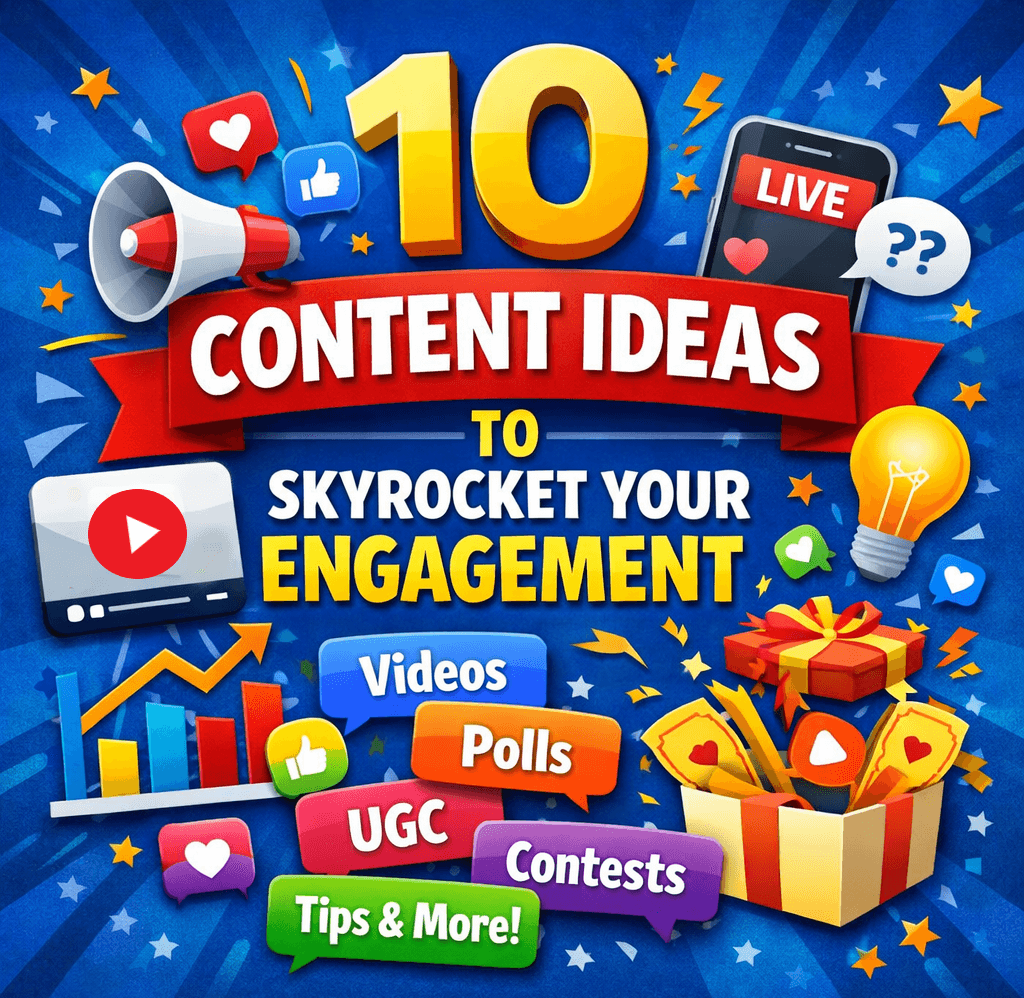
The content marketing landscape continues to evolve at break‑neck speed. Brands face new challenges: search traffic is declining while zero‑click experiences dominate the user journey. As WordStream notes, zero‑visit visibility where algorithms surface snippets of your content rather than users clicking through has become an influential trend because organic clicks are in rapid decline. To stay visible, marketers must rethink their strategies, diversifying content formats and building trust across platforms. Meanwhile, social media feeds are louder than ever, with over 5 billion people on social platforms; to stand out, content must be original, useful and worth stopping the scroll for. This article explores ten high‑impact content ideas backed by recent research to help skyrocket your engagement in this new environment.
1. Teach Your Audience Through Educational Content
Educational posts remain one of the most effective ways to build authority and trust. Hootsuite’s guide emphasises that brands should provide value by explaining how products work, offering industry tips and creating tutorials. Such posts work because they answer questions and help your audience make better decisions. They also support the zero‑visit trend: if AI summarises your content, detailed step‑by‑step guides and FAQ‑style pieces can still gain visibility.
To maximise impact
- Identify knowledge gaps. Use tools like keyword research and social listening to discover what your audience is asking.
- Structure content clearly. WordStream notes that structure and clarity are increasingly important on‑page factors. Break down complex topics into digestible sections with descriptive headings.
- Repurpose into bite‑size snippets. Transform the guide into short videos, carousel posts or infographics for multiple channels.
2. Lean into Short‑Form Video
Short videos dominate social feeds and the data backs it up. Hootsuite reports that brands published 71 % more short videos in 2024 and platforms like TikTok saw 35 % growth in engagement. According to Insivia’s 2025 video statistics, video content is expected to account for 82 % of all internet traffic by 2025, and 78 % of people watch online videos each week with 55 % watching daily. Beyond reach, video delivers a strong business impact: 90 % of marketers report a positive ROI and 87 % say video directly increased sales.
To maximise engagement with short‑form video
- Tell stories quickly. Aim for 15 to 60 seconds; highlight a single idea or tip. Use captions because 85 % of mobile videos are watched without sound.
- Use trends and memes. Hootsuite recommends embracing memes and trending formats to boost discovery. Just ensure they align with your brand voice.
- Include clear CTAs. Encourage viewers to comment, follow or visit your bio link.
3. Tap into User‑Generated Content (UGC)
User‑generated content photos, videos, reviews or testimonials created by customers has become a powerful trust signal. Hootsuite’s research shows that carousels and user‑generated posts consistently outperform polished brand creative because they feel human and credible; a 2024 survey found that 60 % of consumers trust what individuals say about a brand more than what the brand says about itself. UGC also builds social proof at little cost: customers create the content, and brands simply amplify it.
To incorporate UGC
- Create a branded hashtag so customers can share their experiences.
- Turn reviews into visuals. Testimonials can be transformed into graphic posts or short videos.
- Reward contributions. Feature UGC on your channels, offer shout‑outs or small prizes, and watch engagement soar.
4. Design Quizzes, Polls and Other Interactive Content
Interactive content invites your audience to participate making them feel like they’re in the driver’s seat. According to Forbes, 81 % of marketers agree that interactive content like quizzes, calculators and polls is more effective at grabbing attention than static content, and interactive pieces generate 52.6 % higher engagement rates. The success of Spotify Wrapped, shared by more than 60 million users in 2021, illustrates how personalised interactive experiences can drive viral sharing.
Use interactive content to
- Collect insights. Polls and quizzes reveal audience preferences, helping tailor future content and products.
- Provide value. Tools like calculators or assessments deliver instant results while capturing leads.
- Encourage sharing. Incorporate built‑in sharing prompts so participants can show off their results, extending your reach.
5. Host Live Streams and Q&A Sessions
Live video fosters real‑time connection. While detailed statistics vary, live shopping and streaming continue to grow: Insivia reports that live shopping sales are projected to reach $500 billion globally by 2025. Live sessions humanise your brand, enable two‑way interaction and often trigger urgency (e.g., limited‑time offers during a broadcast). Platforms reward live content with priority placement, and audiences appreciate the authenticity of unscripted sessions.
Tips for effective live streams
- Plan a structure. Outline talking points, but remain flexible to answer questions.
- Promote ahead of time. Announce streams in advance across channels and send reminders to your email list.
- Engage actively. Encourage viewers to ask questions and respond in real time. Pin important comments and shout out participants by name.
6. Share Behind‑the‑Scenes and Human Stories
Audiences crave authenticity. Behind‑the‑scenes (BTS) content reveals the people and processes behind your brand humanising your business and building rapport. Insivia notes that showing your company’s culture or production process through mini‑documentary videos builds trust. These narratives can be delivered via photos, Stories, live streams or blog posts.
Ideas for BTS storytelling
- Day‑in‑the‑life features. Spotlight team members or departments to showcase your culture.
- Process walkthroughs. Explain how products are made or services delivered to foster appreciation for your craft.
- Founder stories. Share the mission and challenges behind your brand to create emotional connection.
7. Run Contests and Giveaways
Contests and giveaways provide immediate incentives for audience participation and sharing. They can range from simple comment to enter promotions to elaborate creative submissions. Hootsuite suggests using giveaways to gain new followers by cashing in on trending memes and to keep the tone fun and aligned with your brand. To be effective, prizes should be relevant to your product or service, and rules must comply with platform guidelines.
Best practices
- Set clear rules and deadlines. Transparency builds trust and avoids confusion.
- Require engagement actions. Ask participants to like, share, tag friends or create UGC as part of entry.
- Promote across channels. Advertise your contest on multiple platforms and via email to maximise participation.
8. Create Mini Infographics and Data Visualisations
Infographics distill complex information into visually appealing graphics. Hootsuite notes that social media is the perfect place for mini infographics that share a single data point or concept. Because these visuals are swipeable and easy to digest, they perform well in feeds where attention spans are short. They also adapt perfectly to carousels formats that achieve about 10 % engagement on Instagram.
When designing infographics
- Focus on one takeaway. Don’t cram too much information; one strong statistic can be more impactful.
- Ensure brand consistency. Use your brand colours, fonts and logo.
- Link to deeper content. Use infographics as gateways to longer articles, reports or case studies for those who want more detail.
9. Publish Case Studies and Customer Success Stories
Case studies combine storytelling, data and social proof demonstrating the real‑world impact of your product or service. They align with WordStream’s suggestion to shift blog content into conversion mode and make the most out of every click. Unlike testimonials, case studies provide context: the problem, solution and measurable results. Video case studies are especially powerful; Insivia highlights that explainer videos can reduce product returns by 35 % and product pages with videos experience 47 % higher engagement.
To craft compelling case studies
- Choose relatable subjects. Highlight customers whose challenges mirror those of your target audience.
- Include metrics. Showcase quantitative results (e.g., increased sales, time saved or cost reductions) and qualitative feedback.
- Diversify formats. Offer both written and video versions to accommodate different consumption preferences.
10. Repurpose Content for Multiple Channels
Repurposing turns one piece of content into many by adapting it for different platforms or mediums. Park University’s marketing strategies article advises repurposing old content into something with greater relevance and value, while also emphasising the importance of interactive and user‑generated content. Repurposing ensures that your research investment pays off across search, social, email and beyond.
Effective repurposing techniques
- Turn blog posts into videos or podcasts. Summarise articles in a short script and record them for YouTube, TikTok or Instagram.
- Create carousel posts from long‑form guides. Break down the key points into swipeable slides.
- Compile Q&A threads. Convert audience questions from live streams or comments into FAQ articles or email newsletters.
Conclusion
Engagement isn’t about chasing vanity metrics it’s about building genuine relationships, providing value and creating memorable experiences. As content consumption habits shift and platforms prioritise new formats, the strategies above will help you adapt and thrive. Whether you’re producing educational tutorials, harnessing the power of user‑generated content, experimenting with interactive quizzes or going live with your community, the common thread is human connection. By focusing on authenticity, clarity and multi‑channel storytelling, you’ll not only keep up with trends like zero‑visit visibility and video’s dominance. You’ll set your brand up to skyrocket engagement for years to come.
Financial Disclaimer
The information provided on this blog is for educational and informational purposes only and should not be considered financial, investment, tax, or legal advice. All content is general in nature and may not apply to your individual circumstances.
While we strive to keep the information accurate and up to date, we make no warranties or guarantees regarding completeness, reliability, or accuracy. Any actions you take based on the information on this blog are strictly at your own risk.
Before making any financial decisions, you should consult a qualified professional who can consider your specific goals, income, risks, and personal situation.
Frequently Asked Questions
What does “engagement” mean in content marketing?
Engagement is any meaningful interaction with your content likes, comments, shares, saves, click-throughs, watch time, replies, DMs, email forwards, and on-site actions like scroll depth or time on page. The “right” engagement depends on your goal (awareness vs. leads vs. sales).
What content format drives the most engagement right now?
In most niches, short-form video, swipeable/carousels, and interactive content (polls/quizzes) consistently outperform static posts because they hold attention longer and encourage participation.
How many content ideas should I post per week?
Aim for 3 to 5 strong pieces per week on your primary channel rather than 10 low-quality posts. Consistency matters, but quality and relevance matter more. If you can only do 2, do 2 just make them excellent and repeatable.
How long does it take to see engagement improvements?
You can see quick lifts in days (format changes, better hooks), but sustainable improvements usually take 4 to 8 weeks of consistent publishing, testing, and iteration especially if you’re building a new audience.
Which engagement metrics should I track first?
Start with a small set tied to outcomes:
- Social: saves, shares, comments, profile visits, completion rate (video), CTR.
- Blog: time on page, scroll depth, internal link clicks, returning visitors.
- Email: reply rate, CTR, forward/share, unsubscribes (quality indicator).
- Conversion: lead form completion, demo requests, purchases attributed to content.
What’s the best length for content to maximize engagement?
It depends on the format:
- Short-form video: often 15 to 60 seconds; optimize for retention and replay.
- Carousels: 6 to 10 slides; each slide one idea.
- Blog posts: long enough to fully solve the problem; use scannable sections.
- Emails: shorter tends to earn replies; longer can work if highly structured.